JOURNAL OF COSMETIC SCIENCE 186 (5) C. A. Ramsden, M. R. Stratford, and P. A. Riley, The infl uence of catechol structure on the suicide-inactiva- tion of tyrosinase, Org. Biomol. Chem., 7, 3388–3390 (2009). (6) M. R. Stratford, C. A. Ramsden, and P. A. Riley, Mechanistic studies of the inactivation of tyrosinase by resorcinol, Bioorg. Med. Chem., 21, 1166–1173 (2013). (7) M. R. Stratford, C. A. Ramsden, and P. A. Riley, The infl uence of hydroquinone on tyrosinase kinetics, Bioorg. Med. Chem., 20, 4364–4370 (2012). (8) T. Okubo, M. Oyohikawa, K. Futaki, M. Matsukami, and A. Fujii, The inhibitory effects of 4-n-butyl-resor- cinol on melanogenesis, J. Dermatol. Sci., 10, 88 (1995). (9) O. Nerya, R. Musa, S. Khatib, S. Tamir, and J. Vaja, Chalcones as potent tyrosinase inhibitors: The effect of hydroxyl positions and numbers, Phytochemistry, 65, 1389–1395 (2004). (10) S. Khatib, O. Nerya, R. Musa, S. Tamir, T. Peter, and J. Vaya, Enhanced substituted resorcinol hydrophobic- ity augments tyrosinase inhibition potency, J. Med. Chem., 50, 2676–2681 (2007). (11) K. Tasaka, C. Kamei, S. Nakano, Y. Takeuchi, and M. Yamato, Effects of certain resorcinol derivatives on the tyrosinase activity and the growth of melanoma cells, Meth. Find. Exp. Clin. Pharmacol., 20, 99–109 (1988). (12) K. Shimizu, R. Kondo, and K. Sakai, Inhibition of tyrosinase by fl avonoids, stilbenes and related 4-substi- tuted resorcinols: Structure-activity investigations, Planta Med., 66, 11–15 (2000). (13) H. Oozeki, R. Tajima, and K. Nihei, Molecular design of potent tyrosinase inhibitors having the bibenzyl skeleton. Bioorg. Med. Chem. Lett., 18, 5252–5254 (2008). (14) K. Tsukahara, Y. Takema, S. Moriwaki, N. Tsuji, Y. Suzuki, T. Fujimura, and G. Imokawa, Selective inhibi- tion of skin fi broblast elastase elicits a concentration-dependent prevention of ultraviolet B-induced wrinkle formation, J. Invest. Dermatol.,117, 671–677 (2001). (15) M. M. Bradford, A dye binding assay for protein, Anal. Biochem., 72, 248–254 (1976).

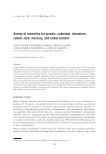
J. Cosmet. Sci., 65, 187–195 (May/June 2014) 187 Stability of urea in solution and pharmaceutical preparations NATTAKAN PANYACHARIWAT and HARTWIG STECKEL, Department of Pharmaceutics and Biopharmaceutics, Christian Albrecht University of Kiel, 24118 Kiel, Germany. Accepted for publication March 10, 2014. Synopsis The stability of urea in solution and pharmaceutical preparations was analyzed as a function of temperature (25°–60°C), pH (3.11–9.67), and initial urea concentration (2.5%–20%). This study was undertaken to (i) obtain more extensive, quantitative information relative to the degradation of urea in both aqueous and non- aqueous solutions and in pharmaceutical preparations, and (ii) test the effects of initial urea concentration, pH, buffer, and temperature values on urea degradation. The stability analysis shows that urea is more stable at the pH range of 4–8 and the stability of urea decreases by increase in temperature for all pH values. Within the experimental range of temperature and initial urea concentration values, the lowest urea degradation was found with lactate buffer pH 6.0. The urea decomposition rate in solution and pharmaceutical preparations shows the dependence of the initial urea concentrations. At higher initial urea concentrations, the rate of degradation is a decreasing function with time. This suggests that the reverse reaction is a factor in the deg- radation of concentrated urea solution. For non-aqueous solvents, isopropanol showed the best effort in re- tarding the decomposition of urea. Since the losses in urea is directly infl uenced by its stability at a given temperature and pH, the stability analysis of urea by the proposed model can be used to prevent the loss and optimize the operating condition for urea-containing pharmaceutical preparations. INTRODUCTION Being widely used in pharmaceutical and cosmetic products, urea plays a vital role in maintaining the skin’s moisture balance and suppleness. Reduced levels of urea, repre- senting 7% of the natural moisturizing factors in the stratum corneum (skin-building layer), lead to a lower water-binding capacity within the skin, which in turn, results in roughness, tightness, fl aking, and irritation of the skin. Urea preparations typically range in strength from 3 to 20, in specifi c preparations up to 40%, and can take many forms, including creams, gels, shampoos, deodorants, foundation, and even toothpaste. Ever since the decomposition of urea was fi rst presented by Wöhler in 1829 (1), the under- standing of its products, by-products, and reaction pathways has been extensively the sub- ject of several studies over the past century (2–11), but little information exists relative to the stability of urea in non-aqueous solutions and pharmaceutical preparations. Urea Address all correspondence to N. Panyachariwat at npanyachariwat@pharmazie.uni-kiel.de and H. Steckel at hsteckel@pharmazie.uni-kiel.de.
Purchased for the exclusive use of nofirst nolast (unknown)
From: SCC Media Library & Resource Center (library.scconline.org)