JOURNAL OF COSMETIC SCIENCE 188 decomposition yields ammonium ions (NH4+) and cyanate (CNO−), further readily under- going conversion to carbon dioxide (CO2) and ammonia (NH3). In aqueous solution, an elimination mechanism for urea decomposition appears to be operative. In contrast, when catalyzed by ureases, urea is generally believed to undergo hydrolysis rather than ammonia elimination (2–6). Although the earlier workers agreed that ammonium cyanate is an inter- mediate in the decomposition of urea, the numerical magnitudes of the rate constant and the order of reaction reported were quite different. Bull et al. (7) reported that urea degrada- tion followed fi rst-order kinetics in both dilute and concentrated solutions as well as Shaw and Bordeaux (8). On the other hand, the hydrolysis of urea was observed by several inves- tigators as a reversible reaction in some specifi c conditions (9–11). Many direct approaches for urea determination involving the reactions with urea to form colored products have been described, for instance, the well-known Fearon reaction (12), the reaction with o-phathaldehyde, and the reaction with p-dimethylaminobenzaldehyde (p-DMAB). Because of the use of corrosive reagents or incubation temperature and other disadvantages in diacetylmonoxime and o-phathaldehyde assays, in this experiment, the reaction of urea with p-DMAB was used. Impressed by Knorst’s work (13), we then ap- plied the protocol using p-DMAB for the kinetic study of urea degradation both in aque- ous solution, non-aqueous, and in pharmaceutical preparations with a broad range of pH and temperature. MATERIALS AND METHODS MATERIALS AND REAGENTS Urea and sulfuric acid were obtained from Merck (Darmstadt, Germany). p-DMAB was obtained from Sigma-Aldrich (Steinheim, Germany). Chemicals and solvents were of re- agent grade and were used without further purifi cation. Lactate buffers pH 4.5 and 6.0, phosphate buffer pH 6.0, and citrate pH 6.0 were prepared according to European Pharmacopoeia (14). The UV absorption spectra were recorded against a reagent blank using a ThermoScientifi c (Waltham, MA) Helios Omega spectrophotometer. DETERMINATION OF UREA DEGRADATION RATE CONSTANTS IN AQUEOUS SOLUTIONS The various concentrations of urea solutions (2.5%, 5%, and 10% [w/v]) were prepared and subjected to investigate the effect on urea degradation rate constant. 1 M NaOH, 1 M HCl, and different buffers were used to prepare solutions at different pH intervals between 3.0 and 10.0. At pH values between 3.11 and 4.19, 1 M HCl pH values be- tween 8.40 and 9.67, 1 M NaOH pH values 4.5 and 6.0, lactate buffer pH values 6.0, phosphate buffer and for pH values 6.0, citrate buffer solutions were used. The solutions of urea at different pH values were incubated at 25°, 40°, and 60°C, respectively. The residual urea concentration values at a defi ned pH and temperature values and different time intervals of 3, 7, and 14 days were determined as per the following procedure. A solution (0.5 ml) containing 4% (w/v) of p-DMAB and 4% (v/v) sulfuric acid in 99% ethanol was added to the mixture of 0.05 ml of urea solution and 9.95 ml of water. After

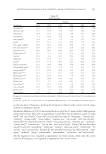
STABILITY OF UREA IN SOLUTION AND PHARMACEUTICAL PREPARATIONS 189 10 min, the absorbance of the solution was measured at 422 nm against a reagent blank. The experiments were performed in triplicate, and mean concentrations were used for determination of rate constants. DETERMINATION OF UREA DEGRADATION RATE CONSTANTS IN NON-AQUEOUS SOLVENTS The 2.5% urea solutions with various non-aqueous solvents including propylene glycol, glycerol, ethanol, isopropanol, pentylene glycol, and polyethylene glycol were prepared and incubated at 25° and 40°C. The urea concentration values at defi ned temperature values and different time intervals of 3, 7, and 14 days were determined as per the follow- ing procedure. A solution (0.5 ml) containing 4% (w/v) of p-DMAB and 4% (v/v) sulfuric acid in 99% ethanol was added to the mixture of 0.05 ml of urea solution and 4.95 ml of 99% ethanol. After 10 min, the absorbance of the solution was measured at 422 nm against a reagent blank. The experiments were performed in triplicate, and mean concentrations were used for determination of rate constants. DETERMINATION OF UREA DEGRADATION RATE CONSTANTS IN PHARMACEUTICAL PREPARATIONS Pharmaceutical preparations composed of urea at varying concentrations of 2.5%, 5%, 10%, 15%, and 20% (w/w) were prepared using the ingredients shown in Table I. For water phase, ingredients were mixed and heated to 80°C, and then urea was added and Table I Ingredients of urea-containing pharmaceutical preparations Ingredients Urea concentration 2.5% 5% 10% 15% 20% Water phase Glycerol 85% 3.50 g 3.50 g 3.50 g 3.50 g 3.50 g Magnesiumsulfate-Heptahydrate 0.50 g 0.50 g 0.50 g 0.50 g 0.50 g Lactic acid solution 9% 1.56 g 1.56 g 1.56 g 1.56 g 1.56 g Sodium lactate solution 50% 1.72 g 1.72 g 1.72 g 1.72 g 1.72 g DI-water 29.27 g 28.02 g 25.52 g 23.02 g 20.52 g Urea 1.25 g 2.50 g 5.00 g 7.50 g 10.00 g Oil Phase Caprylic/capric triglyceride (Myritol 318 PH®) 5.00 g 5.00 g 5.00 g 5.00 g 5.00 g Decamethylcyclopentasiloxane (Cyclomethicone 5-NF®) 1.25 g 1.25 g 1.25 g 1.25 g 1.25 g Cetearyl ethylhexanoate/isopropyl myristate (PCL®) 1.25 g 1.25 g 1.25 g 1.25 g 1.25 g Hexyldecanol/hexyldecyl laurate (Cetiol® PGL) 2.00 g 2.00 g 2.00 g 2.00 g 2.00 g Polyglyceryl-3 diisostearate (Lameform® TGI) 0.84 g 0.84 g 0.84 g 0.84 g 0.84 g Polyglyceryl-2 dipolyhydroxystearate (Dehymuls®) 1.66 g 1.66 g 1.66 g 1.66 g 1.66 g Caprylyl Glycol/ethylhexylglycerin (Sensiva® SC10) 0.20 g 0.20 g 0.20 g 0.20 g 0.20 g
Purchased for the exclusive use of nofirst nolast (unknown)
From: SCC Media Library & Resource Center (library.scconline.org)