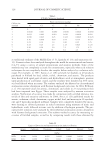
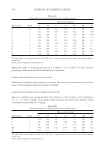
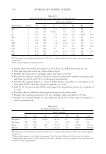
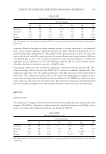
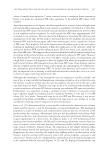
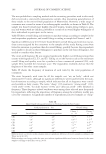
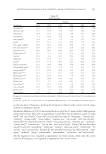
JOURNAL OF COSMETIC SCIENCE 194 bond can act in the same way to water molecule as hydrogen shuffl e. This can imply that increase in dipole moment in O–H bonds of different solvents increased the electron at- tracting ability of oxygen atom, as a result, facilitating the elimination step and thus the urea degradation. The effect of isopropanol in retarding the decomposition of urea in so- lution is explained by our hypothesis described above, with which it is in perfect agree- ment with the lowest dipole moment. THE KINETICS OF UREA DEGRADATION IN PHARMACEUTICAL PREPARATIONS According to the optimum result in retarding urea decomposition in aqueous solution, preparations adjusting with lactate buffer pH 6.0 were subjected to study in this experi- ment. Pharmaceutical preparations composed of urea at varying concentrations of 2.5%, 5%, 10%, 15%, and 20% (w/w) with pH 4.50 (no further pH adjusting) and pH 6.00 (adjusting with lactate buffer) were examined. Table V demonstrates the values of the rate constant, k, in h−1 calculated from the experimental data of the residual urea concentra- tion as a function of temperature. Within the experimental range of temperature and initial urea concentration values, the lowest urea degradation was found with lactate buf- fer pH 6.0. Degradation rate constant slightly decreases as the initial urea concentration is increased. Since more ammonium cyanate was produced (in the same time interval) at the higher urea concentration than at the lower ones, this was tentatively attributed to the reverse reaction as also observed in solution, thus lowering the urea degradation. CONCLUSION The proposed model for prediction of the combined effect of pH and temperature on decomposition of urea was used to investigate the decomposition rate constants and the stability of urea for pH values between 3.11 and 9.67 and a temperature range of 25°– 60°C. The rate constant values obtained from the experiment are in good agreement with those of the literature values. The urea decomposition rate in aqueous solution, repre- sented by the fi rst-order reaction kinetics, shows the dependence of the initial urea con- centrations. At higher initial urea concentrations, the rate of degradation is a decreasing function with time. This suggests that the reverse reaction is a factor in the degradation of concentrated urea solution. The obtained results also show that urea is more unstable Table V The values of the rate constants, k, in h−1 calculated from the experimental data of the residual urea concentrations with various initial concentrations as a function of temperature Concentration (%) k Value at 25°C k Value at 40°C Normal cream Cream pH 6 (lactate) Normal cream Cream pH 6 (lactate) 2.50 8.59 × 10⁻⁷ 8.37 × 10⁻⁷ 7.13 × 10⁻⁶ 6.86 × 10⁻⁶ 5 8.44 × 10⁻⁷ 8.05 × 10⁻⁷ 7.05 × 10⁻⁶ 6.81 × 10⁻⁶ 10 8.39 × 10⁻⁷ 7.96 × 10⁻⁷ 7.03 × 10⁻⁶ 6.80 × 10⁻⁶ 15 8.38 × 10⁻⁷ 7.93 × 10⁻⁷ 7.01 × 10⁻⁶ 6.70 × 10⁻⁶ 20 8.23 × 10⁻⁷ 7.08 × 10⁻⁷ 6.87 × 10⁻⁶ 6.58 × 10⁻⁶

STABILITY OF UREA IN SOLUTION AND PHARMACEUTICAL PREPARATIONS 195 at higher temperature and at pH values more than 8.0 and less than 4.0. Therefore, urea recovers in the range of pH 5.0–8.0, and the minimum possible temperature reduces the losses of product. In non-aqueous solvents, isopropanol showed the best effect in retard- ing the decomposition of urea. Within the experimental range of temperature and initial urea concentration values, the lowest urea degradation was performed with lactate buffer pH 6.0. REFERENCES (1) F. Wöhler, On the decomposition of urea and uric acid at high temperature. Ann. Phys. Chemie, 15, 619–630 (1829). (2) H. R. Shaw and D. G. Walker, Kinetic studies of thiourea derivatives. IV. The methylated thioureas. Conclusions. J. Am. Chem. Soc., 80, 5337–5342 (1958). (3) G. Estiu and K. M. Merz, The hydrolysis of urea and the profi ciency of urease. J. Am. Chem. Soc., 126, 6932–6944 (2004). (4) A. N. Alexandrova and A. W. Jorgensen, Why urea eliminates ammonia rather than hydrolyzes in aque- ous solution, J. Phys. Chem. B, 111, 720–730 (2007). (5) N. D. Jespersen, A thermochemical study of the hydrolysis of urea by urease. J. Am. Chem. Soc., 97, 1662–1667 (1975). (6) P. A. Karplus, M. A. Pearson, and R. P. Hausinger, 70 Years of crystalline urease: What have we learned? Acc. Chem. Res., 30, 330–337 (1997). (7) H. B. Bull, K. Bresse, G. L. Ferguson, and C. A. Swenson, The pH of urea solutions. Arch. Biochem. Biophys., 104, 297–304 (1964). (8) W. H. R. Shaw and J. J. Bordeaux, The decomposition of urea in aqueous media. J. Am. Chem. Soc., 77, 4729–4733 (1955). (9) R. C. Warner, The kinetics of the hydrolysis of urea and of arginine. J. Bio. Chem., 142, 705–723 (1942). (10) M. A. Schwartz and E. Nelson, Husa’s Pharmaceutical Dispensing. (Mack Publishing Co, London, 1996). (11) H. L. Welles, A. R. Giaquinto, and R. E. Lindstrom, Degradation of urea in concentrated aqueous solu- tion. J. Pharm. Sci., 60, 1212–1216 (1971). (12) W. R. Fearon, The carbamido diacetyl reaction: A test for citrulline. Biochem. J., 33, 902–907 (1939). (13) M. T. Knorst, R. Neubert, and W. Wohlrab, Analytical methods for measuring urea in pharmaceutical formulations. J. Pharm. Biomed. Anal., 15, 1627–1632 (1997). (14) Council of Europe, European Pharmacopoeia, 4th Ed. (European Council, Strasbourg, 2005).
Purchased for the exclusive use of nofirst nolast (unknown)
From: SCC Media Library & Resource Center (library.scconline.org)