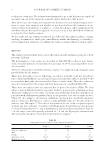
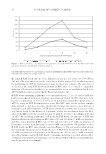
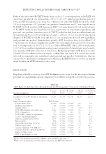
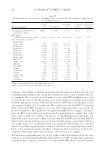
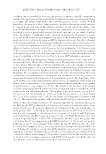
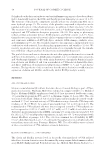
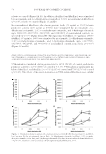
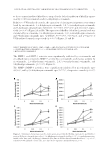
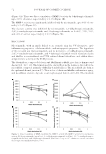
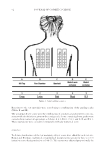
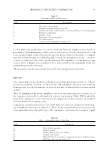
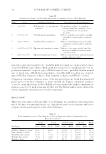
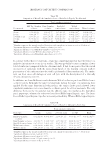
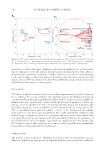
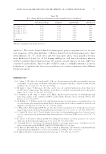
JOURNAL OF COSMETIC SCIENCE 66 tape sticks on the skin, it forms an airtight skin area, which causes sweat as a source of irritant (7). Moreover, occlusion of the skin may cause an increased transepidermal water loss (TEWL) and the increase in TEWL may be interpreted as damage to the skin barrier (8). We also compared the respective impacts on the patch test between the chamber and tape in this study. Among the fi ve patch types, Finn Chamber occlusive showed the highest cumulative irritation scores for cream and lotion. This was because the alumina used was more irritating than rubber and cotton, even though the tape of the Finn Chamber oc- clusive was a microporous paper tape. Considering that cream and lotion were mild and probably acted as a slight irritant to the skin, the type of chamber induced bigger effects on cumulative irritation than type of tape for low irritating material. Hill Top Chamber occlusive revealed the highest cumulative irritation scores, Webril occlusive showed the second highest, and Finn Chamber occlusive showed the third highest for the positive control SLS. This is mainly because the three types of patches have different types of tapes. The tape of Hill Top Chamber occlusive and Webril occlusive was latex-free silk- like hypoallergenic tape, the tape of Finn Chamber occlusive was nonwoven microporous hypoallergenic tape, and the air permeability of latex-free silklike hypoallergenic tape was worse than that of paper tape. This result reveals that the infl uence of the permeabil- ity of tape to cumulative irritation may be greater than the type of chamber for highly irritating material, which encourages us to design further studies to test the idea. ACKNOWLEDGMENTS The patches and test materials were provided by the Johnson & Johnson Company. REFERENCES (1) M. W. Trimble, N. K aul, J. E. Wild, and J. P. Bowman, The differences in human cumulative irritation responses to positive and negative irritant controls from three geographical locations, J. Cosmet. Sci., 58, 519–525 (2007). (2) S. Z. Sajun Merchan t, A. D. Vaidya, A. Salvi, R. S. Joshi, and R. B. Mohile, A new occlusive patch test system comparable to IQ and Finn chambers, Indian J. Dermatol. Venereol. Leprol., 80, 291–295 (2014). (3) J. Brasch, C. Szlis ka, and J. Grabbe, More positive patch test reactions with larger test chambers? Con- tact Dermatitis, 37, 118–120 (1997). (4) D. M. Bagley, E. K. Boisits, T. L. Spriggs, and S. Schwartz, Effect of patch type on the cumulative ir- ritation potential of 4 test materials, Am. J. Contact Dermatitis, 12, 25–27 (2001). (5) S. B. Richard and P . B. James, A reappraisal of the 21-day cumulative irritation test in man, Cutan. Ocul. Toxicol., 1, 109–115 (2008). (6) P. Dykes, Surfactan ts and the skin, Int. J. Cosmet. Sci. 20, 53–61 (1998). (7) C. H. Hu, Sweat-rel ated dermatoses: old concept and new scenario, Dermatologica, 182, 73–76 (1991). (8) T. Agner and J. Ser up, Time course of occlusive effects on skin evaluated by measurement of transepi- dermal water loss (TEWL) including patch tests with sodium lauryl sulphate and water, Contact Derma- titis, 28, 6–9 (1993).

J. Cosmet. Sci., 69, 67–75 ( January/February 2018) 67 The Rheological and Skin Sensory Properties of Cosmetic Emulsions: Infl uence of Thickening Agents YANAN LI, ZHAOQING ZHOU, XIAOMIN ZHAO, HUA ZHAO, and XIN QU, ASI Shanghai Technical Centre, Ashland Inc., Shanghai 200233, China (Y.L., X.Z., X.Q.) and School of Science, Beijing Technology and Business University, Beijing 100048, China (Z.Z., H.Z.) Accepted for publication September 17, 2017. Synopsis Hydrophilic polymers are widely used in the cosmetics industry as thickening agents/rheology modifi ers. These thickening agents have different chemical structures which affect the rheological properties, as well as the sensory attributes of the formula. Systematic study is important to determine the relationship among them. Six commonly used hydrophilic polymers, including cellulose derivatives and synthetic polymers, were used as thickening agents in a series of oil-in-water emulsions. The rheological properties were evaluated in relation to the thickening mechanism and polymer structures. Comprehensive skin sensory studies were carried out to test factors such as the pick-up, rub-in, and after-feel of these emulsions and the control sample. Results showed that all the samples demonstrated a non-Newtonian and shear-thinning behavior, and synthetic polymer-based formulas were more viscous than cellulose derivative-based ones. All eight attributes for the factors of appearance, pick-up, and rub-in showed statistically signifi cant differences (p 0.05), whereas all fi ve attributes for the after-feel factor exhibited no statistically signifi cant differences (p 0.05) for different thickening agents. According to the results calculated using Pearson’s correlation coeffi cients, four sensory attributes were mostly correlated with the rheological parameters. INTRODUCTION In recent years, the infl uence of specifi c raw materials on the rheological and sensorial properties of cosmetic formulas has become an important topic in the cosmetics industry. For example, Ozkan et al. (1) used steady fl ow and Large Amplitude Oscillatory Shear (LAOS) to characterize the yield stress and its correlation with sensory attributes. Lukic et al. (2) studied the effect of four emollients on the textural, sensorial, and in vivo skin performance of water-in-oil (w/o) hand creams. Tamburic et al. (3) investigated the application of thermo- rheology and textural analysis in the evaluation of w/o creams stabilized with a silicone emul- sifi er. Bekker et al. (4) studied mineral-based and wax-based cosmetic emulsions and jellies, relating their rheological measurement to their primary and secondary attributes when Address all correspondence to Xin Qu at xqu@ashland.com.
Purchased for the exclusive use of nofirst nolast (unknown)
From: SCC Media Library & Resource Center (library.scconline.org)