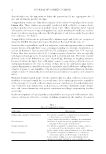
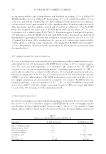
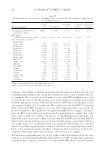
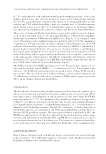
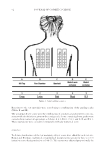
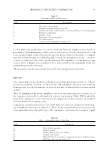
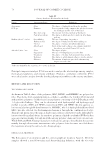
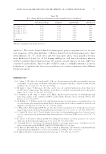
JOURNAL OF COSMETIC SCIENCE 68 applied to skin. Wang et al. (5) looked at the effect of the rheological properties of 12 mois- turizing creams/lotions on their effi cacy and attributes. Savary et al. (6) combined sensory and instrumental characterization to study the impact of emollients on the spreading properties of cosmetic products. The same authors (7) also conducted a large study on the impact of eight hydrophilic polymers on the textural properties of cosmetic emulsions. However, the aforementioned literature only evaluated limited sensory attributes, and few articles have correlated the skin sensory and rheological/mechanical properties of formulas with the chemical structure of raw materials. Hydrophilic polymers are widely used in the cosmetics industry as thickening agents/ rheology modifi ers for gels, shampoos, emulsions, color cosmetics, etc. These thickening agents have completely different chemical structures, including natural and synthetic polymers, crosslinked and noncrosslinked polymers, homopolymers, copolymers, etc. The difference in polymer structure affects both the rheological properties and the sensory attributes of the formula. Systematic study is important to determine the relationship among them. In this study, six commonly used hydrophilic polymers were used as thickening agents in a series of oil-in-water (o/w) emulsions. The rheological properties were evaluated and discussed in relation to the thickening mechanism and polymer structures. Comprehen- sive skin sensory studies were carried out, evaluating factors such as the appearance, pick-up, rub-in, and after-feel of these emulsions and the control sample. The results illuminated how, and to what extent, the polymer structure difference and rheological properties can affect the fi nal skin sensory attributes of the emulsions. EXPERIMENTAL SETUP MATERIALS Six commonly used rheological modifi ers from Ashland were the object of this study. The International Nomenclature of Cosmetic Ingredients (INCI) names, codes, trade names, and chemical structures are illustrated in Table I. Table I INCI Names, Codes, Trade Names, and Chemical Structures of the Polymers Used Code INCI name Trade name Chemical structure HEC Hydroxyethyl Cellulose Natrosol™ HEC 250 HHR Graft, natural derivative, and nonionic HPMC Hydroxypropyl Methylcellulose Benecel™ HPMCE10M Graft, natural derivative, and nonionic HMHEC Cetyl Hydroxyethyl Cellulose Natrosol Plus 330 HMHEC Graft, natural derivative, long alkyl chains, and nonionic PVP Polyvinyl Pyrrolidone FlexiThix™ polymer Synthetic, crosslinked, and nonionic PAA Na Sodium Polyacrylate RapiThix™ A-100 polymer Synthetic, linear, anionic, and neutralized PAA Carbomer Ashland™ 980 carbomer Synthetic, crosslinked, anionic, and unneutralized

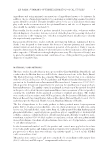
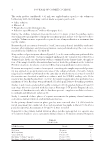
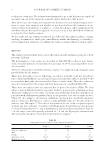
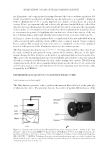
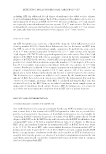
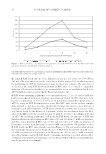
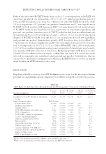
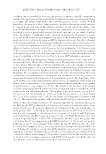
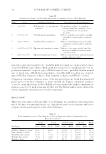
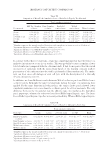
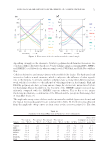
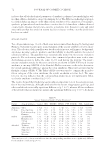
RHEOLOGICAL AND SKIN SENSORY PROPERTIES OF COSMETIC EMULSIONS 69 PREPARATION OF THE FORMULATIONS Six emulsions containing the previously mentioned polymers were prepared. The emul- sion formula is shown in Table II. To be consistent with practical use levels, the concen- tration for HEC, HMHEC, HPMC, and PAA Na was 1% 5% for PVP and 0.5% for PAA (adjusted to pH 6.5 with NaOH). One control sample containing no thickeners was also prepared for comparison. RHEOLOGY All rheological measurements were carried out with a MCR 101 (Anton Paar GmbH, Graz Austria) Rheometer, equipped with a cone plate (CP 50-1) at 25°C. A time of 5 min was set for all tests. Continuous fl ow tests were conducted at a shear rate range from 0.01 to 100 1/S. Amplitude sweeps scanned strain deformations from 0.1% to 100% at a constant frequency of 1 Hz for the emulsions. SENSORY ANALYSIS A panel of 10 college students (age 19–24) of both sexes was recruited from Beijing Tech- nology and Business University. Sensory evaluation protocols based on well-accepted guidelines for the skin feel analysis of creams and lotions (ASTM, 2003) (8) were used to train the panelists. All of the sensory attributes evaluated in this study are shown in Table III. For each sensory attribute, four to fi ve commercial products were used as standard reference points to defi ne the scales (0–10) during the training. STATISTICAL ANALYSIS Several statistical analysis methods were applied using JMP 12.0.1 software (Cary, NC), with the confi dence level set as 95%. For each sensory attribute, A one-way analysis of variance (ANOVA) of the Kruskal–Wallis tests was conducted to determine the overall differences among the seven emulsions, and the Tukey’s honest signifi cant difference (HSD) tests were conducted to compare the mean between each pair of the seven emulsions to categorize them. Table II Emulsion Formula Used in This Study Trade name INCI name Supplier % (w/w) Distilled water Water Local q.s. 100 Glycerin Glycerin Local 2 Hydrophilic polymers Listed in the text Ashland 0.5/1/5 GTCC Caprylic (and) Capric Triglyceride Local 4 Brij™ 72a Steareth-2 Croda 2.55 Brij™ 721a Steareth-21 Croda 1.65 Liquid Germall™ Plus preservative Propylene glycol (and) diazolidinyl urea (and) iodopropynyl butylcarbamate Ashland 0.5 a Trademark owned by a third party.
Purchased for the exclusive use of nofirst nolast (unknown)
From: SCC Media Library & Resource Center (library.scconline.org)