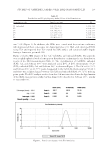
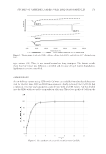
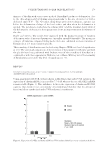
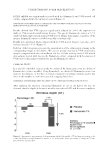
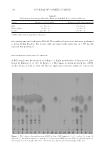
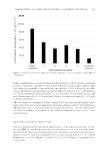
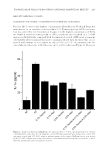
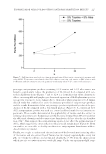
JOURNAL OF COSMETIC SCIENCE 200 these creams may pose an issue. Nevertheless, this can likely be solved by making slight modifi cations to the cream’s composition. The color of the creams was unchanged after 2 mo except for those containing locust fat. Here a discoloration of the cream from greenish to white at the emulsion–air interface was observed. Addition of an antioxidant (0.25% sunfl ower seed oil extract of rosemary leaf) countered this effect, indicating that the dis- coloration is due to oxidation, presumably of the chlorophyll present in the fat. The fi nal preservative effi cacy was tested only on a hand cream containing 5% insect fat. This is the standard concentration when using mink or macadamia nut oil. The microbial stability of the cream, or preservative effi cacy, was assessed by a challenge test according to the European Pharmacopoeia (21). All creams containing insect fats passed the challenge test according to the A-criteria as all inoculated microorganisms are killed within a certain time and there is no proliferation of microorganisms. This is illustrated in Figure 3, which shows the microorganism reduction plot as a function of time for P. aeruginosa and A. brasiliensis. The curves for the other microorganisms tested overlap with that of P. aeruginosa. This implies that the insect fats do not interfere with the preservative system. CONCLUSIONS Insects have the potential to provide a durable source of biomaterials such as fats. Here we extracted fats from BSF, crickets, and locusts and implemented them in a hand cream Figure 3. Microorganism reductio n in locust hand cream after inoculation according to the European Phar- macopoeia (21). Symbols: P. aeruginosa ( ) and A. brasiliensis ( ).

INSECT FATS FOR COSMETICS 201 formulation. The data indicate that insect fats contain a large fraction of FFAs and phospho- lipids which will need to be removed by thorough refi ning processes to make them more suitable for cosmetics applications. Extraction of insect biomass needs to be performed cost-effectively and green processes (e.g., pressing) should be implemented where possible. Finally, all biomass derived from insects (fats, proteins, and chitin) needs to be valorized in industrial applications. If, in addition, a drastic upscaling of capacity (e.g., stacking) and reduction in breeding costs (e.g., by using waste streams as insect feed) is achieved then industrial implementation of insects becomes feasible and may prove a viable sector in a future circular economy. As an example of the use of insects in such a circular economy we considered the applica- tion of insect fats in a hand cream that serves as a model system for a typical oil-in-water emulsion. Taken together the results of the physicochemical and stability tests, demon- strate that insect fats (especially cricket and the locust, when properly discolored) are suitable for leave-on cosmetic preparations, at least from a physicochemical point of view. BSF fats have a fatty acid profi le that is similar to coconut oil and palm kernel oil (29). These oils are frequently used in cosmetics applications e.g., as a starting material for preparation of surfactants (e.g., Amillite GCS-11). Therefore it can be envisaged that BSF fats can be used for similar applications as these plant materials. However, a full toxico- logical assessment needs to be performed, before considering actual implementation. This also includes an investigation of the potential presence of undesired contaminants such as pesticides and residual solvents. In conclusion, our data indicate that insects can be implemented as an alternative source for fats that are useable for cosmetic applications. Depending on the fatty acid profi le of the insect fats, different applications can be envisaged. ACKNOWLEDGMENTS The authors are grateful to Claude Capdepon from Rousselot NV for providing them with gelatin fi lms. The authors thank Rob Van Ende and Christof Clauwaert for their help in the lab. REFERENCES (1) O. K. S hortall, S. Raman, and K. Millar, Are plants the new oil? Responsible innovation, biorefi ning and multipurpose agriculture, Energy Policy, 86, 360–368 (2015). (2) E. B. F itzherbert, M. J. Struebig, A. Morel, F. Danielsen, C. A. Brühl, P. F. Donald, and B. Phalan, How will oil palm expansion affect biodiversity? Trends Ecol. Evol., 23(10), 538–545 (2008). (3) T. M. Fa yle, E. C. Turner, and J. L. Snaddon, Oil palm expansion into rain forest greatly reduces ant biodiversity in canopy, epiphytes and leaf-litter, Basic Appl. Ecol., 11, 337–345 (2010). (4) M. J. M. Senior, K. C. Hamer, and S. Bottrell, Trait-dependent declines of species following conversion of tropical forest to oil palm plantations, Biodivers. Conserv., 184, 414–423 (2013). (5) J. A. Fo ley, N. Ramankutty, K. A. Brauman, E. S. Cassidy, J. S. Gerber, M. Johnston, N. D. Mueller, C. O’Connell, D. K. Ray, P. C. West, C. Balzer, E. M. Bennett, S. R. Carpenter, J. Hill, C. Monfreda, S. Polasky, J. Rockström, J. Sheehan, S. Siebert, D. Timlan, and D. P. M. Zaks, Solutions for a cultivated planet, Nature, 478, 337–342 (2011). (6) D. Piment el, A. Marklein, M. A. Toth, M. N. Karpoff, G. S. Paul, R. McCormack, J. Kyriazis, and T. Krueger, Food versus biofuels: environmental and economic costs, Hum. Ecol., 37(1), 1–12 (2009). (7) A. van Hu is, J. Van Itterbeeck, H. Klunder, E. Mertens, A. Halloran, G. Muir, and P. Vantomme, FAO Forestry Paper 171. Edible insects: future prospects for food and feed security. ISBN 978-92-5-107595 (2013).
Purchased for the exclusive use of nofirst nolast (unknown)
From: SCC Media Library & Resource Center (library.scconline.org)