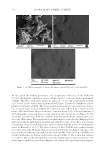
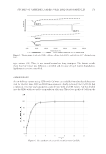
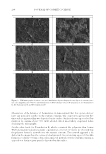
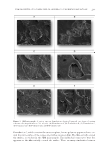
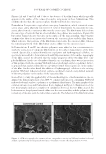
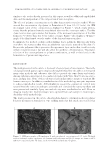
JOURNAL OF COSMETIC SCIENCE 212 polymers do not form continuous fi lms on the surface of the skin. Polymers really form networks that contain mesh-like structures rather than continuous fi lms. This is of course intuitive since the level of polymers in the sunscreen formulation is only 1–2% (w/w). However, because the network is quite hydrophobic, it is diffi cult for water to penetrate due to the sunscreen system’s high surface tension. One other interesting fi nding is that immiscible polymers will not be miscible on the skin after the alcohol evaporates, and will not form continuous fi lms, as in the case with VA/butyl maleate/isobornyl acrylate copolymer and acrylates/dimethicone copolymer. On the other hand, miscible polymers will form continuous fi lms on the skin such as in the case of VA/butyl maleate/isobornyl acrylate copolymer and hydroxypropyl cellulose. A chemist can run simple miscibility tests before adding such polymers to the formulation to avoid any future incompatibilities. CONCLUSIONS In this article, we present an innovative technique that enables scientists to visualize sunscreen fi lms created on a stratum corneum substrate. Furthermore, it allows for the morphological investigation of polymeric fi lm formers in sun care formulations and helps to elucidate their interactions with fi lms formed by sunscreen actives. We used SEM to visualize the deposition of fi lms from sun care formulations on layers of stratum cor- neum, obtained from tape stripping studies. Overall, we found that sunscreen fi lms formed by sunscreen actives resulted in a continuous fi lm on the surface, as evidenced by SEM studies and evaporimetry. Introduction of polymeric additives to the formulation allowed for the formation of separate fi lms that contained a network architecture— dependent on the physicochemical properties of the polymer—resulting in unique inter- actions between fi lms comprising the sunscreen fi lters and the polymer. ACKNOWLEDGMENTS The authors of this article would like to thank Dr. Donald Prettypaul, Ms. Ritamarie Guerrero, Mr. Anthony Luschen, and Mr. David Streuli for their valuable contributions to this work. REFERENCES (1) S. Marguerie, M. Pis savini, A. Baud, and T. Carayol, A new chemical approach to optimize the in vitro SPF method on the HD6 PMMA plate, J. Cosmet. Sci., 63, 243–254 (2012). (2) X. Qu, X. Zhao, and Z. Chen, A new in vitro method to determine sun protection factor, J. Cosmet. Sci., 67, 101–108 (2016). ( 3) D. Moyal, V. Alard, C. Bertin, F. Boyer, M. W. Brown, L. Kolbe, P. Matts, and M. Pissavini, The revised COLIPA in vitro UVA method, Int. J. Cosmet. Sci., 35, 35–40 (2013). (4) O. Dueva-Koganov, B. S. Jaynes, C. Rocafort, S. Barker, and J. Mao, Correlating water contact angles and moisturization/sensory claims, Cosmet. Toil., 122, 20–27 (2007). (5) D. Prettypaul and H. Fares, Microscopic evaluation of polymeric fi lm properties of anhydrous sunscreen compositions and their relation to absorption and water resistance, J. Cosmet. Sci., 63, 213–221 (2012). ( 6) O. Dueva-Koganov, M. Russell, S. Misseri, and A. Duev, Comparative Evaluation of Film-Forming Polymers in Ethanol-Based Sunscreen Spray. (Sunscreen Symposium, Orlando, FL, 2011).

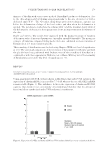
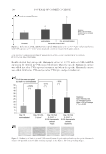
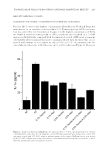
J. Cosmet. Sci., 69, 213–228 (May/June 2018) 213 The Blend of Taurine and Aloe Vera Extract Boosts Action Against Skin Irritation: In Vitro and Clinical Evaluations JUNG M. SEO, SUZIE CHENG, NADIA SOLIMAN, ZEENAT NABI, and LONG PAN, Colgate-Palmolive Company, Piscataway, NJ (J.M.S., S.C., N.S., Z.N., L.P.) Accepted for publication May 10, 2018. Synopsis Regular usage of cosmetic products and drugs in dermatological vehicles may cause irritant contact dermatitis. For example, aluminum chloride (AlCl3), the most effi cacious antiperspirant salt to treat hyperhidrosis, shows high irritancy potential. To mitigate the irritant contact dermatitis caused by topical application of products containing AlCl3, we investigated the anti-irritating effects of aloe extract and taurine in vitro and in vivo. In an in vitro experiment, reconstructed human epidermis model, EpiDerm, was tested with AlCl3 in the presence or absence of taurine and aloe extract. In a human clinical study, 12 adult subjects were tested with two products, a commercial AlCl3 antiperspirant product and a prototype 12% AlCl3 formulation containing 0.1% taurine and 0.1% aloe extract. Skin irritation potential in vitro and in vivo was measured by the release of pro-infl ammatory cytokine, IL-1α, and chemokine, IL-8. Taurine and aloe extract signifi cantly (p 0.05) reduced IL-lα and IL-8 production in vitro and in vivo after topical application of formulations containing AlCl3. The blend of taurine and aloe extract demonstrated boosted anti-irritation benefi ts on AlCl3 irritated skin both in vitro and in vivo. These results suggest that the combination of these anti-irritating actives may possibly be effective in mitigating irritant contact dermatitis caused by other dermatological vehicles containing irritating agents, but further research is warranted to assess their effects. INTRODUCTION In the United States alone, approximately 15.2 million people are affected by dermatitis (1) and 50% of the population has sensitive skin with reduced irritation threshold (2). Application of cosmetics and drugs in dermatological vehicles can induce skin dryness and irritation of the uppermost layer of the epidermis (3). Irritation and sensitization of the stratum corneum can lead to the development of irritant contact dermatitis, which limits the usage of products containing such compounds. Irritant contact dermatitis is the in- fl ammation of the skin which leads to erythema, dryness, itching, burning, and stinging and is caused by a physical or chemical agent that damages the stratum corneum. It is, therefore, important to identify compounds that can reduce skin irritation to develop effi cacious formulations that mitigate irritant contact dermatitis in consumers. However, the biochemical mechanisms and triggers of skin irritation are complex and not fully Address all correspondence to Long Pan at long_pan@colpal.com.
Purchased for the exclusive use of nofirst nolast (unknown)
From: SCC Media Library & Resource Center (library.scconline.org)