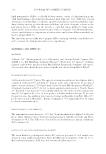
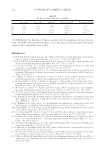
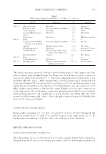
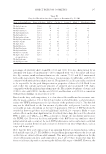
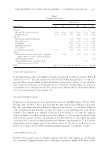
JOURNAL OF COSMETIC SCIENCE 168 Germany) consisting of a G1311B model quaternary pump, a G1329B model auto injec- tor, a G1316A model thermostat column compartment, and a G4212B model diode array detector (DAD) was used. The chromatograms were monitored and integrated using Agilent ChemStation software. Chromatographic separations of analytes were achieved on 5 μm Inertsil ODS-3 (4.6 × 250 mm) and the column was thermostated at 25 ± 1°C during analysis. The detection wavelength was 275 nm and injection volume was 20 ml. Elution of Caf from the column was performed isocratically with a mobile phase mixture of water:methanol (60:40) at a fl ow rate 1.0 ml/min. DATA ANALYSIS All experiments were repeated three times and the results were presented as mean ± SD. Release profi les were evaluated using different kinetic models including the zero order (Qt = Q0 + K0t), fi rst order (lnQt = lnQ0 + K1t), Higuchi (Qt = KHt1/2), Hixson–Crowell (Q0 1/3 - Q1 1/3 = KSt), and Korsmeyer–Peppas (Qt/Q = Ktn) models (15,16). RESULTS AND DISCUSSION In this study, Caf-SLNs were successfully prepared using double emulsion methods with the mixture of Softisan 100®, Span 20®, Caf, and Tween 20® (T20) at different ratios (Table I). The average particle size and size distribution of the formulations are shown in Table 2. Inclusion of Caf increased the particle size. The smallest average size (175.10 nm) was observed in the F4 formulation with 5.0% T20. According to several studies, SLNs with particle sizes ranging from ≈170 to 500 nm make a fi lm on the skin and provide an occlusive effect, which can increase the penetration rate of active agents across the stra- tum corneum (5,17,18). In this study, because of the low particle size and occlusive prop- erty of the SLNs, it is thought that Caf can easily pass through the stratum corneum (5,17–20). The PI values of the formulations were lower than 0.3. Kazemi et al. reported that PI 0.3 indicates great homogenous distribution (9). The zeta potential of the for- mulations was positive and in the range 0 to + 2 mV. Although zeta potentials of the particles were very low, increasing the T20 concentration resulted in smaller particles with good PI values. However, this behavior was not linear and further increase of T20 above 5.0% in F5 and F6 decreased the particle size. Higher T20 concentrations limit the dispersal of the primary emulsion phase (w/o emulsion) in the external phase and the second emulsifi cation process. These data clearly show that the T20 optimum concentration Table I Preparation of Caf-SLNs Formu lations Ingredients F1 (Unloaded, %) F2 (%) F3 (%) F4 (%) F5 (%) F6 (%) Softisan 100® 3.00 3.00 3.00 3.00 3.00 3.00 Tween 20® 5.00 1.00 3.00 5.00 7.00 10.00 Span 20® 0.20 0.20 0.20 0.20 0.20 0.20 Caffeine 0.00 0.10 0.10 0.10 0.10 0.10 Water 91.80 95.70 93.70 91.70 89.70 86.70

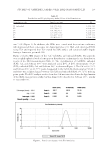
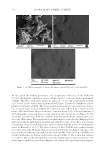
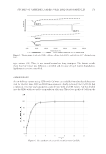
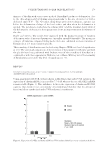
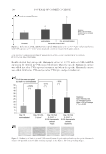
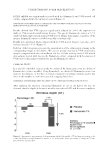
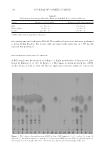
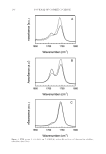
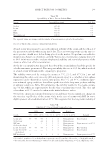
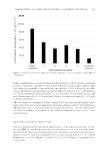
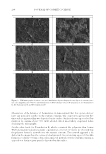
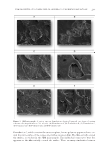
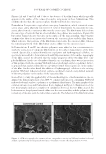
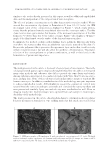
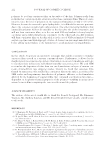
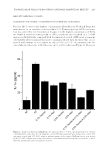
STUDIES OF CAFFEINE-LOADED SOLID LIPID NANOPARTICLES 169 was 5.0% (Figure 1). In addition, the SLNs were coated with the nonionic surfactant, which prevented their coalescence into larger particles (21). Shah et al. developed SLNs using T20 and reported that T20 coated the SLN surface and remained stable despite having a lower zeta potential (22). Figure 2 shows SEM images of free Caf, Caf-SLNs, and unloaded SLNs. The particles were roughly spherical with a homogenous distribution confi rming the size distribution results of the DLS measurements (Table 2). The crystallization of Caf-SLNs, unloaded SLNs, Caf, and Softisan 100® were analyzed using DSC. A DSC thermogram of Caf- SLNs, unloaded SLNs, Caf, and Softisan 100® is shown in Figure 3. The Caf at 236.76°C and Softisan 100® at 40.35°C peaks dissapeared in the Caf-SLNs thermogram at 38.44°C and there was a slight change between Caf-SLNs and unloaded SLNs (36.72°C) melting point peaks. The DSC analysis results show that Caf was introduced into the lipid matrix of the SLNs. In a previous study, Caf was found to be dissolved in Softisan 100®, similar to our results (6). Figure 1. Particle size diagram of the F4 formulation. Table II Particle Size and PI (polydispersity index) Values of the Formulations Formulation code Particle size (nm) PI F1 (unloaded) 161.27 ± 2.00 0.24 ± 0.02 F2 195.52 ± 9.77 0.26 ± 0.06 F3 181.68 ± 3.14 0.25 ± 0.03 F4 175.10 ± 5.68 0.22 ± 0.05 F5 196.80 ± 11.47 0.23 ± 0.01 F6 209.43 ± 10.05 0.28 ± 0.14
Purchased for the exclusive use of nofirst nolast (unknown)
From: SCC Media Library & Resource Center (library.scconline.org)