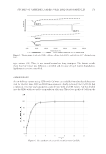
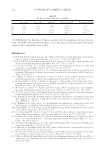
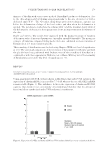
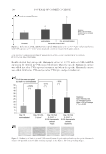
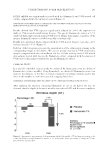
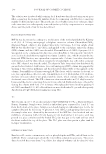
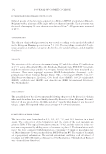
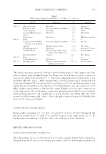
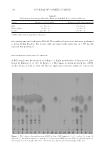
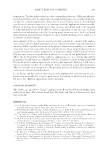
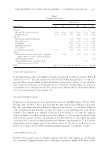
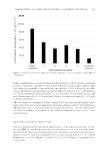
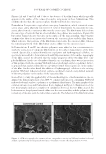
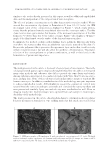
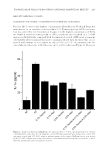
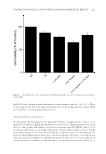
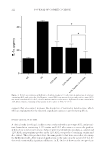
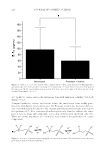
JOURNAL OF COSMETIC SCIENCE 226 (2.5 pH 4), taurine exists as the zwitterionic form with high water solubility (104.8 g/l) (Figure 9) (12). Compared with the cationic and anionic forms, the zwitterionic form readily pene- trates the skin barrier into keratinocytes (8). Previous research has disclosed that tau- rine is predominantly localized to the stratum granulosum and stratum spinosum in the epidermis (12). Aloe vera extract has been previously found to enhance the trans- port of various drugs and compounds across skin and intestinal epithelial cells (23). There are several hypotheses as to how aloe vera enhances the permeation of certain compounds. Figure 9. Speciation of tau rine under varying pH concentrations is shown. The zwitterionic form is the most predominant form at biological pH values. Figure 8. Subjects (n = 1 2) were treated with a commercial 12% AlCl3 antiperspirant benchmark product and a prototype 12% AlCl3 product containing 0.1% taurine and 0.1% aloe extract (one on each designated forearm area). IL-1α concentration was measured after four consecutive days of dermal exposure from obtained skin samples. *p 0.05.

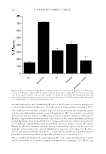
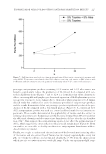
TAURINE/ALOE VERA FOR BOOSTING ANTI-SKIN IRRITATION EFFECTS 227 We hypothesized that aloe extract enhanced the permeation of taurine in the stratum corneum and increased cellular uptake. To confi rm this assumption, a designed study demonstrated that over time keratinocytes in the EpiDerm tissue had increasing intracel- lular taurine concentration when co-treated with aloe extract (Figure 7). One proposed mechanism is that components of aloe vera form complexes with the drug or compound to increase the permeation by size exclusion and pull effect (24). Lower molecular weight drugs are able to form complexes with aloe vera components and are pulled down into the deeper layers of the epidermis. We hypothesized that the permeation enhancement effects were due to the presence of alpha-hydroxyacids in the aloe vera extract. Alpha-hydroxyacids, such as lactic acid, have been found to signifi cantly increase the penetration and intracel- lular accumulation of hydrophilic molecules in the epidermis (25). Malic acid is an alpha- hydroxyacid that is found in the aloe vera extract used in our studies. Further studies would need to be conducted to assess the penetration enhancement effects of major com- ponents of aloe extract alone. In conclusion, aloe extract and taurine blend demonstrates a boosted effect in reducing the skin irritation potential of irritating dermatological actives, such as AlCl3. The pro- duction of pro-infl ammatory cytokines and chemokines, such as IL-lα and IL-8, was sta- tistically signifi cantly decreased by the treatment of aloe extract and taurine in both in vitro and in vivo studies. Our data demonstrate the boosted, anti-irritating capabilities of aloe extract and taurine blend. This discovery does not only lead to new antiperspirant formulations with reduced irritation potential, but possibly other dermatological vehi- cles and cosmetic products with reduced tendency in causing irritant contact dermatitis after usage. ACKNOWLEDGEMENTS We would like to express our appreciation to the Colgate Innovation Fund Committee for fi nancial support of this research and to Dr. Laurence Du-Thumm and Dr. Ravi Subramanyam for their guidance and support. We also thank Halyna Siomyk for her assistance with the human clinical study and Mark Vandeven for his assistance with the statistical analysis conducted for this publication. REFERENCES (1) S. E . Luckhaupt, J. M. Dahlhamer, B. W. Ward, A. L. Sussell, M. H. Sweeney, J. P. Sestito, and G. M. Calvert, Prevalence of dermatitis in the working population, United States, 2010 National Health Interview Survey, Am. J. Ind. Med., 56, 625–634 (2013). (2) L. M isery, E. Myon, N. Martin, F. Verriere, T. Nocera, and C. Taieb, Sensitive skin in France: an epide- miological approach, Ann. Dermatol. Venereol., 132, 425–429 (2005). (3) M. G loor, How do dermatologic vehicles infl uence the horny layer? Skin Pharmacol. Physiol., 17, 267–273 (2004). (4) E. C orsini and C. L. Galli, Cytokines and irritant contact dermatitis, Toxicol. Lett., 102-103, 277–282 (1998). (5) K. T . Scholes, K. D. Crow, R. R. Harman, and E. M. Saihan, Axillary hyperhidrosis treated with alcoholic solution of aluminum chloride hexahydrate, British Med. J., 2, 84–85 (1978). (6) M. C . Dominguez, E. Sole, C. Goni, and A. Ballabriga, Effect of aluminum and lead salts on lipid per- oxidation and cell survival in human skin fi broblasts, Biol. Trace Elem. Res., 47, 57–67 (1995). (7) R. A nane and E. E. Creppy, Peroxidation as pathway of aluminum cytotoxicity in human skin fi broblast cultures: prevention by superoxide dismutase + catalase and vitamins E and C, Hum. Exp. Toxicol., 20, 477–481 (2001).
Purchased for the exclusive use of nofirst nolast (unknown)
From: SCC Media Library & Resource Center (library.scconline.org)