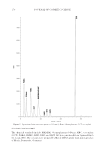
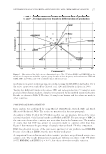
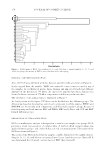
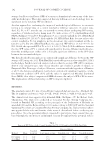
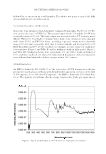
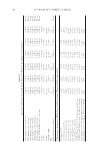
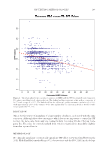
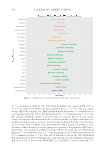
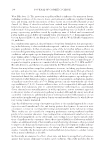
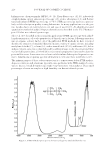
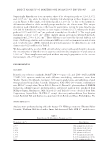
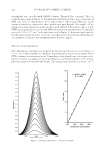
JOURNAL OF COSMETIC SCIENCE 210 high-pressure chromatography (HPLC), (8–11), X-ray fl uorescence (12,13), inductively coupled plasma optical emission spectroscopy (13), atomic absorption (14), and Fourier transform infrared (FTIR) spectroscopy (15–17). FTIR spectroscopy has been a particu- larly useful technique in quality testing laboratories for many applications over the past two decades due to its relatively low cost and ease of use (18,19). An identifi cation and quantitative method of analysis for pure dimethicone is described in the U.S. Pharmaco- peia (20) that uses infrared spectroscopy. Sabo et al. (15) described in this journal the application of FTIR spectroscopy with a fi xed- length transmission cell to the quantitation of dimethicone in lotions, following extraction into an organic solvent. In fact, all of the published FTIR methods we have reviewed describe the extraction of emulsifi ed dimethicone into a variety of organic solvents, including methylene chloride (15), toluene (16), carbon tetrachloride (17,20), and hexane (21), before analysis. Solvent extraction is often followed by additional steps to dry the solvent and fi lter out insoluble particulates, all of which increase sample preparation times and escalate the potential for errors. Some extraction solvents exhibit infrared absorption frequencies sim- ilar to dimethicone, requiring spectral subtraction to overcome these interferences (15). The primary purpose of these solvent extractions is to remove water before FTIR analysis. Aqueous solutions and emulsions typically cause problems with FTIR analysis because water’s intense, broad absorption spectrum overpowers most other analytes. Even small percentages of water in samples or high humidity can distort infrared spectra. Figure 1. FTIR-ATR absorption sp ec tra for water and aqueous emulsifi ed dimethicone.

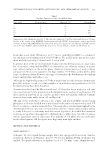
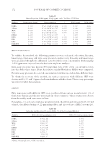
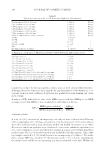
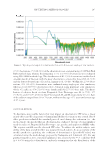
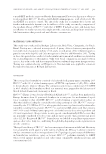
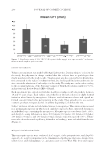
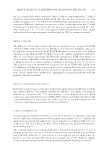
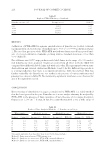
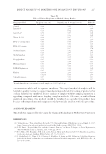
DIRECT ANALYSIS OF DIMETHICONE IN AQUEOUS EMULSIONS 211 Surprisingly, dimethicone is an exception: three of its absorption peaks at 1,260, 1,072, and 1,007 cm-1 rise above the water’s relatively low absorption at these frequencies, as seen in Figure 1. The single, well-defi ned peak at 1,260 cm-1 is due to the symmetric deformation vibration of the methyl groups attached to the silicon atom. This unique absorption peak of dimethicone is the basis for quantitative testing for pure dimethicone (20) and for dimethicone solutions in some organic solvents (16,17), whereas the double peaks at 1,072 and 1,007 cm-1 are preferred in methylene chloride (15). The single peak maximum at about 1,260 cm-1 differs slightly among previously published methods, ranging from 1,258 to 1,262 cm-1. These differences are caused by spectral shifts in sol- vents of differing polarities and instrumental differences such as transmission and attenu- ated total refl ectance (ATR). Infrared absorption frequencies for dimethicone are well characterized (22) and listed in Table I. We have ex ploited the use of an ATR cell with a long contact surface path length to measure the concentration of dimethicone in aqueous emulsions by integration of peak areas at 1,260 cm-1. Neat samples were analyzed without any sample preparation in the concen- tration ranges of 1–35% (g/100 g). EXPERIMENTAL REAGENTS Dime thicone r eference standards, Belsil® DM 350 (pure oil), and DM 5102E and DM 5700E (50% aqueous emulsions with different emulsifying surfactants), were from Wacker Chemie AG (Munich, Germany). ACS reagent-grade hexane and anhydrous ethanol were purchased from Fisher Scientifi c (Hampton, NH). PEG-100 stearate, sorbitan lau- rate, PPG-15 stearyl ether, Triton X-100, Tween 20, Tween 80, phenoxyethanol, DMDM hydantoin, sodium benzoate, methyl paraben, and propyl paraben were purchased from MilliporeSigma, Burlington, MA laureth-23 and laureth-4 were obtained from Rita Corporation, Crystal Lake, IL PPG-15 stearyl ether was purchased from Jeen Interna- tional, Fairfi eld, NJ and Kathon was purchased from Rohm and Haas, Philadelphia, PA. INSTRUMENTATIO N Analyses were performed using a Nicolet Avatar 470 FTIR spectrometer (Thermo Fisher Scientifi c, Waltham, MA) fi tted with a Smart Ark horizontal ZnSe ATR 45° multi-bounce Table I Dimethicone IR Absorption F requencies (22) Frequency (cm-1) Description 2,965 CH3 asymmetrical stretch 2,906 CH3 symmetrical stretch 1,410 CH3 asymmetrical bend 1,258 CH3 symmetrical bend 1,072 Si-O-Si asymmetrical bend 1,007 Si-O-Si asymmetrical stretch 864 Si-CH3 asymmetrical rock
Purchased for the exclusive use of nofirst nolast (unknown)
From: SCC Media Library & Resource Center (library.scconline.org)