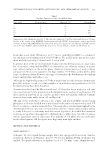
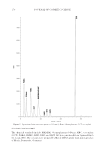
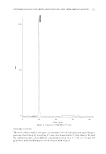
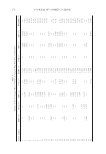
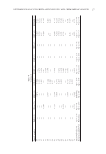
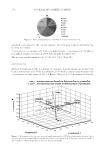
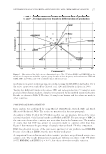
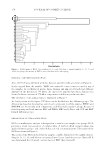
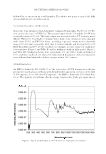
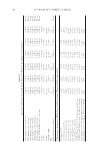
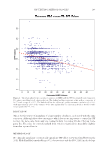
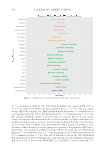
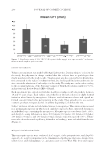
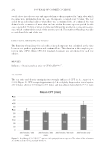
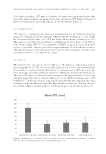
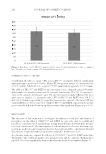
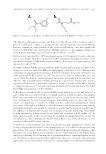
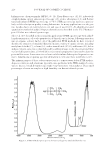
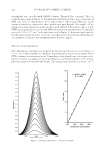
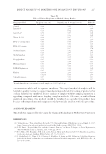
JOURNAL OF COSMETIC SCIENCE 212 trough plate and controlled with OMNIC software (Thermo Fisher Scientifi c). This cell is much longer (approximately 72 mm in length with multi-bounce optics) than typical ATR cells (only 1.5 mm diameter with single bounce). This longer ATR plate yields enhanced sensitivity compared to those with shorter path lengths. The sample cell for transmission measurements was a demountable liquid cell with CaF2 windows and a 0.1-mm PTFE spacer. Quantitative scans for both ATR and transmission were limited to the expanded region of 1,239–1,279 cm-1 in the absorbance mode (Figure 2). Integrated peak areas for the absorption band centered at 1,260 cm-1 were then plotted as a function of dimethicone concentration to calibrate the instrument and to measure samples. METHOD 1: FTIR TRAN SMISSION Pure dimethicone st andards were prepared by dissolution in hexane at concentrations of 0.3–1.5 g/100 mL. Dimethicone emulsions were analyzed by extraction into hexane before FTIR scanning in transmission mode. Depending on the dimethicone concentration, be- tween 0.20 and 2.0 g samples of each liquid emulsion (carefully weighed to 0.001 g) were placed in separate 60-mL wide-mouth jars. The open jars were heated in an oven at 115°C Figure 2. Emulsifi ed dimethicone c a libration standards.

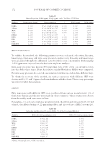
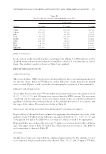
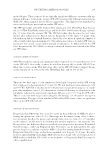
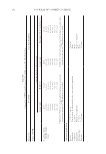
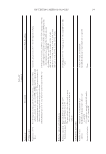
DIRECT ANALYSIS OF DIMETHICONE IN AQUEOUS EMULSIONS 213 for 1 h or until all the water evaporated. After cooling to room temperature, 5.0 mL of anhydrous ethanol was added and mixed well. The open jars were returned to the oven and heated again at 115°C to evaporate the ethanol and any remaining water by azeotropic evaporation. Following evaporation, the jars were cooled to room temperature and 25.00 mL of hexane was pipetted into each jar. The jars were then capped and sonicated for 1 min. After settling for 2 h, 15–20 mL of the upper solution was transferred to clean, capped vials and stored at room temperature until analyzed by FTIR in transmission mode. METHOD 2: FTIR-ATR Tw o different commerc ially available dimethicone emulsions were compared. Both DM 5102E and DM 5700E contained 50% dimethicone but different emulsifying surfactants. No differences were observed in the FTIR-ATR absorption spectra of these two different emulsions at any dilution. DM 5102E was used as the primary standard for calibration. After its concentration was verifi ed by Method 1 (transmission FTIR of the hexane ex- tract), portions of this DM 5102E emulsion were diluted by mixing with distilled water to prepare a series of secondary calibration standards in the range of 0–35.0% (g/100 g). These aqueous emulsion standards were analyzed directly by FTIR-ATR. Liquids from fi ve different retail skin-protection wipe products were squeezed from the wipes and ana- lyzed directly by FTIR-ATR without any further preparation. Dimethicone concentra- tions of each sample were calculated by comparing the integrated peak areas with the primary calibration standards. METHOD 3: FTIR-ATR ST ANDARD ADDITION Each of the retail sk in protection wipe products was analyzed again by Method 2 follow- ing standard addition. The primary standard was added to each sample, increasing its dimethicone concentration by 50%. After mixing to ensure homogeneity, each spiked sample was again analyzed directly by FTIR-ATR without any further preparation. The increased absorbance of each sample was used to calculate its original dimethicone con- centration, rather than the external calibration in Method 2. POTENTIAL INTERFERENC ES To examine potential matrix interference, a series of 3% dimethicone emulsions containing various surfactants and preservatives were prepared and analyzed. A 20% dimethicone emulsion was prepared by blending 200 g of pure dimethicone oil (Belsil® DM 350), 10 g of Tween 20, and 10 g of Tween 80. Then, 780 g of DI water was added slowly with vig- orous stirring at 80°C. The resulting mixture w as homogenized with a Silverson homogenizer for 10 min at medium speed. The resulting 20% stock solution was then mixed with deionized water and individual surfactants or preservatives at levels typically present in personal care products, such that the fi nal dimethicone of each sample was 3.00%. Triplicate samples of each surfactant and preservative were prepared and analyzed by all three methods.
Purchased for the exclusive use of nofirst nolast (unknown)
From: SCC Media Library & Resource Center (library.scconline.org)