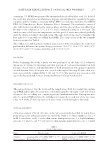
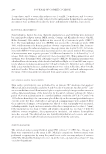
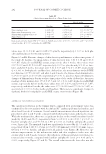
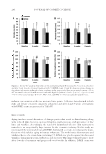
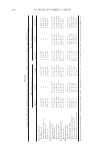
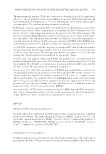
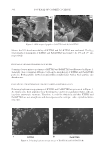
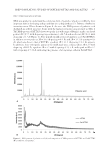
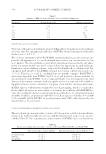
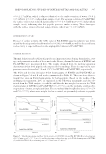
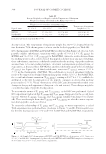
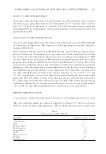
T able IV Collective Data Obtained in Both Male and Female Volunteers at Baseline and after 4 and 8 weeks of Treatment with DPKE Cream Male volunteers (=7) Female volunteers (=29) Baseline 4 weeks 8 weeks Baseline 4 weeks 8 weeks Clinical assessment: Roughness score 2.32 ± 0.83 — 1.86 ± 0.87* 1.72 ± 0.85 — 1.14 ± 0.51* Texture homogeneity score 2.07 ± 0.53 — 1.41 ± 0.63* 2.21 ± 0.75 — 1.59 ± 0.62** Pigmentation score 2.30 ± 0.74 — 2.08 ± 1.08 2.37 ± 0.99 — 1.83 ± 0.80* Redness score 1.81 ± 0.77 — 2.04 ± 0.78 2.10 ± 0.85 — 1.91 ± 0.96 Biophysical measurements: Skin hydration (AU) 43.00 ± 10.56 49.70 ± 9.83** 55.23 ± 9.63** 40.71 ± 9.60 53.74 ± 9.66** 50.93 ± 12.03** TEWL (g/m2/h) 11.75 ± 3.32 10.24 ± 1.57 10.12 ± 1.90 12.33 ± 3.10 10.48 ± 2.54* 10.02 ± 2.90** Skin elasticity (AU) 0.844 ± 0.088 0.910 ± 0.057 0.976 ± 0.113* 0.836 ± 0.093 0.890 ± 0.063* 0.930 ± 0.094** Skin fi rmness (AU) 0.270 ± 0.078 0.199 ± 0.047* 0.171 ± 0.061* 0.277 ± 0.084 0.236 ± 0.057* 0.218 ± 0.054** Skin melanin density (AU) 272.9 ± 21.8 250.6 ± 20.2 264.9 ± 27.3 273.5 ± 29.7 263.4 ± 28.9 254.1 ± 26.3* Erythema (AU) 176.9 ± 62.8 168.6 ± 66.4 155.5 ± 74.2 167.6 ± 60.3 158.9 ± 70.4 151.7 ± 68.4 Multispectral analysis: Wrinkle size (AU) 67.5 ± 19.5 44.0 ± 17.6 41.8 ± 15.9* 54.6 ± 22.1 46.5 ± 22.5 39.2 ± 23.1* Maximal depth (mm) 0.482 ± 0.117 0.315 ± 0.130 0.258 ± 0.157* 0.395 ± 0.194 0.323 ± 0.190 0.287 ± 0.225* Relative indentation index (%) 100.0 ± 18.1 84.9 ± 16.4 78.5 ± 17.5* 100.0 ± 17.8 81.3 ± 16.5** 80.8 ± 15.4*** Relative roughness index (%) 100.0 ± 15.5 82.5 ± 13.0* 74.4 ± 12.8** 100.0 ± 15.2 75.1 ± 15.7** 67.2 ± 13.9*** Relative melanin concentration (%) 100.0 ± 13.7 92.9 ± 14.4 86.7 ± 13.5 100.0 ± 20.6 87.3 ± 20.4* 85.8 ± 25.4* Data are presented as mean ± SD of seven male and 29 female subjects. Signifi cance levels: *p 0.05, **p 0.01, and ***p 0.001 versus baseline values (paired t JOURNAL OF COSMETIC SCIENCE 286

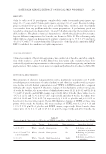
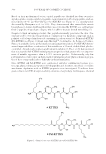
DATE PALM KERNEL EXTRACT ON FACIAL SKIN WRINKLES 287 cell turnover, resulting in grave disorganization of the dermal matrix (20). Accordingly, there is plenty of room to explain the essentials of mechanisms underlying the benefi ts of DPKE observed herein. We suggest that the anti–skin aging effect of DPKE is attributed, at least partially, to preservation of the dermal matrix through prevention of oxidative damage to cellular DNA. This assumption is based on data in the literature documenting the protective role of many antioxidants against the UV-induced oxidative damage to human skin (21). Likewise, researchers have found that date seed extract includes a myriad of polyphenols and tocopherols with robust antioxidant capabilities. Moreover, date kernel oil was reported to have higher oxidative stability than most vegetable oils, including olive oil (1). These observations have led to a series of studies to investigate the notable anti- oxidant and radical-scavenging properties of date kernel extract on human skin. Dammak et al. (22) have demonstrated that pretreatment with date seed oil signifi cantly amelio- rated the expression of p53 in human skin after exposure to UV irradiation by affording free-radical–scavenging properties. Date seed oil was also demonstrated to signifi cantly improve cell viability and reduce depletion of superoxide dismutase, glutathione peroxi- dase, catalase, and lipid peroxidation in cultured human melanocytes after hydrogen per- oxide exposure (23). The experiment was subsequently repeated on human keratinocytes with fi ndings analogous to those of the previous study (24). As both melanocytes and keratinocytes are implicated in the infl ammatory process of photoaging, we suggest that these fi ndings may explain some of the rejuvenative properties of DPKE. Previous studies have shown that date kernel extract contains a high fraction of hydroxy- tyrosol, one of the most powerful natural antioxidants. This compound has 10 times more antioxidants than green tea and two times more than coenzyme Q10 (25). The extraordi- nary scavenging activity of hydroxytyrosol has been demonstrated in several studies both in vivo and in vitro (26,27). In its chemical structure, this compound has an extra hydroxyl group in its benzene ring, granting it greater function as a free radical scavenger and in- creasing its effi cacy under stress conditions (25). In addition, hydroxytyrosol is an am- phipathic, water-soluble, and fat-soluble molecule which facilitates its penetration of cellular membranes and makes it a good transporter of substances across skin tissue (28). Studies have also shown that hydroxytyrosol has the ability to inhibit cyclooxygenase and lipoxygenase enzymes of arachidonic acid, reducing the oxidative corrosion characteristic of infl ammations, and stimulate the regeneration and repairing of damaged tissue (29). Alpha (α)-tocopherol, a type of vitamin E, is another component present in date kernel extract with signifi cant concentration (1) and is best known for its robust antioxidant function and good penetration into the human skin layers (30). α-tocopherol has been used in the treatment of burns, surgical scars, and variety of skin conditions (31). Topical formulations containing α-tocopherol have also been found to be effective in reducing infraorbital dark haloes and wrinkles of the lower eyelids (32), although in vitro studies revealed that α-tocopherol inhibits p53 expression in dermal tissues and protects against the UV irradiation of cultured fi broblasts (33). α-tocopherol is, therefore, one of the most shared ingredients in the over-the-counter treatments of skin aging. Phyt osterols and phytoestrogens are additional major phytochemicals found in the lipid soluble fraction of the DPKE. Phytoestrogens are a group of isofl avones that can bind both estrogen receptors ERα and ERβ (34), and they are considered to be naturally oc- curring selective estrogen receptor modulators and potential candidates to provide a nat- ural alternative of estrogen replacement in postmenopausal women. Studies have shown that these phytoestrogens have favorable effects on human skin as they can minimize
Purchased for the exclusive use of nofirst nolast (unknown)
From: SCC Media Library & Resource Center (library.scconline.org)