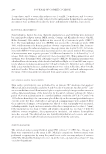
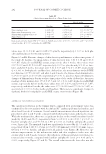
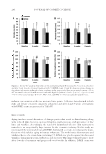
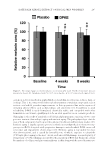
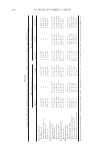
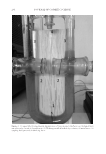
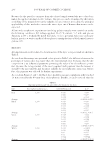
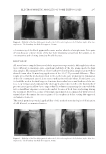
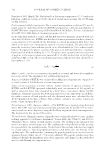
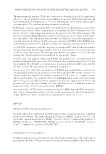
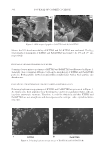
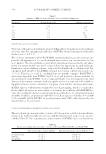
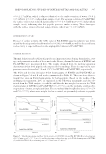
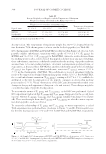
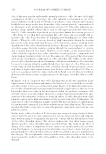
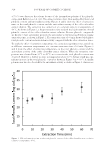
JOURNAL OF COSMETIC SCIENCE 284 melanin concentration at the two measured time points. Collective data obtained in both male and female volunteers separately at baseline and after 4 and 8 weeks of treatment with DPKE cream are presented in Table IV. DISCUSSION Aging involves several alterations of skin properties that resul t in skin thinning along with reduced skin elasticity, increased fragility, pigmentations, and appearance of fi ne lines and wrinkles. Accordingly, the search for natural and effective skin rejuvenation remedies is an exceptionally large interest for the cosmetics industry. In this study, we investigated the potential of topical DPKE, formulated as cream, in reducing the mani- festations of facial skin aging in human volunteers. The work herein demonstrates and validates the use of a cream form containing 5% DPKE over placebo against fi ne lines and wrinkles, skin pigmentations, hydration, and elasticity. This improvement began to show after 4 weeks of treatment and progressed over 8 weeks. In addition, DPKE cream was Figure 2. Antera 3D® ana l ysis of wrinkle size (A) and maximal depth (B) measured in 36 subjects at baseline and after 4 and 8 weeks of topical treatment with 5%DPKE cream. (C and D) show percentage changes in the relative indentation index and relative roughness index, respectively. Data are presented as mean ± SD in AU for wrinkle size and in millimeters for wrinkle depth. Signifi cance levels: *p 0.05, **p 0.01, and ***p 0.001 versus baseline. #p 0.05, ##p 0.01, and ###p 0.001 versus placebo (paired t-test).

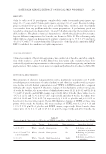
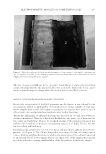
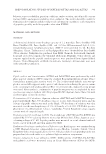
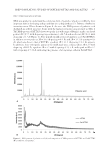
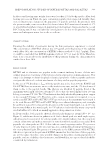
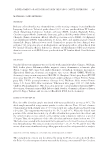
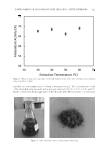
DATE PALM KERNEL EXTRACT ON FACIAL SKIN WRINKLES 285 extremely well tolerated when applied daily on facial skin (no irritation, redness, burn, or itching). This is in contrast with other topical treatments containing compounds such as retinoic acid which provides improvements in skin appearance but at the expense of irritating adverse effects such as skin redness and sensitivity (16). In addition to good tolerability, DPKE is easily formulated, chemically stable, and compatible with other formulation constituents, qualifying it to be an ideal agent for use in cosmetic products. Skin aging is the result of a multifaceted biological phenomenon consisting of two com- ponents: intrinsic (chronologic) aging and extrinsic aging. The pathophysiologic elucida- tion of both components has been well documented in clinical and histologic studies (17). Intrinsic aging is largely a genetic process in which increased production of reactive oxy- gen species (ROS) alongside with progressive damage to mitochondrial DNA causes cell senescence and impairment of skin repair (18). Extrinsic aging is responsible for most skin deteriorations, and is caused by several factors, of which, exposure to ultraviolet (UV) light (photoaging) is the most crucial, and causes DNA damage in a multiplicity of living tissue (19). Photodamage also involves the generation of ROS that breaks the cellular biosynthesis of collagen and glycosaminoglycans in skin along with decreased keratinocyte Figure 3. Percentage change s in relative melanin concentration after 4 and 8 weeks of treatment. Data are presented as mean ± SD. Signifi cance levels: *p 0.05 versus baseline. #p 0.05 versus placebo (paired t-test).
Purchased for the exclusive use of nofirst nolast (unknown)
From: SCC Media Library & Resource Center (library.scconline.org)