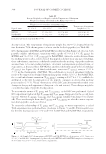
JOURNAL OF COSMETIC SCIENCE 288 UV-induced cell damage in cultured keratinocytes, improve skin elasticity, reduce pig- mentation and wrinkle depth, and increase the production of type 1 procollagen (35). Moreover, the isofl avone genistein has been reported to provide signifi cant protection against the UV-induced damage in human dermal fi broblasts by signifi cantly boosting the intracellular antioxidant armamentarium in a dose-dependent way (36). Taken to- gether, we suggest that the combination of various ingredients contained in DPKE might provide complementary mechanisms of modulating cellular pathways involved in the process of skin aging, and the effectiveness of these ingredients may be further potenti- ated by synergism of their individual components. FUNDIN G This research did not receive any specifi c grant from funding agencies in the public, com- mercial, or not-for-profi t sectors. REFERE NCES (1) I . A. Nehdi, H. M. Sbihi, C. P. Tan, U. Rashid, and S. I. Al-Resayes, Chemical composition of date palm (Phoenix dactylifera L.) seed oil from six Saudi Arabian cultivars, J. Food Sci., 83(3), 624–630 (2018) . (2) E. Bauza, C. Dal Farra, A. Berghi, G. Oberto, D. Peyronel, and N. Domloge, Date palm kernel extract exhibits antiaging properties and signifi cantly reduces skin wrinkles, Int. J. Tissue React., 24(4), 131– 136 (2002). (3) S. Meer, N. Akhtar, T. Mahmoud, and J. Igielska-Kalwat, Effi cacy of Phoenix dactylifera L. (Date Palm) creams on healthy skin, Cosmetics, 4, 13 (2017). (4) U. M. Thorkar and S. T. Hamde, Noninvasive measurement of skin biophysical parameters in normal, psoriasis, vitiligo affected skin. 2015 International Conference on Industrial Instrumentation and Con- trol (ICIC), Pune, India, May, 2015, 811–815. (5) M. P. Wakeman, An open-label forearm-controlled pilot study to assess the effect of a proprietary emol- lient formulation on objective parameters of skin function of eczema-prone individuals over 14 days, Clin. Cosmet. Investig. Dermatol., 10, 275–283 (2017). (6) S . F. Bish, M. Sharma, Y. Wang, N. J. Triesault, J. S. Reichenberg, J. X. Zhang, and J. W. Tunnell, Handheld Diffuse Refl ectance Spectral Imaging (DRSi) for in-vivo characterization of skin, Biomed. Opt. Express, 5(2), 573–586 (2014). (7) J . Laloš, M. Mrak, U. Pavlovčič, and M. Jezeršek, Handheld optical system for skin topography mea- surement using Fourier transform profi lometry, Stroj Vestn-J. Mech. Eng., 61(5), 285–291 (2015) . (8) C. Mes saraa, A. Metois, M. Walsh, S. Hurley, L. Doyle, A. Mansfi eld, C. O’Connor, and A. Mavon, Wrinkle and roughness measurement by the Antera 3D and its application for evaluation of cosmetic products. Skin Res. Technol., 24(3), 359–366 (2018). (9) S. Bjer regaard, C. Vermehren, I. Söderberg, and S. Frokjaer, Accelerated stability testing of a water-in- oil emulsion. J. Dispersion Sci. Technol., 22, 23–31 (2001). (10) J. M. L achapelle, A proposed relevance scoring system for positive allergic patch test reactions: practical implications and limitations, Contact Derm., 36, 39–43 (1997). (11) A. Tri v isonno, A. Rossi, M. Monti, D. Di Nunno, C. Desouches, C. Cannistra, and G. Toietta, Facial skin rejuvenation by autologous dermal microfat transfer in photoaged patients: clinical evaluation and skin surface digital profi lometry analysis. J. Plast. Reconstr. Aesthet. Surg., 70(8), 1118–1128 (2017). (12) E. A. H olm, H. C. Wulf, L. Thomassen, and G. B. Jemec, Instrumental assessment of atopic eczema: validation of transepidermal water loss, stratum corneum hydration, erythema, scaling, and edema, J. Am. Acad. Dermatol., 55(5), 772–780 (2006). (13) K. De P aepe, E. Houben, R. Adam, F. Wiesemann, and V. Rogiers, Validation of the VapoMeter, a closed unventilated chamber system to assess transepidermal water loss vs. the open chamber Tewameter®. Skin Res. Technol., 11(1), 61–69 (2005). (14) A. M. A l malty, S. H. Hamed, F. M. Al-Dabbak, and A. E. Shallan, Short-term and long-term effects of electrical stimulation on skin properties. Physiother. Res. Int., 18(3), 157–166 (2013).

DATE PALM KERNEL EXTRACT ON FACIAL SKIN WRINKLES 289 (15) C. Y. W r ight, A. E. Karsten, M. Wilkes, A. Singh, J. du Plessis, P. N. Albers, and P. A. Karsten, Diffuse refl ectance spectroscopy versus Mexameter(®) MX18 measurements of melanin and erythema in an African population. Photochem. Photobiol., 92, 632–636 (2016). (16) S. Mukhe r jee, A. Date, V. Patravale, H. C. Korting, A. Roeder, and G. Weindl, Retinoids in the treat- ment of skin aging: an overview of clinical effi cacy and safety. Clin. Interv. Aging, 1(4), 327–348 (2006). (17) H. Assaf , M. A. Adly, and M. R. Hussein, “Aging and Intrinsic Aging: Pathogenesis and Manifesta- tions,” in Textbook of Aging Skin, M. A. Farage, K. W. Miller, and H. I. Maibach. Eds. (Springer, Berlin, Heidelberg, 129–138, 2010). (18) A. K. Ba l in and L. A. Pratt, Physiological consequences of human skin aging, Cutis, 43(5), 431–436 (1989). (19) E. Mori, A. Takahashi, K. Kitagawa, S. Kakei, D. Tsujinaka, M. Unno, S. Nishikawa, K. Ohnishi, M. Hatoko, N. Murata, M. Watanabe, Y. Furusawa, and T. Ohnishi, Time course and spacial distribution of UV effects on human skin in organ culture. J. Radiat. Res., 49, 269–277 (2008). (20) H. Tanaka , T. Okada, H. Konishi, and T. Tsuji, The effect of reactive oxygen species on the biosynthesis of collagen and glycosaminoglycans in cultured human dermal fi broblasts, Arch. Dermatol. Res., 285(6), 352–355 (1993). (21) B. Poljs a k, R. Dahmane, and A. Godic, Skin and antioxidants, J. Cosmet. Laser Ther., 15, 107–113 (2013). (22) I. Damma k , S. Boudaya, F. Ben Abdallah, H. Turki, and H. Attia, Effect of date seed oil on p53 expres- sion in normal human skin, Connect. Tissue Res., 51, 55–58 (2010). (23) I. Dammak , S. Boudaya, F. B. Abdallah, T. Hamida, and H. Attia, Date seed oil inhibits hydrogen peroxide-induced oxidative stress in normal human epidermal melanocytes, Connect. Tissue Res., 50, 330–335 (2009). (24) D. Ines, B. Sonia, B. A. Fatma, B. Souhail, A. Hamadi, T. Hamida, and H. Basma, Date seed oil inhib- its hydrogen peroxide-induced oxidative stress in human epidermal keratinocytes, Int. J. Dermatol., 49, 262–268 (2010). (25) L. Martí n ez, G. Ros, and G. Nieto, Hydroxytyrosol. Health benefi ts and use as functional ingredient in meat, Medicines (Basel), 5(1), 13 (2018). (26) E . Merra, G. Calzaretti, A. Bobba, M. M. Storelli, and E. Casalino. Antioxidant role of hydroxytyrosol on oxidative stress in cadmium-intoxicated rats: different effect in spleen and testes, Drug Chem. Toxicol., 37, 420–426 (2014). ( 27) S. Schaffe r, W. E. Müller, and G. P. Eckert, Cytoprotective effects of olive mill wastewater extract and its main constituent hydroxytyrosol in PC12 cells, Pharm. Res., 62, 322–327 (2010). (28) J. G. Fern á ndez-Bolaños, O. López, M. A. López-García, and A. Marset, “Olive Oil—Constituents, Quality, Health Properties and Bioconversions,” in Biological Properties of Hydroxytyrosol and Its Derivates, Chapter 20 (InTech, London, UK, 2012), pp. 375–398. (29) S. Silva, B. Se p odes, J. Rocha, R. Direito, A. Fernandes, D. Brites, M. Freitas, E. Fernandes, M. R. Bronze, and M. E. Figueira, Protective effects of hydroxytyrosol-supplemented refi ned olive oil in ani- mal models of acute infl ammation and rheumatoid arthritis, J. Nutr. Biochem., 26(4), 360–368 (2015). (30) J. J. T hiele and S. Ekanayake-Mudiyanselage, Vitamin E in human skin: organ-specifi c physiology and considerations for its use in dermatology, Mol. Asp. Med., 28(5–6), 646–667 (2007). (31) A. Chiu and A. B . Kimball, Topical vitamins, minerals and botanical ingredients as modulators of en- vironmental and chronological skin damage, Br. J. Dermatol., 149(4), 681–691 (2003). (32) T. Mitsu ishi, T. Shimoda, Y. Mitsui, Y. Kuriyama, and S. Kawana, The effects of topical application of phytonadione, retinol and vitamins C and E on infraorbital dark circles and wrinkles of the lower eye- lids, J. Cosmet. Dermatol., 3(2), 73–75 (2004). (33) G. F. Vile, A. T anew-Liitschew, and R. M. Tyrrell, Activation of NFkappaB in human skin fi broblasts by the oxidative stress generated by UVA radiation, Photochem. Photobiol., 62, 463–468 (1995). (34) C. S. Hwang, H. S. Kwak, H. J. Lim, S. H. Lee, Y. S. Kang, T. B. Choe, H. G. Hur, and K. O. Han, Isofl avone metabolites and their in vitro dual functions: they can act as an estrogenic agonist or antago- nist depending on the estrogen concentration, J. Steroid Biochem. Mol. Biol., 101(4–5), 246–253 (2006). (35) M. J. Thornton, Estrogens and aging skin, Dermatoendocrinology, 5(2), 264–270 (2013). (36) Y. N. Wa ng, W. W u, H. C. Chen, and H. Fang, Genistein protects against UVB-induced senescence- like characteristics in human dermal fi broblast by p66Shc down-regulation, J. Dermatol. Sci., 58(1), 19–27 (2010).
Purchased for the exclusive use of nofirst nolast (unknown)
From: SCC Media Library & Resource Center (library.scconline.org)