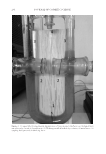
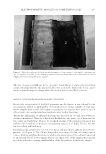
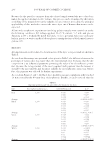
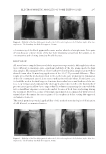
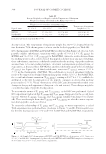
J. Cosmet. Sci., 70, 291–298 (November/December 2019) 291 Electrophoretic Mobility of Some Tattoo Dyes as an Approach to Remove Their Subcutaneous Traces IGOR WINKLER, ULYANA ANDRUSHKO, and ALLA VELYKA , Bucovinian State Medical University, Chernivtsi 58000, Ukraine (I.W., A.V.), Yuriy Fedkovych National University of Chernivtsi, Chernivtsi 58012, Ukraine (U.A.) Accepted for publication September 13, 2019 . Synopsis The electrokinetic (ζ, zeta) potential was determined for a series of commercial tattoo pigments. A standard experimental method involving the measuring of the level difference formed in a U-shaped tube fi lled with a solution containing the dye after application of some potential difference was used to fi nd ζ-potential values. All of them were negative and suffi ciently large to ensure electrophoretic mobility of the pigment particles in a special gelatin-based electrophoretic bed. Gelatin-based beds, one containing a pigment and the other without the pigment, were set side by side in a microelectrophoretic cell. The application of relatively low potential difference (20–25 V) provoked the migration of the pigment in the gelatin bed without pigment for as much as 10 mm after a 40-minute long electrophoresis. The intensity of the color of the pigment did decrease noticeably. These results seem to indicate the potential applicability of the reported method for the elimination of old and/or unwanted tattoo and of tattoo traces left after previous manipulations. I N TRODUCTION A s tattooing becomes very popular all over the world, the necessity to remove old, no longer needed, blurred, deformed tattoo pictures is becoming more and more widespread too. Although “temporal” tattoo can be removed without any serious troubles, classical subepidermal patterns are very tenacious and sometimes require more time and effort to eliminate than was spent on their preparation. T here is a wide variety of approaches that can be used to remove or discolor the classical tattoo. They range from the simple mechanical scraping of skin layers together with the pigment particles fi xed in them (1) to more advanced laser destruction (discoloration) of the pigment inside the patient’s skin (1–3). It should be noted that all these approaches are more or less traumatic and may leave traces in the form of scars, hypo/hyperpigmenta- tion of the skin, and changes in the skin texture and may provoke its contamination or Address all correspondence to Igor Winkler at winkler@bsmu.edu.ua.
Purchased for the exclusive use of nofirst nolast (unknown)
From: SCC Media Library & Resource Center (library.scconline.org)