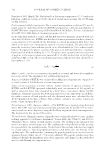
JOURNAL OF COSMETIC SCIENCE 302 Panalytical B.V, Almelo,The Netherlands) at laboratory temperature (25°C) under the following conditions: voltage of 40 kV, current of 40 mA, and scan range of 1–80 2θ using Cu Kα radiation. Partitioning and solubility investigation. The n-octanol/water partition coeffi cient ( w Po) was ob- tained using the shake fl ask method for KTTKS and partition coeffi cient and solubility of Pal-KTTKS were computed using ACD/ChemSketch (ACD/Labs, Toronto, Canada) and ALOGPS (VCC-LAB, Munich, Germany) programs (10–12). In the shake fl ask method, n-octanol and distilled water were mutually saturated with each other for 24 h before use. KTTKS was dissolved in water presaturated with n-octanol at a concentration of 200 μg/mL. In the following, n-octanol, presaturated with water, was added to the glass vials containing the aqueous solution of peptide. The glass vials were mixed by vortex for 2 min and then placed on an orbital shaker for 1 h to achieve equili- bration. To separate the phases, contents of the glass vials were transferred to a separation funnel and left without shaking for 0.5 h. The phases were separated and concentrations of peptide in the aqueous phase were measured by LC–MS, as described in the Peptide assay by LC-MS section. The n-octanol/water partition coeffi cient was then calculated us- ing equation 1 (13): o logP log , o w w C C (1) where Co a nd Cw are the concentrations of peptide in n-octanol and water after equilibra- tion, respectively. The experiment was performed in triplicate. Aqueous solubil ity of KTTKS was estimated by adding increasing amounts of peptide to a certain volume of distilled water at room temperature. Surface tension measurement of peptide solutions. Surface tension s of aqueous solutions of KTTKS and Pal-KTTKS (prepared individually with concentrations of 100 μg/mL) as well as deionized water were measured by a K100 Force tensiometer (Krüss GmbH, Hamburg, Germany) using the Du Noüy ring method at room temperature. In addition, the surface tensions of both peptides and also deionized water were calculated by the ACD/ChemSketch freeware software. This software calculates the surface tension via molar volume and parachor (14). Determination of C MC. Aqueous solution o f Pal-KTTKS was prepared using deionized water. The CMC value was then measured fully automatically by the K100 Force tensi- ometer (with one micro dispenser) using the Du Noüy ring method at room temperature. The measurement was repeated three times. Thermal behavior. Th ermal behaviors of peptides were evaluated by IA9000 series capillary melting apparatus (Cole-Parmer Instrument, Vernon Hills, IL), TGA-50, and DSC-60 (Shimadzu, Kyoto, Japan) thermal analysis systems. The melting point apparatus was used to determine the melting points. The capillary tube was packed by gently pressing the open end into the peptide powders. The bottom of the capillary tube was then tapped on a hard surface so that the peptide powders packed down into the bottom of the capillary tube. The capillary tubes containing the peptide powder were inserted into the apparatus holder. Ramp rate of 5°C/min was adjusted. The peptide powders were then examined through the magnifying glass of the apparatus, and changes in the powder bed were recorded during the temperature rise.

PREFORMULATION STUDIES OF PEPTIDES KTTKS AND PAL-KTTKS 303 Thermogravimetric ana lysis (TGA) was conducted to determine peptide decomposition. About 4–5 mg of peptide powder was weighed into an open TGA aluminum pan and heated from ambient temperature to 595°C at a heating rate of 10°C/min under a nitro- gen atmosphere. The experiment was performed in triplicate. Differential scanning c alorimetry (DSC) was performed for determination of peptides’ thermal characteristics. First, using indium as a standard, the DSC instrument was cali- brated. About 3–5 mg of peptide powder was then put into the DSC aluminum pan. The pan was sealed and thermal behavior studied at a heating rate of 10°C/min under a nitro- gen atmosphere. The experiment was performed in triplicate. In another experiment, a cycled heating method was used. First, the pans containing KTTKS or Pal-KTTKS were individually heated to 100°C, and after cooling, the same pans were reheated to 165°C. Cycled TGA experiments wer e also used here to interpret DSC data. In this experiment, the pan containing peptide was heated to 100°C at a heating rate of 5°C/min and then cooled to room temperature. The same pan was then heated again to 100°C at the same heating rate. Thermogram was then analyzed for any weight change. Stability studies. An aqueous solution of KTTKS was prepared at a concentration of 100 μg/mL and aliquoted into glass vials. The vials were then studied separately at 32°C in a water bath for 48 h. Peptide concentration was then measured by LC–MS, as described in the later section. The experiment was performed in triplicate. Peptide assay by LC-MS. The con centration of KTTKS was quantifi ed by a selected ion chromatogram method using an Agilent 6410 Triple Quad LC/MS system under the fol- lowing conditions: Capital C8-Optimal column (250 × 4.6 mm, i.e., 5 μm), isocratic elution, mobile phase of acetonitrile (40%): 20 mM ammonium acetate solution contain- ing 0.05% acetic acid glacial (60%), nitrogen dry gas at a temperature of 300°C and pressure of 25 psi, injection volume of 25 μL, and fl ow rate of 0.6 mL/min. A mass to charge (m/z) ratio of 564.2 was used to detect KTTKS. Statistical analysis. SPSS Statisti cs software version 21 .0 (IBM, Armonk, NY) was used for data analysis. Independent sample t-test was used to determine the statistical significance of data. Differences were considered to be significant for values of p 0.05. RESULTS PEPTIDE SYNTHESIS AND CHARACT ERIZATIO N Peptides, which were synthesized by S PPS using the Fmoc methodology, were confi rmed by mass spectrometry. The singly charged molecular ion [M+H]+ at an m/z of 564.2 and the doubly charged molecular ion [M+H]2+ at an m/z of 282.7 confi rmed the synthesis of KTTKS. In the case of Pal-KTTKS, [M+H]+ at an m/z of 802.3 and [M+H]2+ at an m/z of 401.7 confi rmed the synthesis of Pal-KTTKS. DETERMINATION OF UV ABSORBANCE Findin g an appropriate assay method t o quantify a drug candidate is an important step in preformulation studies. UV spectroscopy is a simple and widely available analytical method.
Purchased for the exclusive use of nofirst nolast (unknown)
From: SCC Media Library & Resource Center (library.scconline.org)