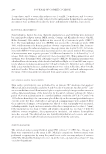
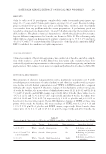
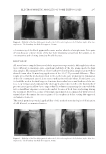
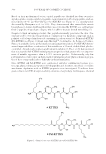
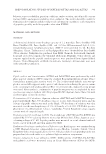
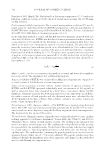
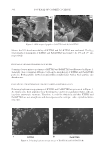
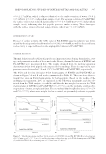
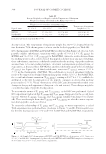
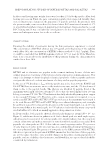
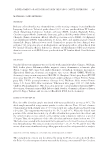
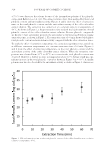
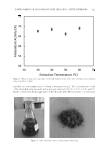
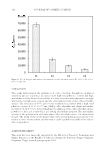
JOURNAL OF COSMETIC SCIENCE 304 Hence, the UV absorbance ability of KTTKS and Pal-KTTKS was evaluated. The λmax (wavelength of maximum) of KTTKS and Pal-KTTKS was found to be 193 and 195 nm, respectively. EVALUATION OF PARTICLE MORPHOLOGY BY S EM Scanning electron microscope images of KTTKS and Pal-KTTKS are illustrated in Figure 2. Generally, there is minimal difference between the morphology of KTTKS and Pal-KTTKS particles. Both peptides showed irregular fl ake morphologies with a wide particle size distribution. EVALUATIONS OF BIREFRINGENCE UNDER POL A RIZED LIGHT MICROSCOPY Polarizing light microscopy images of KTTKS and Pal-KTTKS are presented in Figure 3. As clearly seen, both peptides show birefringence under cross-polarized light, indicat- ing their anisotropic structure. Therefore, it could be defi nitely said that KTTKS and Pal-KTTKS are not amorphous and do not possess the isotropic cubic crystalline lattice structure. Figure 3. Polarizing ligh t microscopy images of KTTKS (A) and Pal-KTTKS (B). Figure 2. SEM images of p eptides: (A) KTTKS and (B) Pal-KTTKS.

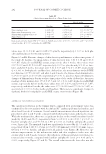
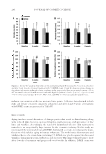
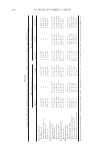
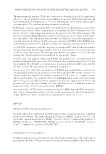
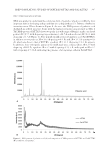
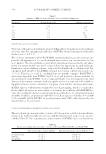
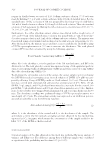
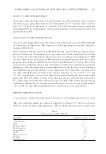
PREFORMULATION STUDIES OF PEPTIDES KTTKS AND PAL-KTTKS 305 STRUCTURE EVALUATION BY XRD XRD was ap p lied to understand the soli d-state form of peptides, which is possibly the most important state in developing a drug candidate into a drug product (15). Patterns of refl ection intensity versus 2θ are shown in Figure 4. As seen, the XRD pattern of palmitic acid displayed an ordered structure. Peaks with the highest intensities are presented in Table I. The XRD pattern of KTTKS shows two peaks in a wide range of Bragg’s angles: one broad peak at 2θ = 19.5 with d-spacing (repeat distance) of 8.7 Å and another at 2θ = 10.1 with d-spacing of 4.5 Å (Figure 4). After peptide modifi cation with palmitic acid (Pal-KTTKS), in addition to two peaks at 2θ = 10.6 (d-spacing = 8.3 Å) and 2θ = 19.1 (d-spacing = 4.6 Å), which are close to that of KTTKS, a peak at 2θ = 21.3 (d-spacing = 4.1 Å) appears. In addition, three other peaks appear in the small angle area: a sharp peak at 2θ = 2.0 with d-spacing of 44.2 Å, a peak at 2θ = 6.5 with d-spacing of 13.6 Å, and a peak at 2θ = 9.5 with d-spacing of 9.34 Å, indicating the presence of a long-range order in Pal-KTTKS. Figure 4. XRD pattern of p a lmitic acid (A) and comparison of XRD patterns of KTTKS and Pal-KTTKS (B) at ambient temperature.
Purchased for the exclusive use of nofirst nolast (unknown)
From: SCC Media Library & Resource Center (library.scconline.org)