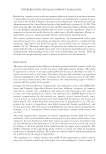
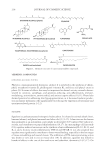
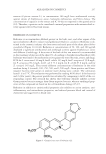
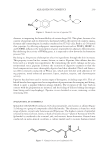
JOURNAL OF COSMETIC SCIENCE 238 Berberine frui t masks are used to treat acne vulgaris as well as skin hyperpigmentation. Seki and Morohashi (48) noted that lipogenesis in the hamster sebaceous glands was sup- pressed 63% by 10-4 M berberine. They suggest that this alkaloid can be used for acne vulgaris because of inhibition of lipogenesis. Anti-infl ammato ry properties are associated with the process of inhibiting the activity of pro-infl ammatory lipoxygenase enzyme causing skin diseases (49,50). Kuo et al. (51) used cancer cell to evaluate anti-infl ammatory properties of berberine. In ca ncer cell line OC2 and KB cells, a 12-h berberine treatment (1, 10, and 100 mM) reduced prostaglan- din E2 production dose dependently with or without 12-O-tetradecanoylpho rbol- 13-acetate (TPA, 10 nM) induction. This berberine-induced effect occurred rapidly (3 h) as a result of reduced COX-2 protein. Further analysis showed that berberine inhibited activator protein 1 binding directly. Despite the evi denced potentiality of berberine in the treatment of skin diseases, its topical application is limited because of its high hydrophilicity, the approximate log p value of -1.5 hinder its delivery across the skin layers (44). According to Torky (52), to increase its dermal bioavailability, berberine can be formulated with sodium oleate as a compl exing agent. This complex displays about 250-fold higher saturation solubility in n-octanol, endorsing the improved lipid solubility of the complex compared with free alkaloid (52). They are a rich source of antioxidants. Zovko Koncic et al. (53 ) studied the antioxidant activities of the ethanolic extracts of roots, twigs, and leaves of Berberis vulgaris L. and Berberis croatica Horvat. For preparation of extracts, powdered herbal material (10 g) was extracted with 96% ethanol (50 mL) in ultrasonication bath at 45°C for 45 min. They noted that all the extracts were found to possess some radical-scavenging and antioxidant activities, as determined by the scavenging effect on the 2,2-diphenyl-1-picrylhydrazyl fre e radical, reducing power and β-carotene–linoleic acid model system. Toxicity of berberi ne depends on the route of administration and experimental animal species. The LD50 value of powdered root Berberis vulgaris is 2,600 mg/kg in mice on oral administration. On oral administration of root extract fraction of B. vulgaris, the LD50 values are 1,280 and 520 mg/kg in rat and mice, respectively. In mice, the LD50 values of pure berberine on intraperitoneal (IP) and oral administration are 23 and 329 mg/kg, respectively. Berberine sulfate isolated from Berberis aristata on IP administration in rats has LD50 value equal to 205 mg/kg (54). PIPERINE IN COSMETI CS Piperine (1-[5-(1,3 -benzodioxo-5-yl)-1-o xo-2,4-pentadienyl] piperidine) belongs to the group of piperidine alkaloids (Figure 4). Piperine can be obtained from black pepper (Piper nigrum L.). Black pepper contains approx. 2–3% of volatile oils (55) and about 5–9% of alkaloids such as piperine, piperidine, peperitin, and a who le range of other similar substances (56). The process of piperine isolation consists in the extraction of oleoresin from ground pepper with supercritical fl uid and then crystallization with etha- nol. This alkaloid can also be obtained by methods such as maceration, Soxhlet extrac- tion, or hydrotropic solubilization (57). Black pepper has a variety of physiological properties, ranging from stimulation of pan- creatic digestive enzymes, through anti-infl ammatory effects in many autoimmune

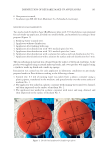
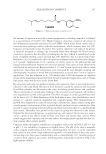
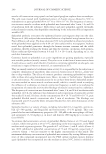
ALKALOIDS IN COSMETICS 239 diseases, to improving the bioavailability of certain drugs (58). This plant, because of its content of piperine and its derivatives, has found itself in the interest of cosmetic manu- facturers and cosmetologists. In studies conducted on 3T3-L1 cells, Park et al. (59) noted that, piperine, by affecting adipogenic transcription factors such as PPARγ, SREBP-1c, and C/EBPβ, infl uences the transcription of genes responsible for adipocyte differentiation. By inhibiting the activity of PPARγ genes, it is expected to slow down the fat formation process (59). By doing so, the proce ss of absorption of active ingredients through the skin increases. This property is used in face creams, lotions, or tonics. Piperine, like caffeine, has also been used as a weight loss supplement. By stimulating the nerve endings in the gas- trointestinal tract, piperine activates the secretion of digestive enzymes so that the food components are more thoroughly digested and thus absorbed. Platel and Sriniva- san (60) in research conducted on Wistar rats, which were fed diet with addition of 10 mg piperine, noted enhanced pancreatic lipase, amylase, trypsin, and chymotrypsin activity. Piperine has also been used in various types of detergents, including soaps (61). This al- kaloid has also been appreciated as an ingredient of preparations discouraging nail biting, which is quite a popular behavior among children. The receptors of the taste buds in contact with the preparation are irritated, and the feeling of delicate baking discourages from biting nails (onychophagy). Piperine is not classifi ed as acute, irritating, or skin sensitizing (62). SPILANTHOL IN COSMETIC S Spilanthol ((2E,6Z,8E) - N-isobutyl- 2,6,8-d ecatrienamide), also known as affi nin (Figure 5), belongs to a group of compounds called alkylamides. The substance is found in a wide range of plants, in particular Asteraceae and Piperace ae. The highest content of spilanthol is found in extracts of root, leaves, or buds of Acmella oleracea—plant of Asteraceae (63,64). Spi lanthol is considere d to be a natural, safe, and nontoxic botox alternative. Research was conducted on nerve–muscle coculture, a culture model used to recreate human striated Figure 4. Chemical structure of piperine (50). Figure 5. Chemical structure of spilanthol (59).
Purchased for the exclusive use of nofirst nolast (unknown)
From: SCC Media Library & Resource Center (library.scconline.org)