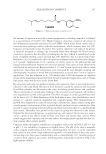
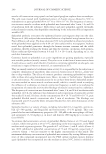
JOURNAL OF COSMETIC SCIENCE 236 According to research conducted on Sprague–Dawley rats by Joo et al. (36), capsaicin prevents the transcription of protein genes that intensify the process of adipogenesis, in other words, accumulation of white adipose tissue. In this study, rats were divided into the normal control group, the high-fat group with capsaicin, and the high-fat group without capsaicin. This alkaloid was administered in dose 10 mg/kg BW by oral injec- tions. During the proteomic ana lysis of white adipose tissue, 37 proteins were detected and identifi ed wh ose expression was modulated in response to high-fat diet. Joo et al. (36) showed that under the infl uence of dietary capsaicin, the amount of mRNA of the key white adipose tissue transcription factors, PPARγ and C/EBPR, decreased signifi cantly. The weight difference at the beginning and at the end of the study for control group was 240 g, for the high-fat group without capsaicin was 313 g, and for high-fat group with capsaicin was 285 g (36). Capsaicin also contributes to the regulation of transcription of genes responsible for the production of enzymes that catalyze the hydrogenation of fats. In Lee et al. (37) studies conducted on the mouse 3T3-L1 cell line, fully differentiated adipocytes were treated with 0.1, 1, or 10 μmol/L capsaicin for 24 h. The intracellular lipid content was decreased in a dose-dependent manner in the presence of 0.1, 1, or 10 μmol/L capsaicin, by 3.2%, 6.9%, and 14%, respectively. The TG content of cells was also decreased by 15%, 21%, and 33%. Treatment with capsaicin resulted in a decrease in the intercellular lipid content and an increase in the amount of glycerol released into the medium, an indicator of the stimulation of lipolysis. Capsaicin is involved in the breakdown of fat in rodent adipocytes, and also increases the catabolism of intracellular fats (37). These processes are controlled by regulat- ing the expression of genes encoding proteins involved in catabolic lipid processes. Research on laboratory animals applies to humans therefore, it can be assumed that the mechanisms that occur in animals will be the same as in humans. Each of these processes leads to a de- crease in the amount of body fat, which can be a method of fi ghting cellulite. C apsaicin also has antioxidant properties that consist in reducing the intensity of lipid peroxidation processes. As an example, scientists cite delayed LDL lipoprotein oxidation (38). Serum lipid oxidation was examined by incubation of human serum with increasing concentrations (0.1, 0.5, 0.7, 1, 2, and 3 μM) of capsaicin, dihy drocapsaicin, and sub- jected to copper (100 μM)-induced oxidation. Copper-induced oxidation of serum was undertaken using the method described by Schnitzer et al. (39). At a concentration of 0.7 μM, the rate of oxidation was reduced by 42 and 45% for capsaicin and dihydro capsaicin, respectively (40). Delaying the lipid oxidation process can be of great importance when extending the shelf life of cosmetics containing a high fat content. Capsai cin has been shown to maintain the durability of various artifi cial materials, e.g., polyethylene—one of the most popular component cosmetic packaging. Capsaicin blocks the production of oxygen-free radicals and hydroxide anions, even in the presence of γ waves that activate their formation (41). The evident increase in the oxidation induction time (OIT) is the proof of the effi cient antioxidant effi ciency of capsaicin. The presence of capsaicin in low-density polyethylene (LDPE) brings about the delay in the OIT values by 1.6 times relative to neat polymer. The oxidation times of 150 and 260 min represent the values of 10 times longer for LDPE stabilized with capsaicin than for pure LDPE re- ceived irradiation dose of 30 kGy (41). Publishe d research shows that a plant extract with high capsaicin content has the effect of inhibiting the growth of some bacterial cultures. Both alcoholic and aqueous paprika

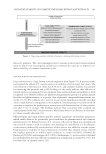
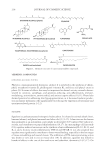
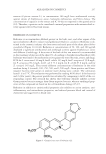
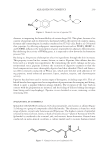
ALKALOIDS IN COSMETICS 237 extracts (Capsicum annuum L.) in concentration 100 mg/L have antibacterial activity against strains of Staphylococcus aureus, Salmonella typhimurium, and Vibrio cholerae. The concentration of capsaicin in the extract and IC 50 was not reported in the quoted article (42). Therefore, capsaicin can be considered a natural preparation with antimicrobial ac- tivity against selected bacterial strains. BERBERIN E IN COSMETICS Berberin e is an isoquinoline alkaloid present in the bark, root, and other organs of the species barberries (Berberis vulgaris) and goldenseal (Hydrastis canadensis). Berberine is ob- tained in the cosmetic industry also from roots and aerial parts of the abuta plant (Abuta grandifolia) (Figure 3) (43,44). Berberine at concentrations of 50, 100, and 200 μg/mL displayed a signifi cant antibacterial and antifungal activity against Staphylococcus aureus and different Candida spp. A decoction of the bark of this raw material is recommended in the treatment of mycosis of the skin (45). According to Cernáková and Kostálová (46), berberine was found to be moderately active against the tested bacteria, yeasts, and fungi. IC50 for S. aureus was 14.6 mg/L, for B. subtilis 143 mg/L, for P. aeruginosa S 39.8 mg/L, for P. aeruginosa 99.2 mg/L, for E. coli S 73.2 mg/L, for E. coli R 87.0 mg/L, and for Z. ramigera 145 mg/L. They tested different concentrations of berberine in the solid medium being 0 (control), 100, 250, 500, and 1,500 mg/L. Gram-positive and Gram- negative bacteria were grown in peptone water during static culture. The cultivation lasted 1 d at 37°C. The evaluation was performed by reading A630 after 1 d (for bacteria) and 2 d (for yeasts) the percent growth was calculated by comparing to A630 of the cor- responding control. The research has shown that berberine chloride inhibits activity Gram-positive bacteria stronger than Gram-negative bacteria, whereas antifungal prop- erties of this compound are based on the cell membrane damage (45,47). Berberine in a ddition to antimicrobial properties also exhibits on action anodyne, anti- infl ammatory, and antioxidative properties, and reduced pressure blood and control of cholesterol and sugar level in blood (44). Figure 3. Chemical structure of berberine (42).
Purchased for the exclusive use of nofirst nolast (unknown)
From: SCC Media Library & Resource Center (library.scconline.org)