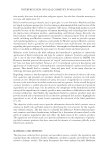
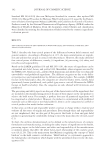
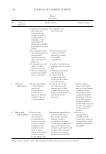
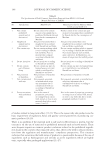
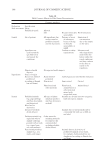
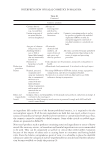
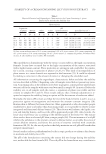
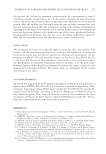
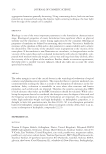
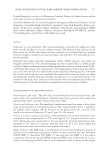
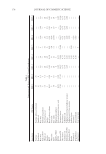
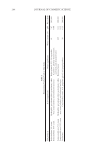
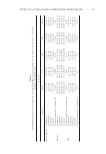
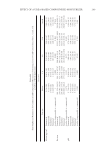
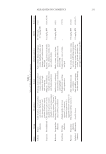
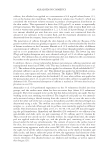
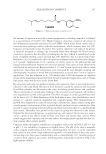
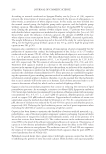
JOURNAL OF COSMETIC SCIENCE 142 Standard MS 2634:2019 (the new Malaysian Standard for cosmetic that replaced MS 2200) (16), Manual Procedure for Malaysia Halal Certifi cation (10) issued by the Depart- ment of Islamic Development Malaysia (JAKIM), and Guidelines for Control of Cosmetic Products issued by the National Pharmaceutical Regulatory Agency (NPRA) under the Ministry of Health of Malaysia. From the documents, related themes and classifi cation were identifi ed in assisting the determination of halal status for the cosmetic ingredients’ evaluation process. RESULTS THE CRITICAL POINTS OF THE DIFFERENCES BETWEEN HALAL AND GENERAL COSMETICS AND THEIR CLASSIFICATIONS Table I describes the four critical points of the differences between halal cosmetic and general cosmetic. According to Pandagel et al. (17), the main control points are ingredi- ents and utilities that are put in contact with the products. However, this study identifi ed four critical points of differences, namely, (i) ingredient, (ii) processing, (iii) safety, and (iv) ethics and responsibility. Based on the JAKIM guideline (10) and MS 2634 (16), the source of ingredients can be categorized into halal, haram, and syubhah (18). Meanwhile, other categories are used by the NPRA (19), which are safe—allowed with limitations and allowed due to technically unavoidable—and prohibited ingredients . The different categories are due to the differ- ent perspectives and responsibilities by different authority bodies. For example, JAKIM focuses on the halal aspect thus, the categories are closed to Islamic terms, namely, halal (permitted), haram (prohibited), and syubhah (gray area or critical). However the NPRA focuses on health and safety thus, the categories are safe, allowed with limitations, and prohibited. The processing and safety aspects are also part of the characteristics of the ingredients that are included in the manufacturing protocol because of their impact on the end product to achieve the halal status. For example, a product that uses all permitted ingredients will be categorized as a halal product. However, if a product is contaminated with prohibited materials such as fi lth (najs) or non-halal additive, then it can be categorized as syubhah or critical product that needs further evaluation. In that sense, an ethical and responsible worker or person in charge needs to examine and evaluate all the source of origins and procedures. Even though ethics and responsibility are not emphasized, they are also part of the process that leads to clean and pure halal product in generating the comfortable feeling to meet the main objective of halal–tayyib (11). In short, the utilities aforementioned can be defi ned as the related process of cosmetic formulation and manufacturing, including the safety impact of ingredients to the health, processing impact to the halal status, and ethics and responsibility of the manufacturers or industry players that affect the whole halal–tayyib relationship of the cosmetic prod- ucts (10,11,16). This is the main reason that Malaysia is applying the concept of “halal built-in” in the halal cosmetic certifi cation. “Halal built-in” is a systematic approach to the halal product development which begins with the predefi ned objectives by the man- agement (16).

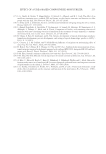
INTERPRETATION OF HALAL COSMETICS IN MALAYSIA 143 Table I The Critical Point of Difference between Halal Cosmetic and General Cosmetic No Point of differences Halal cosmetic General cosmetic 1 Referred document 10 16 18 2 Defi nition There is no signifi cant difference between general cosmetics and halal cosmetics, except for the specifi cation mentioned by MS 2634 and JAKIM as described in items (three to six). However, there are two important items in the defi nition, namely, the function of cosmetic and the places and areas where the cosmetics are used. --In contact with part of body Cosmetic and personal care means any substance or preparation intended to be placed in contact with various external parts of the human body (including epidermis, hair system, nails, lips, and external genital organs) or with teeth and the mucous membranes of the oral cavity --Function Mainly to cleaning the external parts of the human body, perfuming them, changing their appearance or correcting body odours, and protecting them or keeping them in good condition 3 Ingredients This document presented six requirements of raw materials, ingredients, and processing aid. Section 4.0 elaborated that halal cosmetics are cosmetic products that contain ingredients permitted under the Shariah law and fatwa and fulfi ll the seven stated conditions (having a clear status of halal and haram because of the clear statement in the Quran). This document listed seven prohibited substances and the traces of substances that are allowed because of the presence that is technically unavoidable in GMP. It conforms to the safety requirements. --Allowed with limitation No specifi c section related to this topic. Section 4.2 elaborated that the materials or ingredients used in the halal cosmetics further explained the allowed ingredients mentioned in the Quran that have consensus due to the status of halal and haram. For examples: This document listed substances and other ingredients that are allowed to be used within the limits and stated the conditions such as coloring agents, preservatives, and UV fi lters. (i) cosmetic originated from GMOs or GMOs by the product or ingredients made by manipulating the genetic material of animals that are non-halal by Shariah law and fatwa, and (ii) animal (and plant) toxins or poisons are permitted after the elimination or removal during the processing (as permitted by Shariah law). 4 Processing of ingredients Five items identifi ed may affect the halal recognition and halal status, namely Five items identifi ed may affect the halal recognition and the halal status, namely No specifi c section but the overall procedure for cosmetic products must comply with the GMP requirements. (i) Production record that is consistently updated, (i) Hygiene, sanitation, and safety in the manufacturing and handling of halal cosmetics,
Purchased for the exclusive use of nofirst nolast (unknown)
From: SCC Media Library & Resource Center (library.scconline.org)