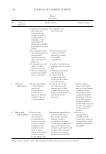
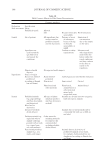
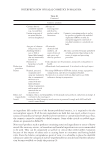
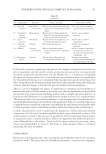
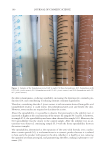
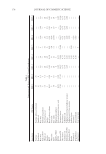
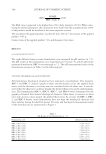
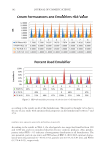
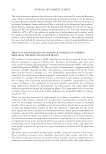
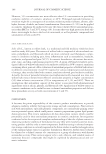
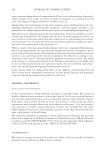
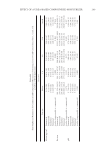
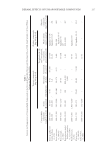
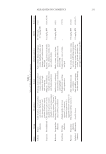
JOURNAL OF COSMETIC SCIENCE 144 No Point of differences Halal cosmetic General cosmetic (ii) preparation, handling, processing, and packaging for the storage or transfer of products shall be in compliance to the requirements by Shariah law and GMP/ good hygienic practices (GHP), (ii) equipment and processing aids, (iii) no mixing between raw materials/products with non-halal materials/sources or those with uncertain halal status, (iii) materials for halal cosmetics shall be prepared according to the GMP requirements, (iv) transportation used shall be for halal products only, and (iv) product manufacturing, handling, and distribution, and (v) the use of appliances/ brushes from animal’s hair is not allowed. (v) Packaging, labelling, and advertising. All must follow the requirements stated in the specifi ed clause in the document. 5 Safety of ingredients The fi rst requirement of raw materials/ ingredient/ processing aid is as follows: to ensure raw material/ ingredient sources are halal and safe. No specifi c section but each ingredient and material used in halal cosmetic must not cause harm or hazard to health and should not be poisonous. A cosmetic product placed in the market must not cause damage to human’s health when applied under normal or reasonably foreseeable conditions of use. The cosmetic Notifi cation Holder (CNH) shall ensure that the safety assessment is conducted for each producta. 6 Ethics and responsibility Related to the responsibility that should be accomplished by manufacturers such as Internal Halal Committee and establishing the halal assurance system with reference to halal assurance System (HAS) 2011. Management responsibilities are listed in Section 4.1 that includes training, suffi cient resources, traceability of document records, religious obligation practices are allowed, and integrity is preserved by each member of the company, including the company’s suppliers and distributors. There are 13 responsibilities of CNH, and the requirement related to the ingredients, safety, and halal status must be fulfi lled. a Please refer to Annex I, part 6 for Guideline for Safety Assessment of Cosmetic Product. Table I Continued

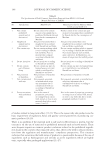
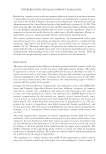
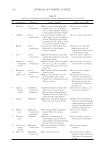
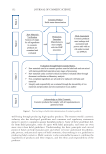
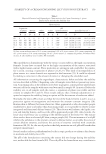
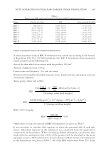
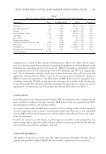
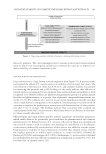
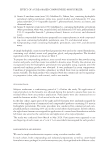
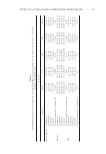
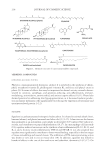
INTERPRETATION OF HALAL COSMETICS IN MALAYSIA 145 ISSUES AND FACTORS AFFECTING THE HALAL STATUS OF A COSMETIC PRODUCT In halal status verifi cation either for food, cosmetic, or pharmaceutical, etc., it is suggested to integrate the ingredient verifi cation with the halal supply chain (HSC) to ensure that halal products are not in the gray area. HSC is a process for ensuring that all raw materi- als of halal products and services are halal and tayyib in the supply chain or “from farm to fork.” Three main aspects to be emphasized are supply chain resources, supply chain network, and supply chain business processes (20). Therefore, the source of origin is a critical point and fundamental step in the halal cosmetic verifi cation. In each situation, the origin of raw materials is considered the critical aspects and high- lighted by a responsible authority such as JAKIM in Malaysia in the evaluation of halal logo application (10,16). All ingredients used in cosmetic products are examined thor- oughly by JAKIM offi cers. The specifi cations of halal ingredients are presented in Table II and must be fulfi lled to be acknowledged as halal cosmetics. Halal cosmetics must not contain ingredients derived from pig, carrion, blood, human body parts, predatory ani- mals, and reptiles, which all are known as haram components (16). This might be inter- esting to compare with the western world’s cosmetic industry, where a consensus has been reached not to use animal-derived ingredients at all. Further analyses of all eight conditions were based on the origin of ingredients and their uses. The specifi cation of halal extracted from Shariah law is related to specifi cation num- bers one to fi ve. Specifi cation number six is related to safety, specifi cations numbers seven and eight are included in the utilities and processing criteria, and all of them are part of tayyib elements. Halal is not standalone and must be followed with tayyib elements such as cleanliness, absence of fi lth, and does not contain hazardous or poisonous materials that affect health and well-being. One of the challenges in cosmetic products is to determine whether the ingredients of a product are derived from synthetic or natural sources. Generally, there are two main cat- egories of ingredients used in cosmetics, namely, active (functional) ingredient and ex- cipient (inactive or additional) ingredient. Functional ingredient is the main cosmetic substance that can give the desired effect or the stated claim of a product. For instance, products claimed to have whitening effect might use arbutin and kojic acid as their func- tional ingredients. On the other hand, excipient ingredients have versatile functions, and can be used as preservatives, stabilizers, emulsifi ers, thickeners, moisturizers, pigment agents, and fragrances. Besides that, some ingredients can be used as active or excipient ingredients depending on their functional effects on the product. For example, gelatine and collagen can be used as active ingredients in anti-ageing products or as excipients such as thickeners or emulsi- fi ers in other kinds of products. In addition, thousands of different ingredients can be used in a product, and this situation needs a competent, knowledgeable, and responsible person to evaluate the ingredients in halal and general cosmetic products for the safety and health risk aspects (11). Other than that, issues related to contaminants or trace ingredients are allowed because of technically unavoidable situations in the formulation or manufacturing process related to health hazards. In certain situations, the health hazard of cosmetic products is some- times neglected or ignored. Another concern is the limited information on the health effects of long-term exposure to certain ingredients in cosmetics due to the low numbers
Purchased for the exclusive use of nofirst nolast (unknown)
From: SCC Media Library & Resource Center (library.scconline.org)