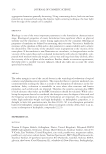
JOURNAL OF COSMETIC SCIENCE 170 In addition to disinf ectants, the level of knowledge about compliance with hygiene and prevention principles among the staff of beauty salons and hairdressers is also important in maintaining an adequate level of hygiene (14). A survey showed that 65% of respon- dents do not know the defi nition of the word “disinfection,” and the word “sterilization” was defi ned by only 23% of respondents. Some respondents admit that they do not always follow the rule of putting on and changing disposable gloves after each treatment that may cause mechanical damage to the skin 6% of respondents admitted that they do not change gloves between clients. Half only put on new gloves after the previously used ones were damaged. Regarding reusable equipment, as many as 83% of respondents use man- ual disinfection, 15% use automatic devices, and ultrasound is used in just 2% of cases. Autoclave sterilization is performed by 57% of respondents, and chemical disinfectants are used by 33% of them. About 6% of respondents are not able to sterilize equipment and tools. Handwashing before and after a procedure was declared by 94% of respon- dents, after using the toilet by 93%, after contact with various types of secretions by 62%, after contact with potentially pathogenic objects and tools by 52%, after removing and putting on protective gloves by 41%, and after removing gloves by only 14%. Hand disinfection after their previous washing is used by 53% of respondents, before proce- dures where there is a risk of mechanical damage to the skin by 42%, before contact with mutilation by 35%, and before applying gloves by 14% of respondents. This study shows that the knowledge of beauty salon employees is low and translates into insuffi cient use of hygiene procedures. An interesting report, however, is the fact that educational pro- grams targeted at beauty salons are highly effective (15). The study has several limita tions, some of which are inherent to the preliminary study. We have tested a limited number of samples, and for this reason, we were unable to con- duct a statistical analysis. Sabouraud agar mainly supports the growth of yeasts and molds, but not bacteria. For this reason, different broader approach should be used for continuation of this study. Despite these limitations, our fi ndings have important impli- cations because they draw attention to the importance of implementing proper disinfec- tion procedures in beauty salons and contribute to the body of real-world data. CONCLUSIONS Our study, when c ompared with the reports that can be found in the literature, indicates that the disinfection process should be selected according to the used applicator and cos- metic product. This fact, combined with the low level of knowledge of beauty salon employees about disinfection and the low level of compliance with hygiene procedures, is worrying because it increases the risk of infection among beauticians and the spread of infection among customers. There is a need to conduct further research on the selection of appropriate disinfection procedures for individual applicants and for those who prepare makeup. It is also necessary to provide education among employees of beauty salons on disinfection procedures. ACKNOWLEDGEMENTS We thank the University Clinic in Göttingen, Germany (Universitätsmedizin Göttingen), for providing laboratory tests for this research.

DISINFECTION OF REUSABLE MAKE-UP APPLICATORS 171 REFERENCES (1) S. Naz, M. Iqtedar, Q. ul A i n, and K. Afta, Incidence of human skin pathogens from cosmetic tools used in beauty saloons from different areas of lahore, J. Sci. Res., 4(2), 523–527 (2012). (2) H. Dao, P. Lakhani, A. Poli c e, V. Kallakunta, S. S. Ajjarapu, K. W. Wu, P. Ponkshe, M. A. Repka, and S. Narasimha Murthy, Microbial stability of pharmaceutical and cosmetic products, AAPS PharmSci- Tech, 19(1), 60–78 (2018). (3) L. A. Wilson, A. J. Julian, and D. G. Ahearn, The survival and growth of microorganisms in mascara during use, Am. J. Ophthalmol., 79(4), 596–601 (1975). (4) A. S. Chidambaranathan and M. Balasubramanium, Comprehensive review and comparison of the dis- infection techniques currently available in the literature, J. Prosthodont., 28(2), e849–e856 (2019). (5) W. A. Rutala and D. J. Weber, Disinfection and sterilization in health care facilities: an overview and current issues, Infect. Dis. Clin., 30(3), 609–637 (2016). (6) G. McDonnell and A. D. Russell, Antiseptics and disinfectants: activity, action, and resistance, Clin. Microbiol. Rev., 12(1), 147–179 (1999). (7) A. Ziembińska and M. Szpindor, Comparison of bactericidal effect effectiveness disinfectants for micro- organisms isolated from the cuticle, CHEMIK, 67(2), 12–13 (2013). ( 8 ) K. Gluszek, Assessment of susceptibility of Staphylococcus aureus strains to disinfectants, Stud. Med., 19, 13–23 (2010). (9) D. L. Breneman, J. M. Hanifi n, C. A. Berge, B. H. Keswick, and P. B. Neumann, The effect of antibac- terial soap with 1.5% triclocarban on Staphylococcus aureus in patients with atopic dermatitis, Cutis, 66(4), 296–300 (2000). (10) A. Kukulowicz, Hygiene aspects of cosmetic services, Environ. Med., 19(1), 37–42 (2016). (11) L . M. Villar, V. S. de Paula, A. J. de Almeida, O. Km do, J. C. Miguel, and E. Lampe, Knowledge and prevalence of viral hepatitis among beauticians, J. Med. Virol., 86(9), 1515–1521 (2014). (12) I . M. A. Felipe, R. D. S. Dias, C. L. L. Couto, L. Nina, and S. P. H. Nunes, Biosafety in beauty centers: knowledge and practices in a state capital in Northeast Brazil, Rev. Gaucha Enferm., 38(4), e2016–2013 (2017). (13) A. C. Oliveira and R. Focaccia, Survey of hepatitis B and C infection control: procedures at manicure and pedicure facilities in Sao Paulo, Brazil, Braz. J. Infect. Dis., 14(5), 502–507 (2010). (14) B . Bilski and B. Marynowicz, Knowledge, hygiene behavior and risk of bloodborne infections in the selected staff of beauty parlors and hairdressing salons, Med. Pr., 57(6), 517–524 (2006). (15) E . E. Vieira Junior and C. L. Wen, Training of beauty salon professionals in disease prevention using interactive tele-education, Telemed. J. E. Health, 21(1), 55–61 (2015).
Purchased for the exclusive use of nofirst nolast (unknown)
From: SCC Media Library & Resource Center (library.scconline.org)