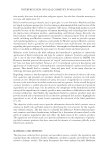
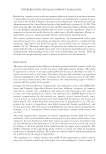
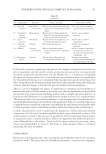
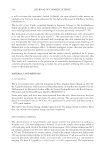
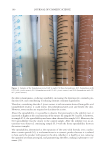
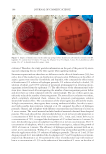
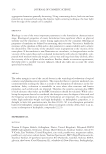
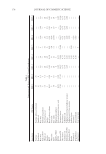
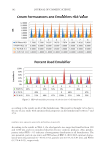
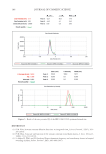
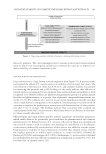
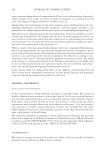
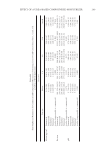
JOURNAL OF COSMETIC SCIENCE 168 evaluated. Therefore, the study provides information on the part of the process by assess- ing and comparing the use of the three agents when applying makeup. Litera ture reports indicate that there are differences in the effect of disinfectants (5,6), but only a few of the studies focus on disinfection in beauty salon. Differences in the effect of aseptic agents were noted by Ziembińska and Szpindor, who compared the effectiveness of disinfectants (3% solution of hydrogen peroxide, 2% solution of salicylic alcohol, 3% solution of iodine, and 0.05% solution of potassium permanganate) in removing micro- organisms isolated from the epidermis (7). The effectiveness of the aforementioned solu- tions were characterized after interpreting the number of microorganisms present before and after their use when compared with the control sample. The use of these agents sig- nifi cantly reduced the number of microorganisms. The most effective solution was iodine, which completely eliminated them, whereas the potassium permanganate solution showed the weakest effect. The concentration of the tested agent also affected the results. In high concentrations, these agents have a strong antibacterial effect, but this is associ- ated with possible skin irritation. Gluszek et al. (8) compared the effects of hydrogen peroxide, ethanol, and iodophore with different concentrations and duration of action on S. aureus strains. The tested material included medical materials obtained from hospital patients. The study showed that ethyl alcohol did not reveal its bactericidal properties at a concentration of 60% for any of the tested times (15 s, 1 min, and 2 min) however, in a concentration of 70%, it stopped the development of 47 isolated strains in 1 minute. In turn, the disinfecting action of iodophore was effective at its low concentrations. The 1% concentration of iodophore, which is recommended in antiseptics, reduced the growth of 100% of strains in 1 minute. The effi ciency of hydrogen peroxide increased with an in- crease in its concentration. Within 15 s, a complete stop of microbial growth occurred after the application of the 3% solution of hydrogen peroxide. The use of 1 and 2% hy- drogen peroxide for 1 min inhibited the development of 17 and 38 staphylococcal strains, respectively. Breneman et al. (9) examined the effect of antibacterial soap with triclocar- ban at a concentration of 1.5% on the reduction of the number of S. aureus on the skin of Figure 4. Impact of disinfectants on the make-up sponge before disinfection (A) and after disinfection (B). Legende: #1: control test #2: water #3: soap #4: ethanol, 30 s #5: ethanol, 3 min #6: re-disinfection after using, 30 s #7: re-disinfection after using, 3 min.

DISINFECTION OF REUSABLE MAKE-UP APPLICATORS 169 people with atopic dermatitis. After using the soap for 9 weeks, there was a reduction in the total number of aerobic organisms in the antibacterial soap group when compared with the placebo group. In addition, dermatitis in the group testing the antibacterial soap remained less severe than in the placebo soap group during the regression period when the use of corticosteroids was banned. There ar e few reports in the literature concerning the disinfection of make-up applicators. Naz et al. (1) examined the frequency of the occurrence of human skin pathogens on cos- metic tools used in beauty salons One hundred samples taken from tools such as blush brushes, make-up sponges, and waxing tools from 33 different beauty salons were tested and microbiologically examined for the occurrence of S. aureus, P. aeruginosa, yeast, and fungi. The samples from the sponges and brushes had 100% of S. aureus impurities, with the samples from the wax tools having 88%. Almost 51.5% of all the sponge samples, and 30.3 and 20.5% of the brush and wax tool samples, respectively, showed the presence of fungal and yeast colonies. The sponge samples showed high contamination (24.24 × 10⁴ colony-forming units (CFU)/mL) of S. aureus 22.96 × 10⁴ CFU/mL was obtained for P. aeruginosa, whereas for yeast and fungi, the maximum contamination was estimated at 26.57 × 10⁴ CFU/mL. Analysis of microbiological contamination of the brush samples showed that for S. aureus, CFU/mL was equal to 22.76 × 10⁴, whereas the maximum con- tamination of P. aeruginosa was estimated to be equal to 21,52 × 10⁴ CFU/mL. The growth of yeast and fungi was equal to 20.06 × 10⁴ CFU/mL. In the wax tool samples, the estimated impurity of S. aureus was equal to 25 × 10³ CFU/mL, whereas for P. aeruginosa, it amounted to 26.55 × 10⁴ CFU/mL. The contamination with yeast and fungi was equal to 120 × 104 CFU/mL. It was observed that the main reason for the contamination of tools used in beauty salons is their repeated use for all customers without taking into account hygiene conditions. In practice, disinfection it self cannot be considered separately, but instead should be treated as one of the elements of hygiene procedures, and that is why we reviewed the available literature regarding biosafety in beauty salons. Kukulowicz conducted an assess- ment of the state of sanitary conditions in beauty salons (10). The cleanliness of the fol- lowing was assessed: the beauticians’ hands, the surface of the cosmetic apron, towels, the treatment chair cover, and also other furniture such as the table and pedicure tub. After- ward, the total number of microorganisms that were found on them was verifi ed. All sa- lons met the sanitary requirements that are required by law. The test results indicated heterogeneous contamination of the analyzed samples. The most numerous microorgan- ism colonies turned out to be aerobic mesophilic microorganisms, fi lamentous fungi, yeast, and trace amounts of Staphylococcus epidermidis. The occurrence of S. aureus was not reported. The hands of the beauticians and the pedicure tubs, which constituted 14% of the tested surfaces, were particularly inhabited by staphylococci 92% of their surface was colonized by fi lamentous fungi and 75% by yeast. The largest amount of aerobic bacteria was found on the tables and aprons, and the smallest amount on the towels. Staphylococci and yeasts, which belong to human microfl ora, were also isolated from the beauticians’ hands. In only 7% of tests was the limit of permitted impurity for class D rooms ex- ceeded. Tests conducted by Villar et al. (10) showed that 81.5% of beauticians reported the use of disposable sandpaper, nail sticks and sterilized pliers, but only 40% admitted compliance with the proper disinfection/sterilization rules. Moreover, most of them were not vaccinated against HBV, which creates an additional risk of occupational diseases, such as an increased risk of infections for customers. Many other researchers point out the lack of appropriate biosafety procedures in beauty salons (12,13).
Purchased for the exclusive use of nofirst nolast (unknown)
From: SCC Media Library & Resource Center (library.scconline.org)