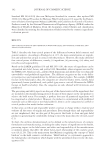
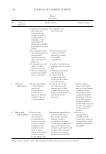
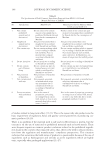
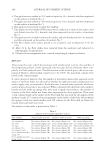
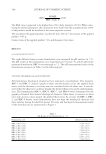
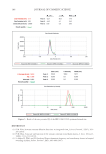
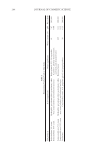
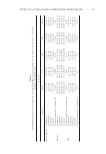
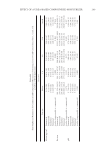
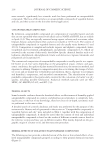
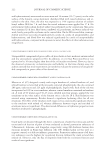
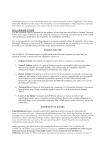
JOURNAL OF COSMETIC SCIENCE 184 been evaluated by developing BBCs as safe when used under normal or reasonably foreseeable conditions of use. DISCUSSI ON The phys icochemical analysis of eight different barrier cream formulations developed with natural raw materials was compared with each other via the literature. As a result of the studies, barrier cream formulations from ZnO and natural sources were optimized. As a res ult of the studies, barrier cream formulations containing raw materials obtained from ZnO and natural sources were tried to be optimized. Nowadays , one of the most important points while developing cosmetic products is to provide biocompatible, natural, and recyclable products for the consumer and environ- ment. In this context, formulations containing olive oil, beeswax, ZnO, and w/o-type emulsions were obtained with the help of an appropriate emulsifi er in a formula. Consid- ering the physicochemical properties of ZnO, it was determined that the carrying capac- ity of w/o-type emulsions is suitable compared with o/w-type emulsions. The pH values of all formulations prepared with natural raw materials have been determined with three repeated measurements made in the pH range of 6–7. Considering the rheological prop- erties of the developed BBC formulations, it was observed that BBC-1 and BBC-2 were very viscous as a result of the use of 23% Vaseline, and the rheological character was not pseudoplastic. BBC-3, BBC-4, BBC-6, and BBC-7 were also in a lotion appearance. In BBC-8, it has been observed that the rheological character creates a consistent graph in the face of shear stress applied viscosity values, and it is estimated that it will meet the desired properties both in terms of shelf life and user satisfaction. Zeta potential (ζ) is one of the second parameters to evaluate the stability of disperse systems. It was observed as the optimum value (-30.9 mV ± 0.72) among the formulations after three repeated mea- surements in barrier cream formulations. The PDI was found as 0.370 ± 0.03 for BBC-8 Table 5 90-D Room Temperature Stability Test Results in 25°C, 60% Humidity Conditions for BBC-8 Parameters 0 d 15 d 30 d 60 d 90 d Appearance Opaque Opaque Opaque Opaque Opaque Odor Odorless Odorless Odorless Odorless Odorless pH 7.26 7.20 7.19 7.16 7.10 Viscosity (%50 torque) 49.200 cp 49.185 cp 48.000 cp 47.100 cp 46.900 cp Table 6 90-D Accelerated Stability Test Results in 40°C, 75% Humidity Conditions for BBC-8 Parameters 0 d 15 d 30 d 60 d 90 d Appearance Opaque Opaque Opaque Opaque Opaque Odor Odorless Odorless Odorless Odorless Odorless pH 7.26 7.10 7.05 6.95 6.80 Viscosity (%50 torque) 49.200 cp 48.550 cp 47.200 cp 46.100 cp 44.600 cp

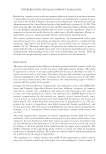
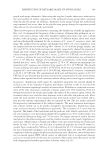
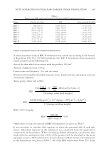
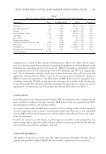
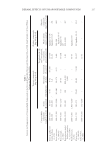
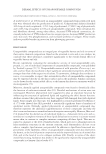
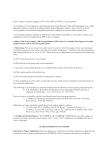
NEXT-GENERATION NATURAL BABY BARRIER CREAM FORMULATIONS 185 Table 7 MoS Calculations of BKF-8 (Highest Concentration for Each Raw Material) Ingredient Ratio NOAEL (mg/kg) MOS References Bees wax 3.0 250 291.67 230 (31) Olea Europea fruit oil 28 2,000 251 230 (32) Lanolin 2.5 1,200 1,680.02 230 (33) Butyl hydroxy toluene 0.01 250 87,501 230 (34) Glycerine 8 4,580 2,003.7 230 (35) Zinc oxide 20 2,000 350 230 (36) Magnesium sulphate 1 256 896 230 (37) Ethylene diamine tetra acetic acid 0.05 2,000 14,002 230 (38) Shea butter 0.75 1,000 4,666.7 230 (39) Calendula oil 0.75 2,500 11,666.8 230 (40) Polyglyceryl-2 dipoly hydroxy stearate 4.00 845 739.4 230 (41) Deionized water 27.59 — — — formulation as a result of three repeated measurements. These two values can be consid- ered as a reference point when creating an emulsion formulation to develop barrier cream formulations containing natural raw materials. BBC-8 formulation instability studies were performed at 25 ± 2°C temperature, 60% ± 5% humidity and 40°C ± 2 temperature, and 75% ± 5 humidity. Stability study was evaluated for color, odor, pH, viscosity, and appearance parameters (see Tables 5 and 6). It was not observed singifi cant change in BBC-8 formulation parameters. The MoS values of BBC-8 formulation ingredient were calculated using the NOAEL according to the literature. As a result of the calculations, it was determined that when the substances forming the formulation content are used in appropriate concentrations, all of them have the desired SED values (see Table 7). CONCLUSION From the results of the aforementioned studies, BBC-8 formulation was confi rmed as the most suitable according to the pH, viscosity, HLB, particle size, zeta potential (ζ), PDI, microbiological analysis, and stability studies. As a result of the stu dy, the MoS value was above 230 according to the calculations made on each component and in certain concentration ranges and this case it was concluded that the BBC-8 (K13/092) formulation is safe for babies when the legislation and regula- tions are examined. In terms of cosmetics in the future, it gives hope to consumers in the preparation of a barrier cream, and it provides a safer cosmetic product consisting of natural oils and zinc oxide without preservatives, perfumes, and dyes. ACKNOWLEDGMENTS The au t hors would like to thank the SFA R&D Laboratory (Istanbul, Turkey) and its general manager MSc. Bekir CAKICI for the valuable contribution to our research.
Purchased for the exclusive use of nofirst nolast (unknown)
From: SCC Media Library & Resource Center (library.scconline.org)