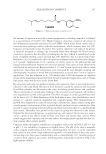
JOURNAL OF COSMETIC SCIENCE 202 more consistent, pharmaceutical compounding still has its role in dermatology. Apparently, market products were unable to resolve all needs of consumers on a personal level and cause some degrees of depersonalization in medical care (2,3). Derma tology and cosmetology are the most common areas of administration of com- pounding preparations. Corticosteroids, antibiotics, anti-acne agents, anesthetics, and moisturizers are commonly prescribed topical agents in compounding dermatology (4). Moist urizers are an important part of dry skin management, which are available in a variety of forms and formulations (5,6). Despite the discovery of novel ingredients for skin care urea is still one of the most useful molecules widely used in compounding and commer- cial moisturizers. It is a component of the natural moisturizing factor and plays an impor- tant role in the maintenance of skin hydration (7). When it comes to dry skin, many dermatologists tend to use compounded formulations, which let them personalize the concentrations (dosing) and vehicles, according to clinical picture and needs of the patient. Personalizing medications also makes products easier for patients to use, and enhances the treatment compliance (8). However, according to con- sideration of the Council of Europe, products prepared in pharmacies must offer added value relative to commercialized products (9). Pharmacy preparations are of added value if, due to medical, pharmaceutical, or personal reasons, they are needed by a specifi c pa- tient or by specifi c population groups with particular needs (9). In th e current study, we evaluated the effect of two different concentrations (5% and 10%) of urea-based compounded moisturizers on skin barrier function and hydration, compared with similar commercial products we also used. MATER IAL AND METHOD STUDY DESIGN AND PARTICIPANTS It wa s an intra-subject, double-blinded, randomized, controlled study. Two cohorts of healthy volunteers (men or women), with an age range of 18–60 years, with self-reported and clinically diagnosed dry skin, were recruited after signing written informed consent. Participants with a positive history of major skin diseases, or those using any topical preparations which might infl uence the skin hydration within past 7 d or used systemic corticosteroids or cytostatic drugs within past 2 weeks, were excluded from the study. Other exclusion criteria were active smoking, presence of any skin diseases on the fore- arms, and pregnancy or breastfeeding. The st udy was performed in compliance with the Declaration of Helsinki, and the study protocol was approved by the Ethics Committee of Tehran University of Medical Sciences (acceptance code: IR.TUMS.VCR.REC.1398.710). It was also registered in Iranian Register of Clinical Trials with registration code of IRCT20190210042676N9. TEST P REPARATIONS We use d two commercial water-in-oil products available in the local market (Golafshan Arayesh Cosmetic Laboratory, Tehran, Iran) as follows:

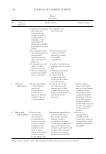
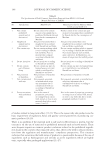
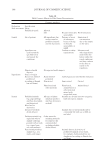
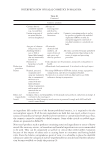
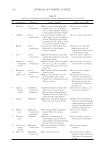
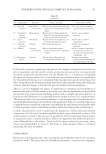
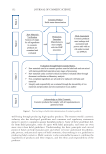
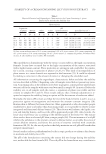
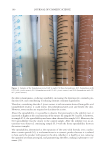
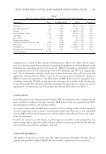
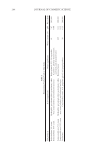
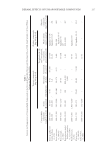
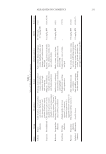
EFFECT OF A UREA-BASED COMPOUNDED MOISTURIZER 203 (i) Samin ® emolient cream (urea 5%) Golafshan Co, Tehran, Iran, containing hydrophilic petrolatum (white petrolatum, white wax, stearyl alcohol, and cholesterol), 5% urea, polyacrylamide C13-14 isoparaffi n Laureth-7, phenoxyethanol, benzoic acid esters, and deionized water. (ii) Samin ® emolient cream (urea 10%) Golafshan Co, containing hydrophilic petrolatum (white petrolatum, white wax, stearyl alcohol, and cholesterol), 10% urea, polyacrylamide C13-14 isoparaffi n Laureth-7, phenoxyethanol, benzoic acid esters, and deionized water. (iii) S i milar compounded formulations prepared by an expert pharmacist with compound- ing cream containing hydrophilic petrolatum, urea 5%, and deionized water. (iv) Com p ounding cream containing hydrophilic petrolatum, urea 10%, and deionized water. A simple hydrophilic cream (cream-based preparation) was used as the control formulation, containing cetyl alcohol, stearic acid, propylene glycol, and propyleparaben. The detailed ingredients of the products are shown in Table I. To prepa re the compounding products, urea crystals were triturated to fi ne powder using mortar and pestle, and then water was added to dissolve urea. Finally, the solution was incorporated into the hydrophilic petrolatum very gradually using a spatula until the smooth and uniform product was obtained. It was performed in room temperature. Condition of preparation was like a pharmacy in which there were no industrial instru- ments available. The fi nal product was compared with the commercial one by organolep- tic properties (color, odor, and texture), and it was similar. STUDY PR OTOCOL Subjects underwent a conditioning period of 3 d before the study. No application of topical products to the forearms was allowed during this period to ensure there were no residual effects from any product application. Participants were also instructed not to wash the forearms within 3 h of arrival at the test facility. In the fi rst cohort, upper parts of the right and left forearms were randomly assigned for twice-a-day application of commercial and compounded products containing 5% urea in hydrophilic petrolatum. The same procedure was conducted for commercial and com- pounded products containing 10% urea in the second cohort of participants. In both cohorts, the right lower forearm was assigned for application of a cream-based formulation and the left lower one served as the control site and application of no topical product. The stud y was conducted from March to May 2020. Participants were supposed to use one fi nger tip of each cream, on a 5-cm × 5-cm area which was assigned for each product. RANDOMIZ ATION AND BLINDING We used a simple randomization sequence using a random number table. In each co hort, both compounding and industrial preparations as well as cream-based formulation were packaged in similar anonymous jars, distinguished with different codes.
Purchased for the exclusive use of nofirst nolast (unknown)
From: SCC Media Library & Resource Center (library.scconline.org)