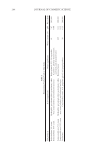
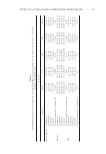
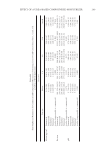
J. Cosmet. Sci., 72, 201–213 (March/April 2021) 201 Comparison of Urea-Based Compounding Moisturizers and Similar Commercial Products on Skin Barrier Function: A Randomized Biometric Study ANISEH SAMADI, ATEFEH NAEIMIFAR, SAMAN AHMAD NASROLLAHI, and ALIREZA FIROOZ , Center for Research & Training in Skin Diseases & Leprosy, Tehran University of Medical Sciences, Tehran, 1416613675 Iran Accepted for publication December 15, 2020. Synopsis Although several commercial moisturizers are available in the market, the continued role of pharmaceutical compounding has been still felt in dry skin management. This study aimed to evaluate the effect of a urea- based compounded moisturizer on barrier function, compared with a similar commercial product. Thirty volunteers with a mean age of 36.15 ± 9.55 years (range 21–56 years) and dry skin were recruited in two groups, one group to apply 5% urea containing hydrophilic petrolatum and the other 10% urea containing hydrophilic petrolatum. I n each cohort, the upper parts of right and left forearms were randomly assigned for twice a day application of commercial or compounded products. Whereas the right lower forearm was assigned for application of a cream-based formulation, the left lower one served as the control site and with application of no topical product. Biophysical assessments [transepidermal water loss (TEWL), skin hydration, friction coeffi cient, pH, and surface lipids], were performed before intervention, at 1 and 4 h after single application, and at 24 h and 1 week twice daily application. I n both groups, commercial and compounded moisturizers showed an appropriate and comparable effect on skin barrier function compared with cream- based formulation and no treatment area. However, commercial products led to better improvement in TEWL, 4 h after single application in both groups (p-value = 0.04). In case of 10% urea base formulation, the rate of increase in skin hydration was also signifi cantly higher for a commercial emollient than a compound ing product (57.48 ± 11.23 vs. 50.59 ± 11.42, p-value = 0.02). Comme rcial formulation led to higher acceptability and better improvement in the skin barrier function after single application, probably because of the infl uence of excipients. The present study did not fi nd suffi cient added value for cream-based pharmacy product relative to commercial one and suggests to be replaced in a similar condition. INTRO D UCTION AND BACKGROUND Pharm acy compounding is defi ned as customized developing of medical or cosmeceutical preparation for individuals with specifi c needs (1). Even though many commercial medi- cations and cosmeceuticals are available in the market, which makes medical practice Address all correspondence to Saman Ahmad Nasrollahi at snasrollahi@tums.ac.ir.
Purchased for the exclusive use of nofirst nolast (unknown)
From: SCC Media Library & Resource Center (library.scconline.org)