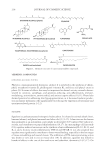
J. Cosmet. Sci., 72, 215–228 (March/April 2021) 215 Dermal Effects of Unsaponifi able Compounds: The Overlooked Perspective of Vegetable Butters and Oils NINA POLJŠAK and NINA KOČEVAR GLAVAČ, Un iversity of Ljubljana, Faculty of Pharmacy, Ljubljana 1000, Slovenia (N .P., N.K.G.) Accepted for publication November 7, 2020. Sy n opsis Un saponifi able compounds are an integral part of vegetable butters and oils. Their composition is typically complex, and includes terpenic and aliphatic compounds, waxes, tocopherols and tocotrienols, phospholipids, and phenolic compounds. In this article, in vitro and in vivo studies of the dermal effects of unsaponifi able com- pounds from avocado (Persea americana), canola (Brassica sp.), coffee (Coffea arabica), hazel- nut (Corylus avellana), palm (Elaeis sp.), and soya (Glycine max) oils perilla (Perilla frutescens) seed meal and shea (Vitellaria paradoxa) butter were reviewed. Un saponifi able compounds as cosmetically and therapeutically active ingredients were proven to act as antioxidative, anti-infl ammatory, antitumor, immunomodulatory, and antimicrobial agents. They express wound healing, anti-acne, and anti-dermatitis activi- ties, as well as hydrating, photoprotective, and anti-wrinkle activities. It is thus also reasonable to recommend the use of unrefi ned vegetable butters and oils. Ho wever, no systematic studies regarding the dermal use of unsaponifi able compounds have been performed yet, and in-depth clinical research should be encouraged because of their promising dermal activity. VE GETABLE BUTTERS AND OILS Ve getable butters and oils are widely used in the pharmaceutical and cosmetic industries as extraction solvents, active ingredients, ingredients of the lipid phase in dermal formu- lations, and other excipients. Chemically they are a mixture of esters of glycerol and fatty acids (triglycerides), and unsaponifi able compounds (1). In general, the dermal effects of vegetable butters and oils include hydrating, emollient, antimicrobial, antioxidative, and anti-infl ammatory activities (2). Although the triglyceride fraction has been subject to Address all correspondence to Nina Poljšak at nina.poljsak@ffa.uni-lj.si.
Purchased for the exclusive use of nofirst nolast (unknown)
From: SCC Media Library & Resource Center (library.scconline.org)