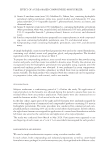
JOURNAL OF COSMETIC SCIENCE 228 (79) G. Kanbur, D. Arslan, and M. M. Özcan, Some c ompositional and physical characteristics of some Turk- ish hazelnut (Corylus avellana L.) variety fruits and their corresponding oils, Int. Food Res. J., 20(5), 2161–2165 (2013). (80) A. P. de Oliveira, S. Franco Ede, R. Rodrigues Barreto, D. P. Cordeiro, R. G. de Melo, C. M. de Aquino, A. A. E Silva, P. L. de Medeiros, T. G. da Silva, A. J. Góes, M. B. Maia, Effect of semisolid formulation of persea americana mill (avocado) oil on wound healing in rats, Evid. Based. Complement. Alternat. Med., 2013, 472382 (2013). (81) Y. Soong and P. Barlow, Quantifi cation of gal l ic acid and ellagic acid from longan (Dimocarpus longan Lour.) seed and mango (Mangifera indica L.) kernel and their effects on antioxidant activity,” Food Chem., 97(3), 524–530 (2006). (82) A. Lewinska, J. Zebrowski, M. Duda, A. Gorka, and M. Wnuk, Fatty acid profi le and biological activi- ties of linseed and rapeseed oils, Molecules, 20(12), 22872–22880 (2015). (83) S. Maranz, Z. Wiesman, and N. Garti, Phenolic constituents of shea (Vitellaria paradoxa) kernels, J. Agric. Food Chem., 51(21), 6268–6273 (2003). (84) T. Itoh, T. Tamura, and T. Matsumoto, Sterol c omposition of 19 vegetable oils, J. Am. Oil Chem. Soc., 50(4), 122–125 (1973). (85) N. Frega, F. Bocci, and G. Lercker, Direct ga s chromatographic analysis of the unsaponifi able fraction of different oils with a polar capillary column, J. Am. Oil Chem. Soc., 69(5), 447–450 (1992). (86) T. A. L. Wagemaker, C. R. L. Carvalho, N. B. M aia, S. R. Baggio, and O. Guerreiro Filho, Sun protec- tion factor, content and composition of lipid fraction of green coffee beans, Ind. Crops Prod., 33(2), 469–473 (2011).

J. Cosmet. Sci., 72, 229–245 (March/April 2021) 229 Selected Alkaloids Used in the Cosmetics Industry ANNA STĘPNIOWSKA, PATRYCJA CIEPLIŃSKA, WERONIKA FAC, and JOANNA GÓRSKA, De partment of Biochemistry and Toxicology, University of Life Sciences in Lublin, Lublin 20-950, Poland (A. S., P.C., W.F., J.G.) Accepted for publication November 18, 2020. Syno p sis Plan ts are a rich source of a wide variety of bioactive compounds that can be used for the preparation of cosmetics. Natural cosmetics with plant components such as vitamins, polyphenols, and alkaloids have become more and more popular. Alkaloids are important secondary metabolites in plants. They are known to possess therapeutic properties. Alkaloids can be used in the production of tonics, creams, lotions, face and hair masks, compresses for skin problems with numerous infl ammations, and discoloration and antiaging products, as well as for reducing the formation of cellulitis. Alkaloids are also used in the production of ampoules for cosmetologists and aesthetic medicine doctors. However, at higher doses, they may exhibit toxic properties. Several studies have been carried out in evaluation of the activity of alkaloids from various plants for their use in cosmetics. This review describes alkaloids (caffeine, capsaicin, berberine, piperine, spilanthol, and anatabine) derived from various plants that are used in cosmetics, as well as their reported activities. INTR O DUCTION Alka loids are a group of secondary plant metabolites containing nitrogen atoms. Ac- cording to Pelletier (1), alkaloid is “a cyclic organic compound containing nitrogen in a negative oxidation state which is of limited distribution among living organisms.” Most of them stimulate physiological processes of living organisms. They are found in plants from the family of poppies (Papav eraceae), leguminous (Fabac eae), nightshade (Solan ceae), papilionaceous (Papil ionaceae), and buttercup (Ranun culaceae), and in fungi (Boletus, Fusarium, and Psilocybe), and club moss (Lycop odiaceae) and horsetails (Equis etaceae) included in the lower plants. Hegnauer (2) defi nes alkaloid plants as those species that contain more than 0.01% in weight of alkaloids. These compounds are most often stored in tubers, roots, seeds, fruits, leaves, fl owers, and the bark. The content of alkaloids is infl uenced by plant development conditions, such as season and microclimate, as well as the degree of maturity of the plant raw material. A single plant may contain several alkaloids with similar or different effects (3). Address all correspondence to Anna Stępniowska at anna.stepniowska@up.lublin.pl.
Purchased for the exclusive use of nofirst nolast (unknown)
From: SCC Media Library & Resource Center (library.scconline.org)