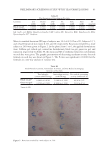
75 ENCAPSULATED TTO IN FACIAL CREAMS incubation at 30°C for 3–5 d in the dark. Samples with low counts were recorded as 10 cfu/g of product. Media and enumeration of pathogenic microorganisms. Pseudomonas spp. are very widespread in nature particularly in water. For the enumeration of P aeruginosa pathogens, which are generally infecting immunocompromised patients, 1 mL of each 10:1 diluted sample was spread on Compact Dry Pseudomonas (PA) ready-to-use plates for Pseudomonas (Compact Dry PA, Hyserve GmbH &Co. KG, Uffing, Germany). Compact Dry SA is a medium to determine S aureus by means of selective growth of Staphylococcus and differentiation by egg-yolk reaction. Compact Dry SA plate is based on improved mannitol salt agar. Staphylococcus aureus generates yellow pigments that result in light-yellow colonies. The lipid–protein complex (lecithin) in the egg-yolk reaction is split by lipase which changes the peripheral medium around the colonies to turbid-white. For the isolation and enumeration of S aureus in samples, 1 mL of each 10:1 diluted sample was spread on Compact Dry SA ready-to-use plates for S aureus (Compact Dry SA, Hyserve GmbH &Co. KG, Uffing, Germany). Plates were incubated at 37°C for 48 h for the enumeration of the spp. Escherichia coli spp. belong to the coliform group of bacteria. This bacterium can be distinguished from other coliforms by its growth and color reaction on certain types of culture media. Escherichia coli is a pathogen microorganism of great concern because it can be found in the water. Water is basic compound used in various industries and products, including pharmaceuticals, dietary supplement, nutraceuticals, cosmetics, and toiletry industries. Microbiological requirements ensure the absence of coliforms. To determine the presence of E coli, 1 mL of each 10:1 diluted sample was spread on Compact Dry E coliready- to-use plates for E coli and coliforms (Compact Dry EC, Hyserve GmbH &Co. KG, Uffing, Germany). The plates were incubated at 37°C for 24 h for the enumeration of the spp. Compact Dry SL plates contain a selective growth medium used in the isolation of Salmonella spp. from clinical samples and food. The plates are based on the combination of three different test principles: (1) alkalization of the medium by Salmonella’s lysine decarboxylase ability (medium color will change blue–purple to yellow) (2) greening colony caused by decomposition of chromogenic substrate with specific enzyme of Salmonella (black colonies are generated by hydrogen sulfide producing Salmonella) (3) motility of Salmonella. Compact Dry SL allows a much more rapid screening for Salmonella therefore, for the enumeration of Salmonella spp., 1 mL of each 10:1 diluted sample was spread on Compact Dry SL ready-to- use plates for Salmonella (Compact Dry SL, Hyserve GmbH &Co. KG, Uffing, Germany). The plates were incubated at 37°C for 24 h for the enumeration of the spp. pH MEASUREMENTS The pH values of all creams were measured using a pH meter (Multiparameter Bench Meter, Mi 180, MARTINI instruments). The pH meter was calibrated using standard buffer solutions, 1 g of each sample was diluted in 9 mL Ringer’s solution (1:10 dilution), and its pH was recorded. COLOR MEASUREMENTS A specific amount of each sample was poured into the measurement cell and analyzed. Color of all samples was measured with the color meter MiniScan XE (Hunter Associates

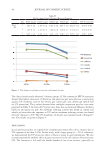
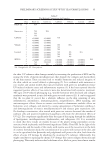
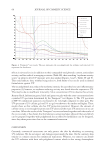
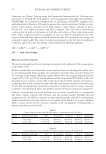
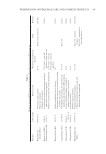
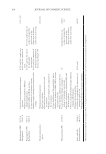
76 JOURNAL OF COSMETIC SCIENCE Laboratory Inc, Reston, Virginia) using the Commission International de l’ Eclairage color system (L*, a*, b*) (CIE 041-1978, Light as a true visual quantity: Principles of measurement, STANDARD by Commission Internationale de L’Eclairage, 01/01/1978). Lightness (L*), with values from 0 (black) to 100 (white), represent the central vertical axis. On the a–a’ axis, positive values indicate amounts of red, while negative values indicate amounts of green. On the b–b’ axis, yellow is positive, and blue is negative. The color axes is used because a color cannot be both red and green, or both blue and yellow, as these colors oppose each other. Values range from positive to negative on each axis. Before measurements, the color meter is calibrated with a white and black calibration plate. The measured color changes are expressed in total as ΔE. The color of a cream was measured on the first day of sampling as a reference. ΔE is the total color change calculated from the following equation: ∆ ∆L ∆ ∆b*)2] E (a* )(=++[*)2 (2 1 2 ∆E =total color change RESULTS &DISCUSSIONS The results obtained from the microbiological analysis of all samples for 50 d storage appear in the Tables I–III. Results revealed that the formulated creams analyzed were microbiologically stable, since no microbial growth (both spoilage and pathogenic bacteria) were recorded during the 50 d storage of the samples. Moreover, results showed that the storage temperature of the samples (5°C, 25°C, and 45°C) and the addition of the encapsulated TTO did not affect the microbial load of cosmetic creams. The results from the microbial analysis were negative, confirming that all the examined samples met the requirements specified for human usage (35,36). Yeast and molds have often been examined in cosmetic products to assess sanitation conditions, microbiological safety, and product quality during processing and storage (37). Cosmetic formulations are good mediums for microbial growth due to components like water, various minerals and vitamins, and also provide oxygen, favorable pH, and temperature (31). In addition, cosmetic creams being potentially exposed to contaminants during manufacture and usage (incorrect use, hygiene of the hands, etc.) is quite common. Thus, a major concern for the cosmetics industry is the development of formulations to prevent microbial growth (38,39). Table I Counts of Bacteria Associated With Cosmetic Creams Stored at 5°C for 50 d Sample Total bacterial count YM P aeruginosa S aureus E coli Salmonella C 2 log cfu/g 1 log cfu/g absence/g absence/g absence/g absence/g T 2 log cfu/g 1 log cfu/g absence/g absence/g absence/g absence/g Table II Counts of Bacteria Associated With Cosmetic Creams Stored at 25°C for 50 d Sample Total bacterial count YM P aeruginosa S aureus E coli Salmonella C 2 log cfu/g 1 log cfu/g absence/g absence/g absence/g absence/g T 2 log cfu/g 1 log cfu/g absence/g absence/g absence/g absence/g
Purchased for the exclusive use of nofirst nolast (unknown)
From: SCC Media Library & Resource Center (library.scconline.org)