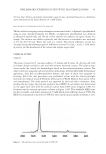
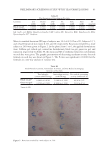
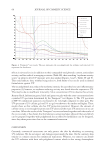
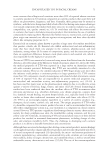
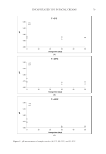
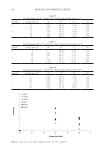
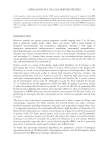
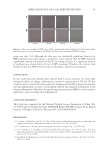
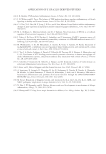
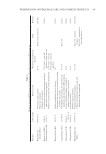
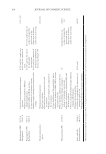
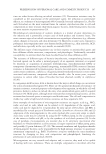
93 APPLICATION OF E GRACILIS-DERIVED PEPTIDES group was only 7.68. Although the data were not statistically significant between the BPE treatment and control group, a population survey showed that the BPE treatment significantly reduced itch intensity (Table II). According to Figure 6, a significant decrease of erythema was observed after 30 min of BPE treatment. Therefore, the clinical trials further verified that BPE treatment reduced the allergic inflammatory responses. CONCLUSION In this study, bioactive peptides were derived from E gracilis proteins. To verify their therapeutic effects on allergic inflammation, simulative experiments in 2D and 3D skin models as well as clinical trials were performed. It suggested that BPE possessed antioxidant and anti-inflammatory activities. It remarkably reduced the symptom development in the allergic inflammation. Therefore, the special properties guaranteed BPE as a novel cosmetic ingredient to prevent allergic skin inflammation. ACKNOWLEDGMENTS This study was supported by the National Natural Science Foundation of China (No. 31770849) and the Foundation from AGECODE R&D CENTER, Yangtze Delta Region Institute of Tsinghua University, Zhejiang (No. 2020330401000436). REFERENCES (1) F. Apone, A. Barbulova, and M. G. Colucci, Plant and microalgae derived peptides are advantageously employed as bioactive compounds in cosmetics, Front. Plant Sci., 10, 756 (2019). (2) A. Sánchez and A. Vázquez, Bioactive peptides: A review, Food Qual. Saf., 1, 29–46 (2017). (3) C. A. Ovando, J. C. Carvalho, G. Vinícius de Melo Pereira, P. Jacques, V. T. Soccol, and C. R. Soccol, Functional properties and health benefits of bioactive peptides derived from Spirulina: A review, Food Rev. Int., 34, 34–51 (2018). (4) B. Zakryś, R. Milanowski, and A. Karnkowska, Evolutionary origin of Euglena, Adv. Exp. Med. Biol., 979, 3–17 (2017). Figure 6. Illustrative examples of BPE’s clinical effect on histamine-induced dermatitis based on the double- blind trial from a 52–year-old woman. (A) Double-distilled water treatment (B) BPE treatment.

94 JOURNAL OF COSMETIC SCIENCE (5) E. C. O’Neill, M. Trick, L. Hill, M. Rejzek, R. G. Dusi, C. J. Hamilton, P. V. Zimba, B. Henrissat, and R. A. Field, The transcriptome of Euglena gracilis reveals unexpected metabolic capabilities for carbohydrate and natural product biochemistry, Mol. BioSyst., 11, 2808–2820 (2015). (6) C. A. Afiukwa and J. C. Ogbonna, Effects of mixed substrates on growth and vitamin production by Euglena gracilis, Afr. J.Biotechnol., 6, 2612–2615 (2007). (7) A. Gissibl, A. Sun, A. Care, H. Nevalainen, and A. Sunna, Bioproducts from Euglena gracilis: synthesis and applications, Front. Bioengineer. Biotechnol., 7, 108 (2019). (8) S. R. Chae, E. J. Hwang, and H. S. Shin, Single cell protein production of Euglena gracilis and carbon dioxide fixation in an innovative photo-bioreactor, Bioresource Technol., 97, 322–329 (2006). (9) M. T. Hasan, A. Sun, M. Mirzaei, J. Te’o, G. Hobba, A. Sunna, and H. Nevalainen, A comprehensive assessment of the biosynthetic pathways of ascorbate, α-tocopherol and free amino acids in Euglena gracilis var. Saccharophila, Algal Res., 27, 140–151 (2017). (10) A. De Lucia, C. Zappelli, M. Angelillo, A. L. Langellotti, V. Fogliano, M. Cucchiara, G. M. Colucci, and F. Apone, A novel biotechnological active ingredient, derived from the microalga Spirulina, increases hydration and reduces osmotic stress in skin cells, HPC Today, 13, 60 (2018). (11) L. Fonacier, S. Dreskin, and D. Leung, Allergic skin diseases, J. Allergy Clin. Immun., 125, S138–S149 (2010). (12) R. A. Fernandes, L. Santiago, M. Gouveia, and M. Goncalo, Allergic contact dermatitis caused by dexpanthenol—Probably a frequent allergen, Contact Dermatitis, 79, 276–280 (2018). (13) M. Spałek, Chronic radiation-induced dermatitis: challenges and solutions, Clin. Cosmet. Inv. Derm., 9, 473–482 (2016). (14) A. A. Hebert, A new therapeutic horizon in diaper dermatitis: Novel agents with novel action, Int. J. Women’s Dermatol., 7, 466–470 (2021). (15) B. Guo, C. Lei, T. Ito, Y. Jiang, Y. Ozeki, and K. Goda, High-throughput accurate single-cell screening of Euglena gracilis with fluorescence-assisted optofluidic time-stretch microscopy, PLoS One, 11, e0166214 (2016). (16) A. V. Ursu, A. Marcati, T. Sayd, V. Sante-Lhoutellier, G. Djelveh, and P. Michaud, Extraction, fractionation and functional properties of proteins from the microalgae Chlorella vulgaris, Bioresour. Technol., 157, 134–139 (2014). (17) J. Hwang, D. Choi, S. Han, J. Choi, and J. Hong, An assessment of the toxicity of polypropylene microplastics in human derived cells, Sci. Total Environ., 684, 657–669 (2019). (18) J. Kim, S. Kang, H. J. Kwon, H. S. Moon, and M. C. Park, Dual functional bioactive-peptide, AIMP 1-derived peptide (AdP), for anti-aging, J. Cosmet. Dermatol., 18, 251–257 (2019). (19) H. Gu, Y. Zhu, T. Jia, X. Li, Y. Lu, and K. Kaku, Development of a new eczema-like reconstructed skin equivalent for testing child atopic dermatitis–relieving cosmetics, J. Cosmet. Dermatol., 19, 752–757 (2020). (20) L. Chen, M. Wu, S. Jiang, Y. Zhang, R. Li, Y. Lu, L. Liu, G. Wu, Y. Liu, L. Xie, and L. Xu, Skin toxicity assessment of silver nanoparticles in a 3D epidermal model compared to 2D keratinocytes, Int. J. Nanomed., 14, 9707–9719 (2019). (21) S. M. Beecher, R. Hill, L. Kearney, J. Dorairaj, A. Kumar, and A. J. Clover, The pruritus severity scale-a novel tool to assess itch in burns patients, Int. J. Burns Trauma, 11, 156–162 (2021). (22) M. K. H. M. Dias, D. M. D. Madusanka, E. J. Han, H. S. Kim, Y. J. Jeon, Y. Jee, K. N. Kim, K. Lee, I. P. S. Fernando, and G. Ahn, Sargassum horneri (Turner) C. Agardh ethanol extract attenuates fine dust-induced inflammatory responses and impaired skin barrier functions in HaCaT keratinocytes, J. Ethnopharmacol., 273, 114003 (2021). (23) S. Prasad, S. C. Gupta, and A. K. Tyagi, Reactive oxygen species (ROS) and cancer: Role of antioxidative nutraceuticals, Cancer Lett., 387, 95–105 (2017). (24) B. Poljsak, D. Šuput, and I. Milisav, Achieving the balance between ROS and antioxidants: when to use the synthetic antioxidants, Oxid. Med. Cell. Longev., 2013, 956792 (2013). (25) I. Sheih, T. Fang, T. Wu, and P. Lin, Anticancer and antioxidant activities of the peptide fraction from algae protein waste, J. Agr. Food Chem., 58, 1202–1207 (2010).
Purchased for the exclusive use of nofirst nolast (unknown)
From: SCC Media Library & Resource Center (library.scconline.org)