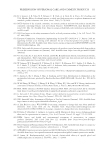
95 APPLICATION OF E GRACILIS-DERIVED PEPTIDES (26) J. R. Bradley, TNF-mediated inflammatory disease, J. Pathol., 214, 149–160 (2008). (27) J. D. Webster and D. Vucic, The balance of TNF mediated pathways regulates inflammatory cell death signaling in healthy and diseased tissues, Front. Cell Dev. Biol., 8, 365 (2020). (28) C. S. Yun, Y. G. Choi, M. Y. Jeong, J. H. Lee, and S. Lim, Moutan Cortex Radicis inhibits inflammatory changes of gene expression in lipopolysaccharide-stimulated gingival fibroblasts, J. Nat. Med., 67, 576– 589 (2013). (29) M. L. DeDiego, L. Martinez-Sobrido, and D. J. Topham, Novel functions of IFI44L as a feedback regulator of host antiviral responses, J. Virol., 93, e01159-19 (2019). (30) J. Traba, A. Del Arco, M. R. Duchen, G. Szabadkai, and J. Satrustegui, SCaMC-1 promotes cancer cell survival by desensitizing mitochondrial permeability transition via ATP/ADP-mediated matrix Ca(2+) buffering, Cell Death Differ., 19, 650–660 (2012). (31) M. Wakabayashi, T. Ito, M. Mitsushima, S. Aizawa, K. Ueda, T. Amachi, N. Kioka, Interaction of lp-dlg/KIAA0583, a membrane-associated guanylate kinase family protein, with vinexin and β-catenin at sites of cell–cell contact, J. Biol. Chem., 278, 21709–21714 (2003). (32) C. Vaz, J. A. Reales-Calderon, A. Pitarch, P. Vellosillo, M. Trevisan, M. L. Hernaez, L. Monteoliva, and C. Gil, Enrichment of ATP binding proteins unveils proteomic alterations in human macrophage cell death, inflammatory response, and protein synthesis after interaction with candida albicans, J. Proteome Res., 18, 2139–2159 (2019). (33) S. Schreiber, P. Rosenstiel, M. Albrecht, J. Hampe, and M. Krawczak, Genetics of Crohn disease, an archetypal inflammatory barrier disease, Nat. Rev. Genet., 6, 376–388 (2005). (34) S. Kezic and I. Jakasa, Filaggrin and skin barrier function, Curr. Probl. Dermatol., 49, 1–7 (2016). (35) A. Sumitomo, R. Siriwach, D. Thumkeo, K. Ito, R. Nakagawa, N. Tanaka, K. Tanabe, A. Watanabe, M. Kishibe, A. Ishida-Yamamoto, T. Honda, K. Kabashima, J. Aoki, and S. Narumiya, LPA induces keratinocyte differentiation and promotes skin barrier function through the LPAR1/LPAR5-RHO- ROCK-SRF axis, J. Invest. Dermatol., 139, 1010–1022 (2019). (36) M. Furue, Regulation of filaggrin, loricrin, and involucrin by IL-4, IL-13, IL-17A, IL-22, AHR, and NRF2: pathogenic implications in atopic dermatitis, Int. J. Mol. Sci., 21, 5382 (2020). (37) X. Han, J. W. Krempski, and K. Nadeau, Advances and novel developments in mechanisms of allergic inflammation, Allergy., 75, 3100–3111 (2020). (38) E. Huang and P. Y. Ong, Severe atopic dermatitis in children, Curr. Allergy Asthma. Rep., 18, 35 (2018).

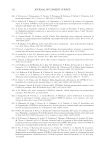
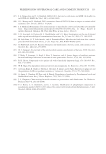
96 Address all correspondence to Gabriela Correa, prado_gabi@terra.com.br Preservation of Personal Care and Cosmetic Products: Effectiveness and Safety During the COVID-19 Pandemic GABRIELA CORREA, ANDREZZA CANAVEZ, VERA ISAAC, MARCIO LORENCINI AND DESIREE SCHUCK Drugs and Medicienes, Sao Paulo State University, Araraquara, SP, Brazil (G.P., V.I.) Department of Safety Assessment, Grupo Boticário, São José dos Pinhais, Paraná, Brazil (A.C., M.L., D.S.) Accepted for publication December 1, 2021. Synopsis The global beauty industry has been shocked by the COVID-19 pandemic. Currently, with increased hygiene habits, the choice of preservatives can be impacted by consumers opting for safe products. Products without preservation system could quickly become contaminated with mold, fungi, and bacteria, resulting in spoilage and increased risk of infection. This review explores the possible impacts of COVID-19 in the preservation of cosmetics from the perspective of effectiveness and safety. The preservatives included benzalkonium chloride, benzoic acid, sodium benzoate, benzyl alcohol, chloroxylenol, chlorphenesin, methylparaben, ethylparaben, propylparaben, butylparaben, phenoxyethanol, sorbic acid, potassium sorbate, as well as the multifunctional/ booster agents ethylhexylglycerin, caprylyl glycol, and natural antimicrobials. First, we highlight the current scenario of cosmetic preservation, the mode of action, and the maximum concentration allowed for preservatives then examines overexposure to preservatives. Unexpectedly, the COVID-19 pandemic paralyzed the world market, and cosmetic industries had to adapt to a new reality. Due to the widespread use of cosmetic products, the prevalence of allergies, microbiological resistance, the need for proper prevention of product contamination, and concerns over the safety of preservatives, further investigations into the modes of action of traditional or alternative preservatives are needed to create successful safety products. INTRODUCTION The global beauty industry (comprising skin care, color cosmetics, hair care, fragrances, and personal care) has been shocked by the COVID-19 crisis, due to which the beauty market is expected to decline 20–30% (1,2). In addition, approximately 17% of women stopped wearing makeup on account of COVID-19, and 30% of the beauty industry market was closed due to the COVID-19 pandemic (2). The COVID-19 pandemic has deeply influenced many aspects of life, especially influencing sanitary restrictions (e.g., bans on leaving the house and the avoidance of direct social contact). People suddenly had more time which they could potentially devote to their J. Cosmet. Sci., 73, 96–113 (March/April 2022)
Purchased for the exclusive use of nofirst nolast (unknown)
From: SCC Media Library & Resource Center (library.scconline.org)