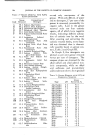
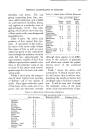
220 JOURNAL OF THE SOCIETY OF COSMETIC CHEMISTS leave more "deposit" on the hair after shampooing than before the washing process. Actually a good shampoo should remove the dirt and grease on the hair and impart a deposit on the hair of a condition- ing oil which improves combability and imparts a luster and high- lights. CONSUMER THE GmNEA We believe that a shampoo should .act as an efficient, effective cleanser but in view of the lack of any satis- factory test method, manufacturers have been forced to judge a shampoo in terms of consumer reaction, and the consumer is indeed a poor sub- ject for evaluating cleansing ef- ficiency. In view of the lack of adequate test methods, commercial shampoos have become poorer and poorer cleansing agents and better and better "finishing" agents. It is interesting to note that recent sur- veys of shampoos run by the various women's magazines, assumed that shampoos exerted a cleansing ac- tion and devoted their efforts to determine the accessory characteris- tics which are desirable, such as luster, softness, fragrance, and suds- ing action. USE OF GREASE WOOL YARNS A careful review of the work done on deterMents (V), particularly with reference to the removal of carbon black from cotton fabrics, clearly indicates that the so-called "stand- ard soils" of this type have little interest or significance in the study of shampoos, and the development of a standard soil on hair would appear to be a difficult problem and require a controlled deposit of lanolin on the hair. A number of difficulties are apparent in the development of such a uniform test. However, we have been greatly assisted by Mr. A. G. Ashcroft, Director of Research at Alexander Smith & Sons Carpet Co., and his assistants working with Mr. E. A. Leonard, who have been studying a quantitative test method for evaluating deterMents (VI) for use in wool scouring. The scouring of sheep's wool in the grease is much more closely related to the problem of shampooing hair than is the prob- lem of removing carbon black from cotton fabrics, which has been so widely and generally studied in the evaluation of deterMents and soaps. The composition of wool grease has been carefully examined by Weit- kamp (VII) and its removal stud- ied by Lundgren (VIII). It is un- questionably similar to the grease and sweat on human hair. By re- ducing the pH by the elimination of sodium carbonate, we are able to approach test conditions closely paralleling conditions encountered in the shampooing of hair. We are particularly fortunate in that Alexander Smith & Sons have recently developed a method of spin- ning "wool in the grease" and pro- ducing a wool yarn containing a wool grease content of 6 to 10 per cent. It is our understanding that Alexander Smith & Sons are pre- pared to produce wool "yarn in the grease" in quantity and that it may

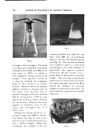
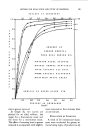
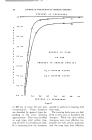
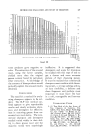
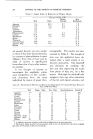
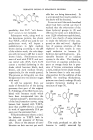
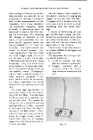
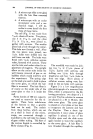
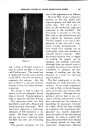
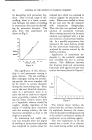
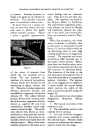
METHOD FOR EVALUATION AND STUDY OF SHAMPOOS 221 be purchased for the use as a stand- ard in studying wool grease re- moval in the textile industry (from the A.A.T.C.C.). By using weighed skeins of this greasy wool yarn, we have been able to study the effec- tiveness of synthetic detergents, soaps, and shampoos under condi- tions that closely approximate the conditions actually used in shampoo- ing the hair. GREAS•. R•.MOVAL rROM 98 TO 0 P•.R C•.NT By using the greasy wool yarn we are able to get a uniform distribu- tion of the grease throughout the yarn and test skeins give a surpris- ingly consistent total grease con- tent when tested from lot to lot. By scouring this greasy wool yarn with detergents and shampoos, we were able to accurately measure the efficiency of the shampoos. By controlling our conditions and limit- ing time and temperature, we were able to develop a test method under which an average shampoo removes only about 50 per cent of the grease from the wool yarn, and by using an extremely effective and efficient synthetic detergent 98 per cent of the grease may be removed. A great many detergents and soaps removed not more than 90 per cent of the grease under any conditions. This method appears to be quite simple to use and gives reproducible results with excellent precision. We further feel that its failure accu- rately to estimate the popularity of a shampoo is an indication of the relatively minor importance of the cleansing action in commercial shampoos. We recommend for your c6nsideration a study of the test method here outlined. B^RN•.TT-POWERS TEST METHOd) The technique involves the use of wool yarn in the grease with known wool-fat content. An accu- rately weighed sample is gently scoured in a definite concentration of shampoo or detergent in a known volume of water for an exact time under standard conditions. The scoured wool is squeezed dry and rinsed twice in a fixed volume of tap water for a given time, then dried, and finally extracted with petroleum ether. The difference between the previously deter- mined grease content of the raw wool and the percentage left after the shampoo scouring is a measure of the relative detergent action of the particular shampoo or chemical compound. EXPERIMENTAL The wool yarn as received on the cone is cut into 20-foot lengths which will weigh between 4.5 and 5 gm. A quantitatively weighed sample is placed (see Fig. 1) in a 500-ml. Erlenmeyer flask containing 200 mi. of tap water at 38øC. and 0.50 gm. of detergent (calculated on a 100 per cent basis). The flask is stoppered and slowly inverted back and forth at 50 times per minute foi' four minutes,•:•after which time the wool is tightly hand- squeezed to remove most of the solution. (Sample may be squeezed
Purchased for the exclusive use of nofirst nolast (unknown)
From: SCC Media Library & Resource Center (library.scconline.org)