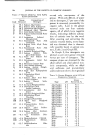
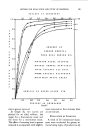
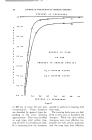
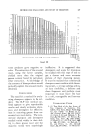
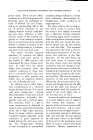
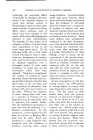
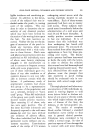
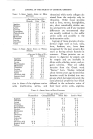
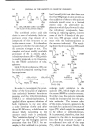
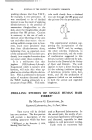
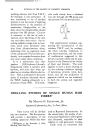
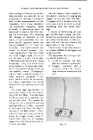
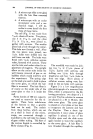
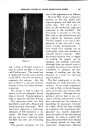
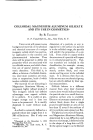
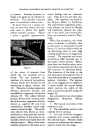
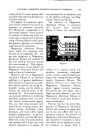
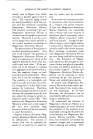
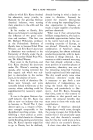
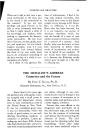
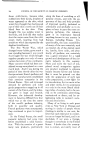
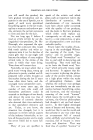
222 JOURNAL OF THE SOCIETY OF COSMETIC CHEMISTS Fig. I through a hand wringer.) The flask is drained and rinsed free of residual detergent, then filled with 100 mi. of tap water at 38øC., to which is then added the damp-scoured wool sample. This operati•m serves as a rinse by shaking the stoppered flask fi)r two minutes in a similar fashion. Remove the wool, squeeze tightly as befi•re to remove most of the water, rinse the flask free of residual detergent, fill with another 100 mi. of tap water at 38 ø C., and repeat the second rinsing by shaking for one minute. liemove the wool, squeeze to eliminate most of the water, and thor(mghly dr)' in a 45øC. oven. l)uring the drying operation, ac- curately weigh two 400-ml. extrac- tion flasks (see Fig. 2) and a sec- ond wool yarn sample previously cut into a 20-foot length. Place the completely dry sample in the ex- Fig. 2 traction thimble and reflux fi•r one hour with 200 mi. of petroleum ether to remove the residual grease (see Fig. 3). The second unscoured wool sample is used as a control by extracting in the same manner to determine the grease content. Ewtporate off the solvent over a steam bath in the hood to constant weight. This last step is of extreme importance to insure that all solvent has been removed--hence the flask should be checked to constant weight by repeated evaporation. It was found that one hour was nsually adequate. Fig. 3

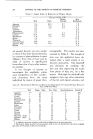
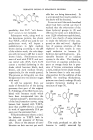
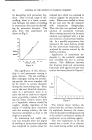
METHOD FOR EVALUATION AND STUDY OF SHAMPOOS 223 A, CALCULATIONS very good precision when evaluating the relative deterRent efficiencies Control: of various surface-active agents. wt. of flask -5-) _ (wt. ofempty• contents flask ]= % grease content wt. of wool sample g. Scoured wool sample: grease content in• i/grease content in• control / -- •, scoured sample } grease content in control - % grease removal by deterRent DISCUSSION OF TEST METHOD All samples when run in duplicate gave a reproducibility as close as 0.3 per cent and a maximum of 2 per cent. Greater precision in all cases may be realized if the dupli- cate samples are shaken simultane- ously. An entire series may be scoured at one time by utilizing a suitable shaking apparatus with fairly slow rocker arms. This pro- cedure, however, would require re- moval of all wool samples at the same time to maintain uniform im- mersion in the deterRent solution. Based on the entire research pro- gram, the results would indicate TABLE 1--EvvECT OF CONCENTRATION OF SODIUM LAURYL SULFATE ON GREASE REMOVAL Concentration, 4-Minute 1-Minute % Scour, % Scour, % 0.005 0.010 0.015 0.020 0.025 0.035 0.040 0.050 0.10 0.t5 0.25 0.35 0.45 0.55 0.80 29.2 32.4 37.0 42.3 50.3 54 2 61 6 64 2 88 6 96 3 96 6 97 1 98.4 98.5 98.7 17.1 ß . . . 351o ß , 5516 8516 ß . ß . ß . When measuring the grease re- moval properties of competitive shampoos, the alkyl sulfate types invariably were more efficient, but in certain instances anomalous re- sults were obtained which indicate that a popular shampoo may not necessarily be a good deterRent. EVALUATION OF SURFACE-ACTIVE AGENTS (SURFACTANTS) ' A total of 43 compounds selected from deterRents, wetting agents, emulsifiers and solubilizers, of the anionic, non-ionic, and cationic types, were studied for their relative deterRent efficiencies in removing grease from raw wool yarn. In each case 0.5 gm. of compound was used, calculated on a 100 per cent basis, in a volume of 200 ml. (giving a 0.25 per cent solution), using the same scouring and rinsing proce- dure in all determinations. The alkyl sulfates were the most effective deterRents fatty acid soaps were generally lower in the scale a wetting agent was 10percent less effective than soap one non- ionic gave only 50 per cent grease removal, while another was one of the most effective deterRents while a branched-chain alkyl sulfate re-
Purchased for the exclusive use of nofirst nolast (unknown)
From: SCC Media Library & Resource Center (library.scconline.org)