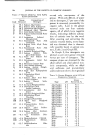
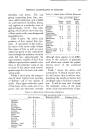
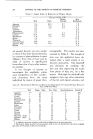
CHEMICAL CLASSIFICATION OF KERATINS 239 ficient material was obtained for this evaluation. Hydroxyproline was not found on any of the chromatograms. The over-all picture one obtains from the chromatograms is that there is a similarity in the amino acid com- position of these tissue proteins except for proline and cystine which are present in markedly smaller quantities in skin than in any of the other proteins. Dandruff occupies an intermediate position between skin and hair and nails with respect to cystine but is similar to the latter tissues in its content of proline. Skin may contain signifi- cantly larger quantities of glycine and lysine. It should be recalled that skin is probably not an euker- atin. In conclusion, then, although it is recognized that the eukeratins dis- cussed in this paper are heterogene- ous proteins, it is believed that two major conclusions may be reached: first, in contrast to many other homologous tissue proteins, eukera- tins show a wider range in their pattern of the 'majority of their amino acid components and, sec- ondly, that they show a remarkable constancy in the molecular ratios of histidine to lysine to arginine. BIBLIOGRAPHY The literature on the methods used for the determinations pre- sented here and many of the results are taken from "The Amino Acid Composition of Proteins and Foods" by R. J. Block and D. Boll- ing, 2nd edition, Springfield, Ill., Charles C Th6mas (1951). ANNUAL MEETING SOCIETY OF COSMETIC CHEMISTS December 6, 1951 Biltmore Hotel New York City Make Your Hotel Reservations Early Complete Program to be Announced Later

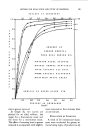
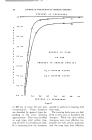
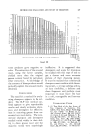
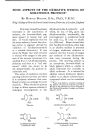
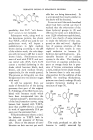
SOME ASPECTS OF THE OXIDATIVE DYEING OF KERATINOUS PROTEINS* By HAROLD BURTON, D.Sc., Ph.D., F.R.I.C. Ki.ng's College of Household and Socia] Science, University of Lond•h, England FOR SOME YEARS I have been interested in the constitution of melanin, the brownish-black pig- ment present in human hair and skin. [I would emphasize that by the name melanin, I mean the color- ing matter or pigment derived by oxidation of 5,6-dihydroxyindole or a suitable derivative.] It was shown by Raper that when tyrosine is treated with oxygen in the pres- ence of the enzyme tyrosinase, it is oxidized first to 3,4-dihydroxyphen- ylalanine and then to a "red sub- stance" which was shown to be 2,3 - dihydroindole - 5,6- quinone - 2- carboxylic acid This series of oxidations involves starting with free tyrosine and there is no evidence whatever that com- bined tyrosine can undergo the same reactions. When the abovequinone is kept in dilute aqueous solution it undergoes rearrangement to 5,6- HOt• fH. COOH NH2 Tyrosine [Ol 5,6-Dihydroxyindole- 2-carboxylic Acid 240 dihydroxyindole-2-carboxylic acid which, by loss of CO,., gives 5,6- dihydroxyindole incidentally, the rearrangement is accelerated both by acids (i.e., H ions) or alkalis (i.e., OH ions). Raper showed that this 5,6-dihydroxyindole, when kept in an alkaline medium in presence of oxygen, underwent oxidation to melanin and that 2 atoms of oxygen per molecule of the dihydroxyin- dole were consumed during the process. The resulting melanin is an amorphous, brownish-black to black pigment which is soluble in alkali hydroxide but insoluble in alkali carbonate. It is redUCed by alkaline sodium dithionate (hydro- sulfite) to an almost colorless leuco- compound which can be reoxidi.zed * Paper read before a scientific meeting of the Society of Cosmetic Chemists of Great Britain in the Chemistry Lecture Theater of the Chelsea Polytechnic, London, on Friday, March 3, 1950. NH• 3,4-Dihydroxyphenylalanine [o1 / 0%/% O•L//•N•CH.COOH.•H,• 2,3-Dihydroind'ole-5,6-quinone- 2-carboxylic Acid
Purchased for the exclusive use of nofirst nolast (unknown)
From: SCC Media Library & Resource Center (library.scconline.org)