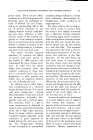
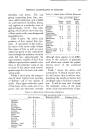
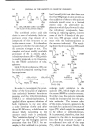
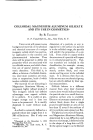
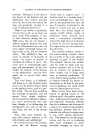
OXIDATIVE DYEING OF KERATINOUS PROTEINS 241 (e.g., by alkaline potassium ferri- cyanide or hydrogen peroxide) to the melanin. Incidentally, this prop- erty of being soluble in alkali hydrox- ide (NaOH, KOH) only, precludes the possibility--apart from the ex- pensive nature of the pigment--of using it as a coloring matter for hair or any other part of the body! In 1948, I suggested (Chem. &Ind., p. 313) a structure for melanin based on the above properties in con- junction with analytical evidence. No mention was made of the actual mechanism whereby 5,6-dihydroxy- indole is converted into the pig- ment, but I suggest that oxidation occurs by introduction of a hy- droxyl group at position 3 with formation of 3-hydroxyindole-S,6- quinone which could then undergo "polymerization." Subsequent oxidation would give the 5,6-quinone which now contains sulfur attached directly to the ben- zene ring. 3,4- Dihydroxyphenylalanine is known to occur in the vegetable kingdom (for example, in the pods of broad beans), but there appears to be no evidence that it can be iso- lated from the animal body. I consider that the presumed non- occurrence of this amino acid in animal protein is incorrect, and would point out that hydrolysis of a protein containing combined 3,4- dihydroxyphenylalanine in the pres- ence of oxygen might well lead to the formation of an indole (see above) which would undergo subsequent decomposition (as occurs with tryp- tophan). Assuming that the com- bined tyrosine in a protein can be HO H H [o1 [o1 Nn N• ø•%• Unpublished work that I have carried out on natural melanins in- dicates that these pigments often contain a small but definite amount (about 1%) of firmly combined sul- fur. I suggest that if the above hy- droxyindolequinone undergoes poly- merization in the presence of free SH groupsbeven the few normally pres- ent in proteins--then the following addition reaction may well occur: NH oxidized to combined 3,4-dihydroxy- phenylalanine, it appears likely that the latter may undergo further oxidation in one or both of two ways, viz., (i) direct hydroxylation at position 6 of the benzene nucleus, (ii) oxidative elimination of the side-chain to give 1,2,4-trihydroxy- benzene (hydroxyquinol). In either case the orientation of the three hydroxyl groups in both oxidation products is the same. SR sjlø addition H0 H [0] + HSR • HO N• O//"'d'x"•'NU

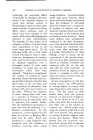
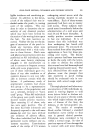
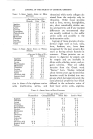
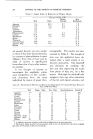
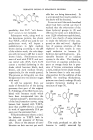
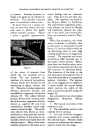
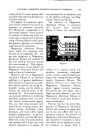
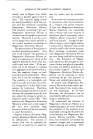
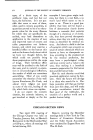
242 JOURNAL OF THE SOCIETY OF COSMETIC CHEMISTS R R OH •OH •----' H --'-• OH OH OH OH (I) (II) R = ß CH2. CH(NH. COW). CO. NHR' (R' is part of the protein residue) The combined amino acid side chain is now of relatively little im- portance since ring closure of a compound of this structure to an indole cannot occur. It is therefore immaterial whether the side chain of (I) contains nitrogen or not. The simplest and most readily available prototype of (I) is clearly 2,4,5- trihydroxytoluene (R = CHa),which is readily prepared, as its triacetate, by the •Thiele acetylation of tolu- quinone. 1,2,4-Trihydroxybenzene (II) can be similarly prepared starting from benzoquinone. O CH• %•% /i , plus O H,,SO4 or HC104 ß In order to investigate th e' p•ssi- biiity of the formalion of pigments (not melanins) between keratioous proteins and the trihydroxytol'Uene (T.H.T.) or trihydroxybenzene, I applied dilute aqueous solutions of both triphenols to my own skin a color develops slowly and after about 10-24 hours a dark brown to almost black (according to the amount used) stain is produced. This" ' ' ox•danve dyeing" or "quinone tannage" (as the biologists call it) presumes that the T.H.T. for ex- ample, is first oxidized to a quinone, but I would point out that there are few free SH groups in skin protein so that addition of these to the quinone molecule would occur to a limited extent only. An alternative ex- planation which I put forward is that the trihydroxy compounds, func- tioning as reducing agents, convert some of the S--S bonds of the pro- tein into SH groups which then react with the hydroxyquinone in the manner indicated. The result- ing thiotrihydroxytoluene (III)could CHa HO• SR __,.0% OH + [ + 2RSH OH SR X'•OoH%O • RSH CHa [0] HOASR • •OI-] OH acid CH.• hydrolysHHO•o) -- OH undergo ready oxidation to the quinone (IV), which might also add the second RSH in a similar manner. In either case, the quinone molecule would be incorporated into the pro- tein molecule. The intense color of the stains, however, appears to be too dark for a quinonoid structure of type (IV) which might be expected to be yellow or yellowish-brown. It is presumed, therefore, that iron present in the skin is incorporated into the final structure to give a co-ordinated iron salt of the type (V), which was almost black the O CH, %•SR t(IV) i 'CH• CHq. C0.0• A .....
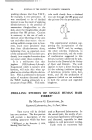
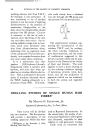
(CHa'COhO :i•-, t•f)O. CO. CH.• O. CO. CH•
Purchased for the exclusive use of nofirst nolast (unknown)
From: SCC Media Library & Resource Center (library.scconline.org)