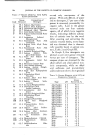
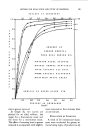
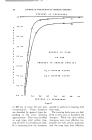
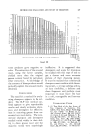
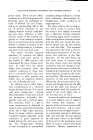
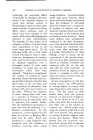
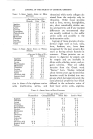
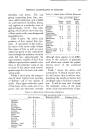
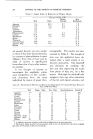
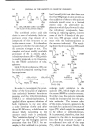
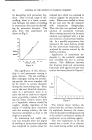
226 JOURNAL OF THE SOCIETY OF COSMETIC CHEMISTS PERCENT OF DETEROENT 90 -- 80 -- 70 -- 60---- 50-- 40 -- 30 EFFECT OF TIME ON THE PERCENT OF GREASE REMOVAL MINUTE SCOUR B- I MINUTE SCOUR 2O in 200 ml. of water (0.5 per cent concentration). These shampoos are classified by general types de- pending on the active cleansing agent present. They were classified as soap type, alkyl sulfate type, and all others as miscellaneous type. It is surprising how the shampoos -- 0,1 0,2 0,3 0,4 0,S 0,6 0.7 PERCENT 0 IP DETERGENT Graph II seemed to perform in keeping with their type. The scouring baths were not buf- fered so they took on the pH of the shampoo. While the alkyl sulfate shampoos were most effective (es- pecially the tube and jar products) and the soap type least effective,

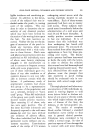
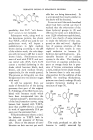
METHOD FOR EVALUATION AND STUDY OF SHAMPOOS 227 •n•s• R•OYA• wx•n o.•o• ol, AC•IVS Graph III • • eo so 3o oo some products gave negative re- sults. The extraction of the scoured wool, using the latter samples, yielded more than the original grease content found by petroleum ether extraction. A knowledge of the contents of these products would probably explain the unusual results obtained. CONCLUSIONS The need foi- a method for evalu- ating shampoos appears to be evi- dent. The B-P test method out- lined appears to give reproducible results and clearly evaluates sham- poos and detergents for effective- ness in removing grease from un- scou/-ed raw wool skeins. The com- mercial shampoos and detergents studied varied widely in their abil- ity to clean grease wool and the majority tested were surprisingly ineffective. It is suggested that detergents and soaps for shampoos be studied with this type of test to get a clearer and more accurate picture of their cleansing power. It must be realized that commercial shampoos must combine with cleans- ing power, a strong sudsing action, an easy rinsibility, a delicate and clean fragrance and perhaps most important it must leave the hair in a soft, manageable and lustrous condition. LITERATURE CITED I. (1) Year Book of the Am. Assoc. of Tex. Chemists & Colorists, Vol. XXVI, New York, Howes Publ shing Co., Inc. (1950). (2) Bacon, O. C., •tm. Dyestuff Reptr., 34, 556 (1945). (3) Clark, J. R., and Holland, V. B., Ibid.,36, 734 (1947). (4) F[ett, L. H., Chern. Eng. News, 26, 1368 (19i8). (5) Harris, J. C., •t.S.T.M. Bull., 140, 6 141, 49 (1946). (6) Holland, V. B., and Pettea, A., •trn. Dyestuff Reptr., 32, 534 (1943). (7) McCutch-
Purchased for the exclusive use of nofirst nolast (unknown)
From: SCC Media Library & Resource Center (library.scconline.org)