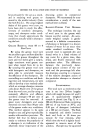
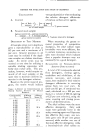
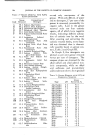
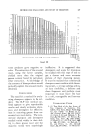
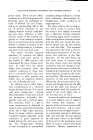
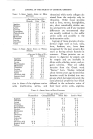
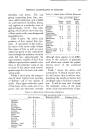
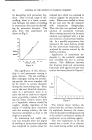
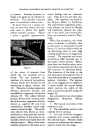
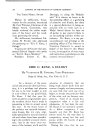
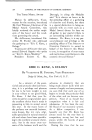
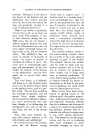
224 JOURNAL OF THE SOCIETY OF COSMETIC CHEMISTS TABLE 2•GREASE REMOVAL WITH 0.25% ACTIVE DETERGENT Grease Composition of Code Removed Detergent A 98.2 Sodium Alkyl Sulfate B 98.2 Sodium Alkyl Sulfoacetate C 98.2 Ammonium Alkyl Sulfate D 95.7 Polyglycol Alkyl Thioether E 95.0 Alkyl Amide Sulfonate F 94.4 Sodium Sulfoacetamide Fatty Ester G 93.3 Ammonium Sulfated Monoglyceride H 93.0 Alkylolamide Fatty Acid Condensate I 92.8 Sodium Sulfo Alkyl Fatty Ester J 92.6 Alkylolamide Fatty Acid Condensate K 92.3 Aromatic Polyglycol Ether L 92.2 Sodium Aralkyl Poly- glycol Ether Sulfate M 92.2 Alkyl Aryl Sodium Sul- fonate N 92.0 Alkylolamine Alkyl SuL fate O 90.3 Potassium Coconut Soap P 89.3 Alkyl Amide Sulfonate Q 88.4 Sodium Aralkyl Polygly- col Ether Sulfate R 84.8 Alkyl Aryl Sulfopropionic Ester S 84.3 Polyethylene Glycol Non-ionic T 81.7 Sodium Alkyl Aryl Poly- ether Sulfonate U 79.8 Sodium Dioctyl Sulfo- succinate V 77.9 Aromatic Polyglycol Ether W 77.0 ProteinrFattyAcid Amide Condensate X 73.7 Alkylolamine Aryl Sul- fonate Y 69.1 Alkylaryl Polyglycol Ether Z 63.5 Polyethylene Glycol Non-ionic AA 57.2 Polyglycol Fatty Ether BB 56.8 Alkyl Aryl Polyglyccl Ether CC 53.0 Polyoxyethylene Fatty Acid Ester DD 25.0 Sodium Alkyl Sulfate- Branched Chain EE 20.0 Sodium Alkyl Imidazol- inium Hydroxide FF --8.5 Acyl Pyridinium Chlo- ride GG --8 6 Benztrialkonium Chloride HH --9.4 Mcrpholinium Ethosul- fate II -12.7 Benztrialkonium Chlo- ride moved only one-quarter of the grease. With only 200 ml. of water and no detergent, 17 per cent of the grease is removed, presumably in- organic salts. Last in the grease removal scale are four cationic agents, all of which have negative results, indicating definite adsorp- tion of cationic ions by the wool. After scouring and extracting the cationic treated skeins, more mate- rial was obtained than is theoreti- cally possible based on grease con- tent, Table 2 and Graph III. In Graph I, five detergents are plotted as per cent grease removal versus per cent of detergent. The steepest slopes are obtained for the alkyl sulfate and alkyl phenol non- ionic compounds, while an alkyl aryl sulfonate and protein-fatty acid condensate show a more gradual TABLE 3--GREASE REMOVAL WITH 0.5% O•' COMMERCIAL SHAMPOOS Grease Type pH Extracted, Alkyl Sulfate 8.4 91.0 Alkyl Sulfate 9.2 93.0 Alkyl Sulfate 7.1 81.9 Alkyl Sulfate 7.6 81.0 Alkyl Sulfate 8.8 80.7 Miscellaneous 6.4 66.6 Alkyl Sulfate 7.7 61.7 Alkyl Sulfate 7.0 58.9 Alkyl Sulfate 7.8 58.7 Alkyl Sulfate 7.3 56.1 Alkyl Sulfate 7.3 41.4 Miscellaneous 6.6 39.1 Alkyl Sulfate 7.9 35.5 Soap 9.4 26.3 Soap 9.1 24.5 Soap 9.3 23.5 Soap 9.5 21.6 Soap 9.3 21.5 Miscellaneous 6.0 21.2 Water 17.0 Soap • i• --0.4 Soap 7.9 -0.5 Soap 6.6 -0.9 Soap 7.6 -0.8

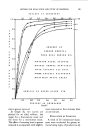
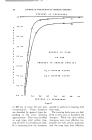
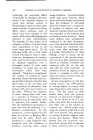
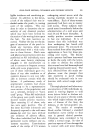
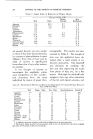
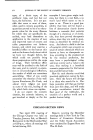
METHOD FOR EVALUATION AND STUDY OF SHAMPOOS 225 •XO0• 9O R C 80 T 70 o 60 A 50 R 0 40• ¾ L •0 2O PERCENT 0F D E T 1•- R O 1•- I( T 0,• 0.3 0.4 0.5 0.6 PERCENT OF GREASE REMOVAL FROM WOOL SKEINS BY., A:SODIUM ALKYL SULFAT• B:ALKYL PHENOL NON-IONIC C•POTo COCONUT OIL SOAP D•T.EoAo A RAL KYL S UL F0 NA TE E:PROTEIN FATTY AMID• REKOVAL BY WATER ALONE rise in grease removal. In Graph II, two curves are plotted for an alkyl sulfate the upper for a four-minute scour and the lower for a one-minute scour. The effect of scouring time in grease removal is as expected, with slightly c 9 5 9O 0,3 0,4 0,5 0,$ 0,? I•E R C •'-N T OF DE TE R G EN T Graph I more removed at four minutes than at one minute. EVALUATION OF SHAMPOOS A total of 23 commercial sham- poos were evaluated for grease re- moval using 1 gm. of product (as is)
Purchased for the exclusive use of nofirst nolast (unknown)
From: SCC Media Library & Resource Center (library.scconline.org)