THE COLLAPSIBLE TUBE G. E. HOLMES, M.A., A.R,I.C.* The physical properties and corrosion resistance o• those metals suitable for the manufacture of tubes are surveyed, and methods of inhibition of corrosion ant1 of reduction of seepage summarised. TIlE METAL collapsible tube finds so many applications in present-day life that there can be very few homes in this country which do not contain at least one in current use. Such a wide distribution, coupled with the fact that it is an expendable product, has produced a thriving industry able to turn out a mass-produced article, of exceedingly high quality, at a relatively low cost. According to reliable estimates, some 300 million tubes are used in Britain per year, a truly staggering total. You will notice that I said "tubes," not collapsible tubes, for that abbreviated form of the name is universally accepted in spite of the fact that it should strictly be used only in connection with piping. Familiarity readily overrides such matters of detail. I hope you will forgive me if I preface my talk on the collapsible tube with a few words about the body which has organised this, and a number of other lectures which are being given in various parts of the country during this autumn. The Collapsible Tube Manufacturers Association (or C.T.M.A. *The Collapsible Tube Manufacturers Association, 47, \¾elbeck Street, London, W. 1. 107

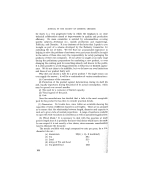
JOURNAL OF THE SOCIETY OF COSMETIC CHEMISTS for short) is a very progressive body in which the emphasis is on close technical collaboration aimed at improvements in quality and production efficiency. Its main committee is assisted by subcommittees covering specific subjects--Technical (i.e., mainly production and engineering), Publicity, and Chemists. It is as chairman of the latter that I speak to you to-night as part of a scheme developed by the Publicity Committee for extending the use of tubes. We feel that our accumulated experience in helping to solve the problems of customers over past years should be brought to the notice of those who carry the responsibihty for safely packaging the products of their own companies. If our advice is sought at an early stage during the preliminary preparations for marketing a new product, or even changing the existing pack for something already well known to the public, it is often possible to avoid disappointments in behaviour or finished appear- ance. We do not claim to be infallible, but we do know our own limitations and those of our product fairly well. Why does one choose a tube for a given product ? No single reason can ever supply the answer it will be a combination of various considerations ' (a) Convenience of the consumer. (b) Protection of the product against deterioration during its shelf life and, equally important, during the period of its actual consumption, which may be spread over several months. (c) The need for a container of limited capacity. (d) Visual appeal of the pack. (e) Cost. Once the manufacturer has decided that a tube is the most acceptable pack for his product he has then to consider practical details. (1) Dimensions. No trouble here, since tables are available showing the). ! , capacities of tubes of different diameters and lengths. These are so arranged as to ensure that the relationship between length, diameter and capacity ism:. such as to give a tube of normal proportions. A range of nozzles is available :' to cope with wide variations in consistency as well as specialised applications. i:! (2) Which Metal ? It is necessary to deal with this question at much-• greater length since it is probably the most vital choice which has to be In one respect it is not exactly a free choice, since economic consideration s• tend to eliminate the favourite. The metals available with rough comparative costs per gross, for a 1 diameter tube are: (a) Aluminium 22/6 (+ 3/- if Araldited) (b) Tin 39/- (c) Lead 21/- (d) Alloys of Tin and Lead • (e) Tin-plated lead 24/6 108
Purchased for the exclusive use of nofirst nolast (unknown)
From: SCC Media Library & Resource Center (library.scconline.org)