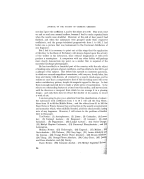
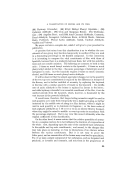
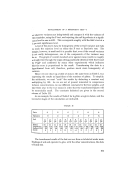
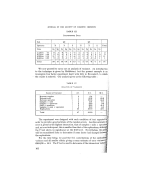
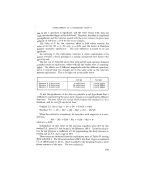
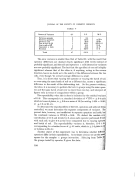
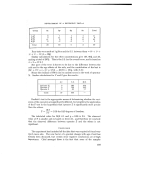
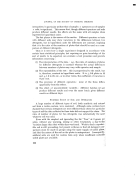
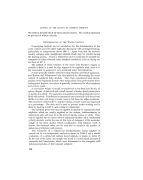
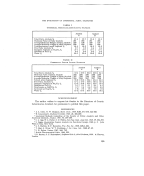
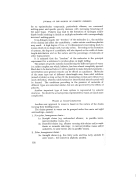
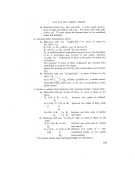
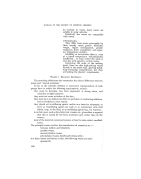
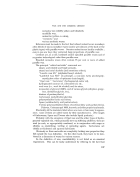
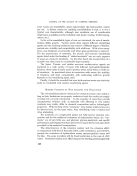
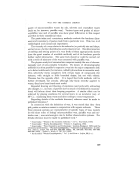
THE EVALUATION OF COMMERCIAL ALKYL $ULPHATES TABLI• I COMMERCIAL TRIETHANOLAMINE LAURYL SULPHATE Analyst Analyst A B ... Total Fatty Alcohols % 21.4 21.7 21.5 21-3 Hydroxyl Value of Fatty Alcohols 281 283 281 285 Average Molecular Weight of Fatty Alcohols 200 198 200 197 Average Molecular Weight of Alkyl Sulphate .•428 426 428 425 Triethanolamine Lauryl Sulphate % 44.4 44.3 44.5 44-2 Free Fatty Alcohols % 2-7 2-5 2-4 2.3 Inqrganic Sulphate as Na•SO4 % 0-1 0.1 0-! !0.1 Chlorides as NaC1% 0.9 0.9 0.9 0.9 Water % 50'0 50.4 50.6 50.9 TABLE II COMMERCIAL SODIUM LAURYL SULPHATE Analyst Analyst A B -- Total Fatty Alcohols % 53.4 53.5 53-2 53.6 54.1 Hydroxyl Value of Fatty Alcohols 285 286 287 288 290 Average Molecular Weight of Fatty Alcohols 197 196 195 195 194 Average Molecular Weight of Alkyl Sulphate 299 298 297 297 296 Sodium Alkyl Sulphate % 55.8 55.6 55-4 55.4 55.3 Free Fatty Alcohols % 17.1 17.0 16-8 16-4 16.5 Inorganic Sulphate as Na•SO• % 10-5 10-8 10.6 10-4 10.4 Chlorides as NaC1% 0.1 0-1 0.1 0.1 0.1 Bicarbonate as NaHCOa % 0.7 0.6 0.6 0'6 0-5 Carbonate as Na•COa % 1-8 2.0 1.8 1.8 1.8 Water % 15.5 15-5 16.0 16.0 16.2 ACKNOWLEDGEMENT The author wishes to express his thanks to the Directors of County Laboratories, Limited, for permission to publish this paper. REFERENCES • J. A. Gilby, H. W. Hodgson, Manf. Chem., 1950, XXlo 371-376, 423-426. 2 I•. Linsenmeyer, Melliand Textilber, 1940, 21, 468-469. a Analytical Methods Committee of the Society of Public Analysts and Other Analytical Chemists, Analyst, 1951, 76, 279-286. 4 C. L. Ogg, W. L. Porter, C. O. Willits, Ind. Eng. Chem. Anal. Ed., 1945, 17, 394-397. 5 S. Siggia, Quantitative Organic Analysis via Functional Gyoups, 1949, p. 3. John Wiley & Sons, New York. 8 G. S. Hartley, D. F. Runnicles, Proc. Roy. Soc., 1938, 168A, 424. 7 T. Barr, J. Oliver, W. V. Stubbings, J. Soc. Chem. Ind., 1948, 67, 45. s S. R. Epton, Nature, 1947, 160, 795. 9 2•ritish Pharmaceutical Codex, 1949, 232. x0 D. Burton, G. F. Robertshaw, Sulphated Oils • Allied Products, 1939. A. Harvey, London. 129

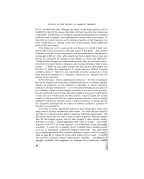
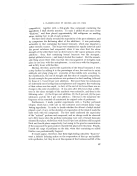
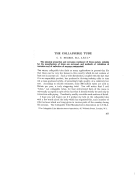
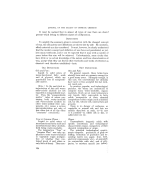
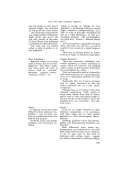
A Lecture delivered to the Society on 14th January, 1955. WAX AND THE COSMETIC CHEMIST L. IVANOVSZKY, D.Sc. The author discusses the meaning ot• [he term •'wax," discards chemical detiinitions and l•rOl•OUnds a classification based on physical structure. INTROr)UC•NG MY lecture, I wish to mention that I do not pretend to be a cosmetic chemist myself. It is therefore obvious that it is not my intention to deal with specific cosmetics' problems. The only excuse I may claim to address you relates to the somewhat remote fact that at one time, in my younger days, I was in charge of a soap and cosmetics works. Since then I have retained a certain interest in the use of waxes, fats and oils, also in the field of cosmetics. The field of wax application covers numerous industrie• whereby it is important to realise that they are used for a variety of different purposes. In the order of approximate consumption, waxes are used as paper impreg- nants, solid illuminants, match impregnants, fruit and food preservatives, electrical and wireless insulants, as well as for the manufacture of polishes, a variety of stationery materials, cosmetics, pharmaceuticals and many other articles of commerce. In addition, waxes are albo used as starting materials for chemical conversion--for instance, by chlorination, oxidation, cracking and polymerisation. It is interesting to note that the assessed annual consumption of waxes and related materials by the U.S.A. cosmetic and pharmaceutical industries amounts to 2,700 tons, or oe1,I00,000. The quantity figure corresponds to about 0-6 per cent of the total U.S.A. wax consumption.• Another angie of wax application gives further insight into the multitude of requirements and problems involved---namely, the fact that •waxes are used in the solid state as well as in the form of solvent solutions and pastes, and in that of a variety of emulsions. In this short introduction, reference should be made to two groups of commoditiesmnamely, "waxes" and "related materials." It seems, there- fore, necessary to outline the past and present concepts of wax and to' consider the meaning of "related material," realising that. representatives of both classes are of importance to the cosmetic chemist. This consideration involves such problems as the appropriate selection of raw materials for a 130
Purchased for the exclusive use of nofirst nolast (unknown)
From: SCC Media Library & Resource Center (library.scconline.org)