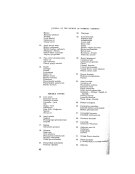
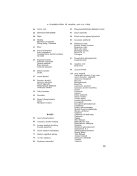
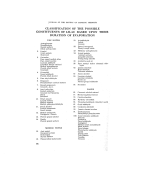
JOURNAL OF THE SOCIETY OF COSMETIC CHEMISTS pure substance. Moreover, they are not so active when added to essential oils by reason of their complex composition, since the low vapour pressure fractions probably act as natural fixatives to the more volatile constituents. In the same way the fragrance. of a properly blended compound or perfume may be marred rather than enhanced by their use, and their employment should only be condoned as fixatives in basic compounds of a light, flowery or evanescent nature. Hence, I think it is time we had a more precise conception of fixation as a whole. First, we should admit that it depends upon the choice and blending of the basic notes in any mixture of aromatics, and we might then with truth call this group of the classification" fixatives" if desired. Second, we should realise that no magical lasting qualities can be imparted by mere additions of odourless synthetics of high boiling point to already blended mixtures,. and in consequence the perfumer will be bound carefully to consider their dual effect before adding them to his finished creation. For if he is a master of his craft he will doubtless prefer to select his aromatics in accordance with their lasting properties, rather than rely upon dubious additions which might, in effect, impair his work of art. To return to the main theme, how can this classification of odours be used to facilitate the work of the perfumer, either novice or expert ? It may be true to say that the few are able to apply their genius exclusively to the creative side of the industry, but alas, the many are compelled to devote much of their time to the examination and duplication of other successful fragrances. This work can be exhausting and is often unsatisfactory, since to copy exactly a work of art is virtually impossible. Some of you will have experienced the disappointments that are inevitably associated with such problems for after months of trial and error you may have succeeded in producing a colourable imitation of the model, only to find on offering it to your client that he expects to pay a quarter the price you ask for your laboriously produced compound. This classification of odours can be of great assistance in this type of work ß since it reveals to the eye, and suggests to the olfactory organ, all the possible constituents of the model in the order of their evaporation. This is:: rendered less difficult by placing a fresh quantity of the fragrance on paper,. at equal intervals and comparing the series of strips, when by difference the:: lost constituents will be immediately recognised by a l•een and experienced sense of smell in accordance with the coefficients. .:::. But it is in the creative side of perfumery that this classification can beli so useful. The first step is to analyse the coefficients under the headings ofl • the various flower types, and colognes, and to then tabulate them according!.:: to their respective groupings of top, middle and basic notes. Each picture.' will then suggest the possible variations in shading as the new flowery creationi'i: develops, and trial and error by quantity will ultimately yield the require.• 8 : f: "•'

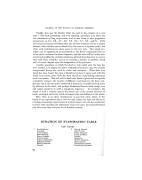
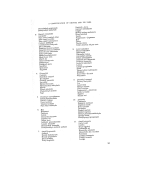
A CLASSIFICATION OF ODOURS AND ITS USES blend. I have abstracted the possible constituents for the creation of a lilac complex, from its simplest form in a compound to its more intricate pattern in a sophisticated fragrance, and have chosen this type because it is one of the commonest flowering agents in use. This particular classification will be available for publication with this paper, but in the meantime I shall quote from it in the two examples I will discuss in detail. In the creation of all flower compounds I give the same advice to my pupils, and will repeat it here and now namely, that the key to success is Simplicity, Simplicity and again Simplicity or, in other words, the use of the absolute minimum of aromatics in the production of the finished blend. Bearing this in mind, an examination of the classification will reveal the vital constituents of a lilac as reducible to nine, as follows: Top Note: Benzyl acetate 1, terpineol 3, and phenyl ethyl alcohol 4. .Middle Note: Heliotropin 15, and anisic aldehyde 21. Basic Note: Cinnamic alcohol 65, hydroxy citronellal 80, isoeugenol and phenyl acetic aldehyde 100. The relative proportions of each are a matter of taste and I must leave each worker to compose his fragrance as he thinks fit, but if the perfume of pink lilac is to be duplicated with any accuracy, then attention should be paid to the predominating nuances of phenyl ethyl alcohol and hydroxy citronellal, their shading with heliotropin and cinnamic alcohol and crown- ing with terpineol, all of which are rounded off with relatively small per- centages of the other essential ingredients including benzyl acetate, which would be replaced by jasmin absolute in a compound of first quality. This classification is perhaps even more useful in the creation of a flowery perfume, and in taking lilac again as the example, it will, of course, be based largely upon the compound already discussed. But here simplicity gives place to complexity, as there are about eighty possible aromatics that may be used in building up a sophisticated fragrance of this type. Their selection offers endless permutations and combinations, and if ten perfumers worked on this theme every one of their creations would be different. Indeed, some might so modify the flower note that it would be unrecognisable as a lilac complex to all save the expert. I shall here discuss only a simple flowery version, which may be elaborated at will in accordance with the above ideas, as follows' Top Notes: Bergamot 6 and nerol 8. Middle Notes: Ionone 21, ylang 24, jasmin and rose absolutes 43, and neroli 50. Basic Notes: Cyclamen aldehyde 89, santal, musk ketone, vanillin and methyl nonyl acetic aidehyde 100 plus lilac and muguet compounds. 89
Purchased for the exclusive use of nofirst nolast (unknown)
From: SCC Media Library & Resource Center (library.scconline.org)