THE SKIN AS A COMMUNITY OF STRUCTURES and other pharmacological studies indicates a r.esponse characteristic of the skin itself rather than of the intact animal (Pomerat & Leake, 1954 Livingood & Hu, 1954). In addition to culture of the epidermis and part of the dermis without further disintegration, studies have been made on portions of skin during investigation of vesicants (Dixon & Needham, 1946). However, these studies were concerned with the presence or absence of certain enzymes after treat- ment of the skin on the intact animal and were not continued for periods of time comparable with those used in tissue culture methods. A recent report of studies of a skin homogenate, prepared by disintegration of the tissue by grinding (Griesemer & Gould, 1954), provides evidence of the ability of certain enzyme systems to function satisfactorily six to seven hours after preparation of the homogenate. Materials related to' carbohydrate meta- bolism were added to the homogenate and the rate of respiration was measured. The results, however, did not allow of any precise conclusions on the path of carbohydrate metabolism in the epidermis. In relation to the processes characteristic of the skin itself, the following tentative conclusions may be drawn from the studies discussed above. Maximum production of keratin takes place when the skin and its structures are provided with a vascular system, but the production of hair and keratin- ised epidermis can still take place independently of the intact animal. The process of utilisation of carbohydrate in the active migration and differentia- tion of epithelial cells and the incorporation of only very small amounts of sulphur from sulphate during keratinisation are normal. The changes in ribonucleic acid content of the cells are consistent with increased protein synthesis. The emphasis has fallen inevitably upon the process of keratinisation because it has received the greatest amount of study. Its relation to pigment production and the activity of the sebaceous glands will form much of the subject matter of the second and third parts of this paper. REFERENCES Dixon & Needham, 1946, Nature (London), Sept. 28, 158, 432. Fell, Mellanby &Pelc, 1954, British Medical Journal, Sept. 11,611. Griesemer & Gould, 1954, Journal of Investigative Dermatology, 22, 299. Hardy, 1949, Journal of Anatomy, 83, 364. 1951, Annals of the New York Academy of Sciences, 53, 546. Hardy, Biggers & Claringbold, 1953, Nature (London), Dec. 26, 172, 1196. Kahn, 1954, ibid., Aug. 14, 174, 317. Livingood & Hu, 1954, Annals of the New York Academy of Sciences, 58, 1202. Medawar, 1947, Quarterly Journal of Microscopical Science, 88, 27. 1948, ibid., 89, 187. Pomerat et alia, 1952, Journal of Investigative Dermatology, 18, 193. 1953, ibid., 20, 357. Pomerat & Leake, 1954, Annals of the New York Academy of Sciences, 58, 1110. Washburn, 1954, Journal of Investigative Dermatology, 23, 97 and 169. 123

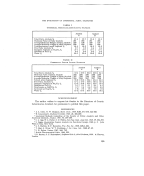
THE EVALUATION OF COMMERCIAL ALKYL SULPHATES R. H. CROCKETT* Analytical methods lor the analysis o! detergents [or alkyl sulphates are detailed. Duplicate results obtained by two analysts, using the methods on two different types oi detergent, are tabulated: they show that the accuracy o! the methods is excellent. THERE HAS been a number of publications concerning the identification and analysis of many types of commercial detergents dealing mainly with the qualitative identification and the determination of the active material. The scheme of Gilby and Hodgson • is based upon a study of some forty commer- cial products and includes a modification of Linsenmeyer's.` method for the identification of eight types of surface-active agents. The Analytical Methods Committee of the Society of Public Analysts and Other Analytical Chemists" give a procedure for the examination of various types' of detergent preparations, including both qualitative and quantitative methods of pro- cedure for the active principle. All these methods deal with detergent preparations in a generalised way, but do not appear sufficient for the evaluation of a raw material which is to be used as a basis for manufacture of various products. The commercial alkyl sulphates are widely used in industry at the present time as wetting agents, as raw materials for the manufacture of laundry and household detergents and for the manufacture of soapless hair shampoos of various types. They usually consist of a mixture of the active detergent with some unsulphated alcohols, inorganic sulphates, inorganic chlorides and water. An evaluation of the raw material is essential for the control of any product for which it forms a basis of manufacture. The procedures given heie are for the purpose of obtaining data to indicate the composition, and include the determination of the hydroxyl value of the fatty alcohols. This value is used as a basis for the calculation of the molecular weight of the alkyl sulphate. DETERMINATION OF THE T•)TAL FATTY ALCOHOLS The alkyl sulphates are quite easily hydrolysed by refluxing with approx- imately 2N sulphuric acid and it is an advantage to obtain the bulk of the fatty alcohols without treatment with solvent so that there is no loss of the more volatile alcohols during the removal of the solvent, and hence no effect on subsequent analysis. A weight of 25 gms. of the sample is transferred to a 500 ml. flat-bottomed Quickfit flask and dissolved in 200 mls. of approximately 2N sulphuric acid. * County Laboratories, Ltd., Honeypot Lane, Stanmore, Middlesex. 124
Purchased for the exclusive use of nofirst nolast (unknown)
From: SCC Media Library & Resource Center (library.scconline.org)