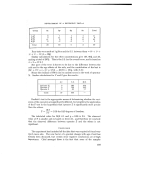
THE EVALUATION OF COMMERCIAL ALKYL SULPHATES DETERMINATION OF THE FREE FATTY ALCOHOLS The unsulphated fatty alcohols may be determined by extraction of a solution of the material with a suitable solvent or by extraction of the material after the addition of sufficient anhydrous sodium sulphate to combine with the water present. The latter method is preferred. A weight of 2 gms. of sample is transferred to a small beaker and 10 gms. of anhydrous sodium sulphate added. The mixture is thoroughly stirred with a small glass rod and 50 mls. of hot benzene added. The contents of the' beaker are thoroughly mixed and allowed to settle for a few minutes on a water bath. The benzene extract is filtered through a No. 1 Whatman filter paper into a weighed flask and the extraction repeated twice more, transfer- ring the contents of the beaker into the filter with the last extraction. Most of the benzene is removed by distillation, the last traces removed in a steam oven and the flask cooled and weighed. The result is expressed as a percentage of free fatty alcohols. DETERMINATION OF THE INORGANIC SULPHATES The inorganic sulphates are determined by solution of the alkyl sulphate in 95 per cent alcohol and removal of the inorganic salts by filtration. The sulphates are precipitated as barium sulphate. A weight of 2 gms. of sample is heated with 50 mls. of 95 per cent alcohol until the alkyl sulphate has dissolved and the inorganic salts are allowed to settle on a water bath. The solution is filtered through a Gooch crucible containing a close-fitting No. I Whatman filter paper and the inorganic salts are transferred to the crucible and thoroughly washed with hot 95 per cent alcohol. The contents of the crucible are then transferred back to the original beaker with hot distilled water, the bulk adjusted to I00 mls., and 4 mls. of concentrated hydrochloric acid added, followed by 20 mls. of hot 10 per cent barium chloride solution. The contents of the beaker are boiled for one minute and allowed to stand at least four hours. The precipitate of barium sulphate is filtered through a No. 42 '•Vhatman filter paper and washed and ignited in the usual way. The weight of barium sulphate obtained is expressed as a percentage of sodium sulphate. DETERMINATION OF THE INORGANIC CHLORIDES The inorganic chlorides are determined by Mohr's method of direct titration with standard silver nitrate solution using potassium chromate indicator. A weight of 2 gms. o[ sample is dissolved in approximately 200 mls. of distilled water, and if the solution is alkaline to litmus, dilute nitric acid added to neutrality. Potassium chromate indicator solution is added and 127

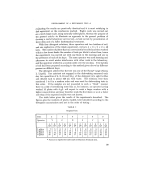
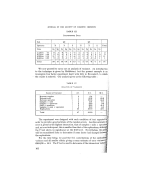
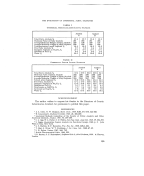
JOURNAL OF THE SOCIETY OF COSMETIC CHEMISTS the solution titrated with 0:1N silver nitrate solution. ß The result is expressed as per cent of sodium chloride. DETERMINATION OF THE WATER CONTENT Oven-drying methods are not satisfactory for the determination of the water content since the alkyl sulphates decompose with prolonged heating, particularly at temperatures above I00 ø C. Apart from this the material usually contains some unsulphated alcohols which may be volatile during the heating process. If such a method be used it could only be suitable for comparative values obtained under standard conditions, such as drying for one hour at 95 ø C. The method of direct titration of the water with Fischer's reagent is suitable if there is a need for this reagent to be regularly used, since it is not convenient to prepare for only occasional water determinations. A more generally suitable method is using the Dean and Stark apparatus, and Burton and Robertshaw •ø use .this method for determining the water content of sulphated fatty alcohols. Since they experienced some decom- position of the sulphated alcohols when using xylene, they preferred the lower boiling-point heptane, but xylene is generally satisfactory for alkyl sulphates and is more rapid. A convenient weight of sample is transferred to the flask and 70 mls. of xylene, 60 gms. of oleic acid and a small amount of broken dried porous plate or pumice are added. The apparatus is assembled and the graduated receiver filled with xylene. Distillation is commenced and continued until the solvent distils over clear and drops of water cease to fall from the reflux condenser. The receiver is cooled to 20 ø C. and the volume of water noted and expressed as a percentage. The oleic acid is used to prevent undue frothing and is dried by heating to 140 ø C. and cooling in a desiccator. The methods given here may be applied in general to commercial alkyl sulphates which are usually supplied as the sodium, triethanolamine or ammonium salts and may be in the form of liquids, pastes or solids. They may be applied also to similar salts of sulphated ethylene oxide condensates of fatty alcohols, and in the case of this type of detergent, if the molecular weight of the fatty alcohol before condensation with ethylene oxide is known, the hydroxyl value can be used also to ascertain the number of molecules of ethylene oxide present. The evaluation of a commercial triethanolamine lauryl sulphate as carried out by two independent analysts is shown in Table I and a similar evaluation of a commercial sodium lauryl sulphate is shown in Table II. In the case of the latter, the sample was found to contain small amounts of carbonate and bicarbonate, which were determined in the inorganic salts before precipitation of the inorganic sulphate. 128
Purchased for the exclusive use of nofirst nolast (unknown)
From: SCC Media Library & Resource Center (library.scconline.org)