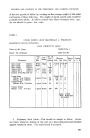
DEVELOPMENT OF A DETERGENT TEST--Part II A Study of the Gontrollable Variables of the Test W. B. SMITH, B.Sc., and A. TAYLOR, M.P.S.* A design often found useful in this type of test [i.e., a Confounded Block Design] is described for studying effects on the test of those variables, such as volume or concentration of detergent, quantity of soil and temperature of operation, which can be controlled at different values. Ninety-six tests by the Classical Method would be required to yield the same amount of informa- tion as 32 by the method described and, in addition, interaction between the variables can be detected by the latter, but not by the former. Detergent concentration is found to have greater influence than the amount of detergent solution on the number of plates washed, which is found not to be directly proportional to the quantity of the solution, and very accurate temperature control is found unnecessary. TEST PROCEDURE THE NEXT stage in the evaluation of the test procedure is to consider the. controllable variables and determine how closely and at what levels they ought best to be controlled. The variables selected for the first experiment: were: Temperature of wash liquor 47 ø , 55 ø . Volume of wash liquor--3 litres, 4« litres. Quantity of soil per plate--4 g, 8 g. Each variable was studied by performing tests at the two levels indicated. In order that the conclusions to be drawn from this test would be applicable over a reasonably wide range of practical conditions, it was necessary to use detergents that would cover the desired range of about 4 to 30 plates. Four solutions were used (as before, these were different quantities of the same material) making a total of 2 x 2 x 2 x 4 = 32 tests. Only eight tests can conveniently be completed per day, and thus the series will extend over four days, but a previous experiment has shown that the soil can change appreciably from day to day and this effect must be eliminated in some way. The 32 tests must be divided into four groups of eight in such a manner that a large change from one group to the other will not affect the variance calculated for any of the main effects or for any simple (i.e. first order) interaction. The design that will achieve this is known as a "confounded block design." * Marchon Products Ltd., Whitehaven, Cumberland. 239

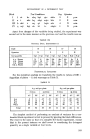
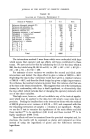
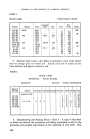
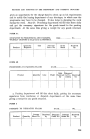
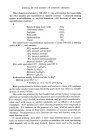
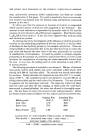
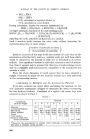
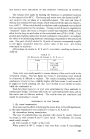
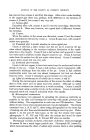
JOURNAL OF THE SOCIETY OF COSMETIC CHEMISTS The need for this design of experiment frequently arises in detergency testing, for the size of a batch of uniformly soiled material is usually too small to enable all the tests to be carried out on it, and different batches of material will show appreciably different results. The principles of cont•ound- ing are described in detail by Brownlee •, where references to earlier works will be found. In the present example we have three factors at two levels and one-- quantity of detergent--at four levels. Suppose the former are denoted by T, V and Q in the order listed at the beginning of the section and the use of the higher level of the variable in any test be designated by t, v or q. The other variable is studied at four levels, but the experiment is simplified if we regard this as a combination of two factors, A and B, and denote the successive levels of detergent quantity by a,-, b and ab. Test abqv, for example, is that using the highest quantity of detergent, plates with 8 g. soil on each, and 4• litres of water at 47 ø C. and test qt is the use of the second detergent quantity, of 8 g. soil per plate, and 3 litres of water at 55 ø C. In designing this experiment with variable wash solution volume, a decision had to be made whether to use four different concentrations of a detergent or four different total quantities. The latter was adopted in order to simplify the preparation of the solutions and the four quantities used were 4, 6, 9 and 13• g. of stock Nansa solution. A complete analysis of variance of 32 tests involving the five variables A, B, Q, T, V would yield information concerning five main effects, 10 first order interactions, 10 second order interactions, 5 third order interactions and 1 fourth order--a total of 31 effects each with one degree of freedom. In the adopted block design three of these are to be confounded: i.e. the design will be such that differences between the blocks would contribute to the variance of only three of the interactions and will not affect any of the others. Naturally, we do not wish to lose any information concerning the main effects or their first order interactions, but will choose to sacrifice the results concerning the interactions AQT, BQV and ABTV. Two third order interactions cannot be used without affecting one of first order(which deter- mines our choice of one third order and two second order), and the final selection was made such that each group of tests at the same soil level contained one test with each detergent quantity. If this were not done there might be a risk of insufficient soiled plates being available for a block containing a preponderance of the higher concentrations. The division of the tests between the four blocks was carried out accord- ing to one of the usual methods (see Ref. 5) and then days, operators, and order of testing were allocated by using a table of random numbers giving the design: 24O
Purchased for the exclusive use of nofirst nolast (unknown)
From: SCC Media Library & Resource Center (library.scconline.org)