RECORDS AND COSTINGS IN THE PERFUMERY AND COSMETIC INDUSTRY PERFU•IERY CO•IPOU•I)S It is advisable to cost these on a conservative basis. Losses from leak- ages, spillages, materials left in container, in filtration and deterioration because of long storage have to be allowed for. The amount of loss will naturally depend on the conditions under which the aromatics are stored, the care with which the compounding is carried out and the size of the batch. The writer considers that an allowance of 2• per cent should cover these losses, but he has heard of cases where the figure was 5 per cent. As liquids are normally measured, allowance for specific gravity of the aromatic must be made in calculating the weight. Where solids are used in the compound there is an increase of gravity, but after a series of tests and calculations it has been found that the cost corrected for gravity approximated so closely to the straightforward costing that it was not worth while making this correction. As mentioned in a previous paragraph, the ingredients are valued at the average value of all stocks of that article. The costing of compounds must include the labour charges in the opera- tion--because these are a much heavier item per fl unit of compound than the factory labour charges per tl unit of production. The labour involved on different compounds varies enormously, depend- ing on the size of the batch, on the number of ingredients and the amount of solids used. Experimental batches of, say, 4 oz. may take more time, owing to the necessity of accurate weighing and measuring, than a large batch. Dealing with the experimental batch first, this should be considered as research work and in a small factory should be included in overheads, as the work is for the benefit of the factory as a whole and cannot be charged against any one product. It is suggested that a rough estimate should be made periodically of the time spent on such work and that the total wages of the department be adjusted by this amount. Daily records must be kept of all the compounds made--these are totalled at the end of the four-week period--and a labour cost per batch figure can be calculated. This is the simplest method and gives a reasonably true figure. More accurate figures can be obtained by multiplying the number of batches by the number of ingredients in each compound and totalling the batch ingredients number, and dividing this into the wages to be accounted for. It is advisable for the compounding laboratory to have a stock card for each ingredient in stock. These would show particulars of purchase, source, price paid, and usages each four-weekly period. On these cards the average price of the stock could be entered. These cards would show how much of each ingredient was being used and would show when it was necessary to order. A check on stock could be made at any time. These cards act as a check on the compounding department working correctly as any errors in 255

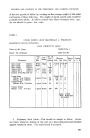
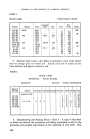
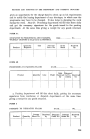
JOURNAL OF THE SOCIETY OF COSMETIC CHEMISTS compounding would show up as an abnormal difference between the paper and the physical stocks. Should any difference appear the stock cards should be corrected to show the physical stock. MANUFACTURING PROCESSES The ingredient cost per batch is straightforward, but here again cost of labour must be included. A good estimate of time required for a batch of any product can be obtained in consultation with the foreman of the department. Such estimate of time must include the weighing of the ingredients, the actual manufacture, the cleaning of plant and utensils after manufacture and the despatch to the filling department--a proportional increase on such time must be made to cover the receipt of material, the general cleaning of the department and other necessary duties. Batches ready to send to the filling department should be weighed occasionally. This is necessary to be able to work out the cost per pound of the product and to be able to check on the efficiency of the filling depart- ment. Any abnormal differences between the weight of ingredients and the weight of the batch should be investigated. These may be due to excessive evapora- tion due to overheating, to spillages or to incorrect making. FILLING DEPARTMENT The only figure that requires consideration here is labour costs--and the same action to calculate this is taken as in the production department, i.e., consultation with the foreman. This figure must include the washing of con- tainers if necessary--the handling of all empty containers and packing material--filling, labelling and packing, and the despiatch of the finished article--the cleaning of equipment after use, and a proportional charge for cleaning the department and other necessary duties. FORMS The following typical forms are suggested: 1. Stock sheet for annual stocktaking. 2. Stock cards for perfumery. 3. Stock cards for matehals. 4. Production department. A. Production programme B. Manu- facture. 5. Filling department. 1. Stock Sheet.--It will be seen that all the necessary information required by the taker and checker is entered •n the top of the sheet, and that these have entered sufficient details for the necessary calculations of value to be made. The office will know whether the 10 bags of zinc oxide delivered 27.3.54 have been paid for the office can also calculate the weight 256
Purchased for the exclusive use of nofirst nolast (unknown)
From: SCC Media Library & Resource Center (library.scconline.org)