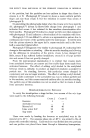
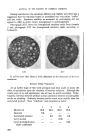
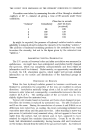
pH VALUE AND ITS IMPLICATIONS practice, there is a wide choice of satisfactory indicators methyl orange, methyl red, bromcresol purple, bromthymol blue, phenolphthalein. However, a glance at the titration curve of acetic acid shows it to be very different from that of hydrochloric acid. The pH value rises slowly from, say, 2.85 to 5.7 or 6, then more rapidly, and then suddenly, for a short distance only, from about 7.5 to 10-5 (the latter figure depending on the concentration of the alkali used) when the alkali added is equivalent to the acid titrated. In this case an indicator changing at 8.0 or above must be used, such as phenolphthalein. Bromphenol blue or methyl orange, which change from 3.0 to 4.6, would slowly pass through all the intermediate colours before the acetic acid was half-neutralised, and would then show the full "alkaline" colour as titration proceeded, and give no indication at all of the "end-point," i.e. the sudden change in pH above 7-5. For similar reasons phenolphthalein is useless in titrating ammonia with hydrochloric acid. Here the titration begins at about pH 11 or 12 according to the concentration of ammonia, diminishes slowly to about 8 or 7.5, then more rapidly to 6, and finally suddenly for a short distance to 3.5 or 3.0 depending on the concentra- tion of the acid. Clearly an indicator is required which changes between, say, 6 to 5.5 and 3.5 to 3.0. Methyl red, methyl orange, bromphenol blue, and some others are suitable, but not phenolphthalein, the red colour of which would begin to weaken before 50 per cent neutralisation, and which would become colourless, after slow changes, at about 90 per cent neutralisa- tion. This explains the old rule for titrations: Strong acid and strong base -- any indicator Weak acid and strong base -- phenolphthalein Strong acid and weak base -- methyl orange. The theory of titration curves and a knowledge of the change regions of the various indicators enables the correct indicator to be chosen with more precision. It may be added that the old rule does not include very weak acids such as boric, or very weak bases. If titration curves for such are drawn, it will be seen at once that no indicator can be suitable since there is no sudden change of pH at the equivalence point nor is there any such rapid pH change at the end point if a weak acid is titrated with a weak base, or vice versa. In such cases it is possible to titrate to a specified pH only by matching the tint against that given by a known buffer. The word "neutral" used in association with indicators clearly cannot mean "at or near pH 7" except in a few cases. If a solution is described as "neutral to methyl orange" this means that the pH lies between 3.0 and 4.6 perhaps in strictness it should mean pH 3.7 or 3.8, where the "half-way" colour is given. Similarity with other indicators, although in the case of a one-colour indicator such as phenolphthalein the term "neutral" can hardly be used satisfactorily at all above 8.3 a pink or red colour is given and 297

JOURNAL OF THE SOCIETY OF COSMETIC CHEMISTS below 8.3 no colour at all there is no intermediate tint, only a difference in intensity on proceeding from 8.3 to 10.0. It will, of course, be realised that this talk skims over the surface of the subject of pH value--after all, many large treatises have been written on the matter--but it is hoped that what I have said will indicate some of the pitfalls that await the unwary when they talk too blithely of "pH." After all the pH value describes one property of a solution, and an aqueous one at that. It does no more than give a measure of the effective acidity (or alkalinity) which may be an important feature, but is seldom of use without qualification. ERRATA to Vol. ¾I, No. 2. Page 142, lines 23, 25 and 28, "W. Navarre" should be "Eddie Navarre ". Page 154, line 19, insert "Dr." between "Schnell" and "E.O." 298
Purchased for the exclusive use of nofirst nolast (unknown)
From: SCC Media Library & Resource Center (library.scconline.org)