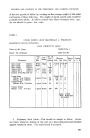
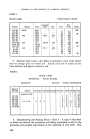
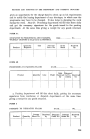
RECORDS AND COSTINGS IN THE PERFUMERY AND COSMETIC INDUSTRY Stocktaking should be anticipated in the arrangement of the various items. Every attempt should be made to prevent dispersion of material and all should be stacked in an orderly fashion so that counting is easy. The production department should have manufacture of batches completed and the filling department should try not to have any batches half filled. In taking stock of raw materials it is advisable to mark the stock sheet with the date of delivery. The office will then know whether the account for the actual delivery has been paid--otherwise errors in value of stock can easily occur. All consumable stocks must be entered on the stock sheet, but not items of plant or equipment. Before stocktaking day, stock sheets should be prepared. These should be numbered, dated, give particulars of the department and also the names of the stocktaker and the checker, as well as any other particulars or instructions necessary. These sheets are to be signed by the stocktaker and checker after stock- taking and returned to the official responsible. The latter will see that all sheets are returned (checking the numbers on the sheet), and sent to the office. It is usual for the foreman or charge-hand in the department, with the help of an assistant, to take stock, and for the checking to be done by an executive or member of the staff--the latter, in signing the stock sheet, taking full responsibility for the correctness of the entries. Items of stock must be entered in geographical order--start'ng at a convenient point and going right through the department. In this way checking is easy and things are not likely to be overlooked. In taking stock the stocktaker's assistant should call out the different items and the stocktaker should record these on the sheet--making an occasional check, say, one item in three, to see that the description and number are correct. Attention should be given in the record to differentiate between packed and unpacked stocks and empties. The description should be sufficient for the office to be able to price correctly without reference back to the department. In checking, at least 10 per cent of the items should be checked for description and number, and another 10 per cent should be checked to see these are actually entered on the sheets. It might be mentioned here that for stocktaking purposes all materials are priced at the purchase price or market price, whichever is the lower. GOODS RECEIVED In addition to chemical or physical check these materials should be weighed and checked against invoices. Many of the ingredients we use are expensive, and although reputable firms will not knowingly deliver 253

JOURNAL OF THE SOCIETY OF COSMETIC CHEMISTS incorrect weights or quantities, there is a possibility of mistakes by the suppliers, or of leakages or losses during transport from the supplier's to the buyer's premises. MANUFACTURING USES This entails rather more work--but if the extensions are done once every four weeks a considerable amount of time can be saved. A four-weekly period is better than a calendar month, as normally things are clearer in the depart- ment at a week-end than during the week. The department will make daily records of batches made and the size of the batches, and batches issued to other departments. At the end of each period the total number of batches of each product can be extended to give the total usage of ingredients. FILLING USAGES The department will make daily entries of batches used after satisfying themselves that the batch is correct size, and will record number of packages produced (giving necessary details of size, type of container and type of packing). It is an advantage if each type of pack of each product is given a number as this number will give all details. Particulars of dispatches to warehouse or sale are also entered. WAREHOUSE Should agree particulars of all material received from ftl]ing and packing department. From the above records it will be quite easy to check up on the productive efficiency of each department and also the overall efficiency. Sales can also be checked against production. Abnormal losses should be investigated at once. The know]edge that records are being kept and that efficiencies are being calculated has a psychological effect on the factory staff and will help to increase efficiency and decrease losses by pilfering or worse. COSTINGS We are concerned here with the material cost of the finished product. To this material cost it would be the management's responsibility to add other charges such as labour, transport and overheads and with reference to transport this can be a very heavy item on small deliveries. Under present conditions when the cost of certain materials fluctuate considerably, the writer suggests the system of averaging. As each fresh delivery of a material comes in an average for value of stock and value of the new delivery is calculated and the new figure is used for costing. This system has the advantage of ironing out pronounced changes in value and gives the opportunity when prices are rising steadily to make necessary adjustments or notify the office of the need to increase prices. 254
Purchased for the exclusive use of nofirst nolast (unknown)
From: SCC Media Library & Resource Center (library.scconline.org)