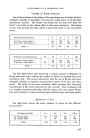
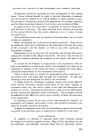
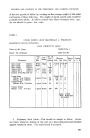
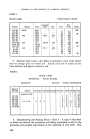
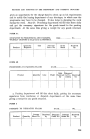
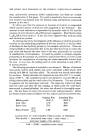
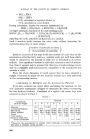
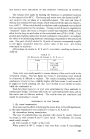
RECORDS AND COSTINGS IN THE PERFUMERY AND COSMETIC INDUSTRY gives an opportunity for the charge-hand to check up on his requirements and to notify the buying department of any shortaões, in which case the proõrarnme may have to be changed. It also helps in planninõ the work during the week. Sheet B: Processing department will fill this sheet daily and get the necessary signatures for the õoods issued to the packinõ department. At the same time givinõ a receipt for any goods returned. FORM 4A DESPATCH TO PROCESSING AND PACKING. WEEKLY ORDERS to be given in on MONDAY. Date ............ No ....... Product Quantity Required Size Internal Order No. If for Stock Received By FORM 4B PROCESSING TO PACKING FLOOR DATE ............ No ......... Product Quantity Line Yield Bulk Received by Returned to Pro- cessing --__ Received by 5. Packing department will fill this sheet daily, getting the necessary signatures from warehouse or dispatch department--at the same time giving a receipt for any goods returned. FORM 5 PACKING TO DESPATCH FLOOR DATE ............ No ....... Process Received Despatch Internal Received Product Quantity Sheet No. by Order No. Order No. by 259

JOURNAL OF THE SOCIETY OF COSMETIC CHEMISTS The above general scheme for costing .should present no serious difficulty in a small or medium-sized factory. Some trouble and expense would be involved in starting up and running it, but once it is organised it should be a valuable asset. Where such a scheme is too involved or where the produc- tion, filling and dispatch departments are intermixed, it should be an easy matter to pick on the essentials of use and to operate a simpler scheme covering these points only. ON PURGHASING ESSENTIAL OILS W. R. LITTLE JOHN, B.Sc., A.R.I.C.* With the widening appeal of odours and flayours many not previously interested in Essential Offs have now to purchase them. Guidance is given to the accepted works of reference for the chemical analysis of samples and practical suggestions are made for their olfactory and/or gustatory evaluation. The attitude of the industry towards variation within deliveries is explained. THE •UYING and evaluation of essential oils is the concern of nearly all who have to impart aroma and flavour to a product. The ramifications of the essential oil industry are large, and it often falls to the lot of a buyer or a chemist in another branch of chemistIy quite different from that of essential oils to have to buy and pass judgment on various samples of essential oils from different sources. The offers from different sources vary tremendously in price, and this has to be taken into account in conjunction with the quality when the final decision has to be made. It cannot be too strongly stressed that a chemical examination to see if the essential oil fulfils certain standards set out in the literature is in reality only part of the evaluation procedure. Another point to be noted is that essential oils are natural products and as such vary from season to season and from locality to locality. In some respects they may be likened to wine for vintage years and localities. The one salient point that must be borne in mind by the buyer and by the chemist analysing the oil is that it is bought in order to perfume or flavour a finished product, and it is the odour or flavour of the finished product which is the deciding issue since these are the selling factors of the product. So one test which must be carried out before any final decision can be made is to make a small batch of the finished product and to compare this with a standard one to see how the flavour or the odour of the essential oil comes through. * Perfumery and Essential Record, Diana House, 33-34, Chiswell Street, London, E.C. 1. 260
Purchased for the exclusive use of nofirst nolast (unknown)
From: SCC Media Library & Resource Center (library.scconline.org)