JOURNAL OF THE SOCIETY OF COSMETIC CHEMISTS no incentive to cut costs or eliminate waste but this does not apply to the maiority of producers. It can be taken for granted that the larger firms have their departments dealing with records and costing--usually under the control of an accountant but in the smaller firms costings are often done in a very rough way, and it is the obiect of this article to give some indication and make some suggestions to the latter. The first point to be considered is t o what extent the practice of keeping records is to be operated. Somebody must take, collect and extend the records, and this cannot be done without some expense. It is advisable to start off in a small way with, say, one clerk to do this, and later, as the system proves its value, it should be extended, but only for so long as the record department is of economic value. A factory should not be run for the benefit of a record office, and no records should be taken, entered and extended unless some use is made of these. Every organisation must keep some records--dealing with such things as purchases and sales, hours worked and wages paid--but these may be of the simplest nature, just sufficient to carry on the business of the company and prepare a balance sheet. The organisation of a record and costing system must be in the hands of a capable person--one who has full knowledge of all the processes employed and the materials used. In many factories the only person answering this description is the chemist. We are quite aware that at present he is fully occupied and has a great deal of responsibility, and it may seem unfair to put extra work and responsibility on his shoulders, but once the system has been organised most of the work could be passed to a junior or to the member of office staff specially employed for the work. As noted above, it is only the economics of production that is being considered in this article, the aim being to reach a higher productive efficiency and to have reliable knowledge of manufacturing costs. •TOCKTAKING All factories carry this out many, however, do it in a haphazard way and therefore do not get full value from the records taken. It is surprising, even in well-organised factories, what things come to light at this time-- materials which have been misplaced, which are no longer used, but which can be used up in another direction, small amounts of products (left-overs) and returns, obsolete material, etc. Arrangements can be made on the spot for returning these to the production lines or scrapping, so turning some into money and at the same time making more room avafiable. Stocktaking must be done in a methodical way, and all productive work should be stopped during the stocktaking period. It is almost impossible to carry on production and stocktaking at the same time, and quite impossible to make any check. 252

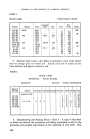
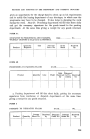
RECORDS AND COSTINGS IN THE PERFUMERY AND COSMETIC INDUSTRY Stocktaking should be anticipated in the arrangement of the various items. Every attempt should be made to prevent dispersion of material and all should be stacked in an orderly fashion so that counting is easy. The production department should have manufacture of batches completed and the filling department should try not to have any batches half filled. In taking stock of raw materials it is advisable to mark the stock sheet with the date of delivery. The office will then know whether the account for the actual delivery has been paid--otherwise errors in value of stock can easily occur. All consumable stocks must be entered on the stock sheet, but not items of plant or equipment. Before stocktaking day, stock sheets should be prepared. These should be numbered, dated, give particulars of the department and also the names of the stocktaker and the checker, as well as any other particulars or instructions necessary. These sheets are to be signed by the stocktaker and checker after stock- taking and returned to the official responsible. The latter will see that all sheets are returned (checking the numbers on the sheet), and sent to the office. It is usual for the foreman or charge-hand in the department, with the help of an assistant, to take stock, and for the checking to be done by an executive or member of the staff--the latter, in signing the stock sheet, taking full responsibility for the correctness of the entries. Items of stock must be entered in geographical order--start'ng at a convenient point and going right through the department. In this way checking is easy and things are not likely to be overlooked. In taking stock the stocktaker's assistant should call out the different items and the stocktaker should record these on the sheet--making an occasional check, say, one item in three, to see that the description and number are correct. Attention should be given in the record to differentiate between packed and unpacked stocks and empties. The description should be sufficient for the office to be able to price correctly without reference back to the department. In checking, at least 10 per cent of the items should be checked for description and number, and another 10 per cent should be checked to see these are actually entered on the sheets. It might be mentioned here that for stocktaking purposes all materials are priced at the purchase price or market price, whichever is the lower. GOODS RECEIVED In addition to chemical or physical check these materials should be weighed and checked against invoices. Many of the ingredients we use are expensive, and although reputable firms will not knowingly deliver 253
Purchased for the exclusive use of nofirst nolast (unknown)
From: SCC Media Library & Resource Center (library.scconline.org)