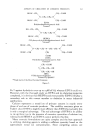
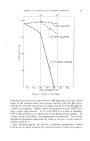
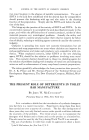
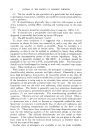
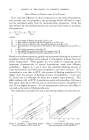
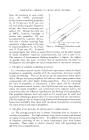
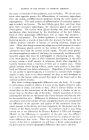
SOME ASPECTS OF CHELATION IN COSMETIC PRODUCTS By ANDREW J. GARD* Presented December 10, 1957, New York Cily WE APPRECIATE this opportunity to discuss chelation. We are mindful that the modern cosmetic chemist is constantly faced with a variety of problems and is expected to take advantage of the progressive concepts of all branches of chemistry in order to be in a position to maintain or improve the quality of his products. Our endeavor is made with the view to elucidate some aspects of chelation chemistry for the cosmetic chemist, to properly focus the interplay of trace metal ions and chelating agents so as to save on valuable laboratory screening tests, and to exploit their use in old and new products. Previous discussions of chelation before this group confined the subject Lnatter to ethylenediaminetetraacetic acid, EDTA, and a general treatment of chelation chemistry. Terms such as, "sequestration" were used, which should apply to any type of complexing action of either organic or inorganic compounds. We wish to drop the use of the word "sequester" or "seques- tration" since our subject matter is chelation, and being an exacting chem- istry should be regarded as such. For organic complexing agents of the EDTA group, the term to be preferred is chelation. At this point, we wish to review briefly some concepts of chelation. Chelation is a stoichiometric type of complexing reaction. It involves a mole to mole ratio of the metal ion to the chelating agent. The metal ion becomes an integral part of the organic molecule by formation of one or more inner cyclic structures and the complex is called a chelate. The word "chelate" is derived from the Greek "kelos" meaning to claw, and the following illustration shows this claw-like action on the copper ion for the simplest amino acid, glycine, and EDTA. The more cyclic claws about the metal ion the more firmly it is bound within the organic molecule and this feature conveys unusual stability to the organo-metal chelate. The important feature of chelation is the loss of chemical identity of the complexed metal ion. The metal ion so complexed is deprived of its usual chemical activity and becomes an entirely new species. *The Dow Chemical Company, Midland, Mich. 261

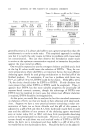
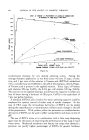
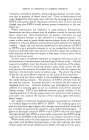
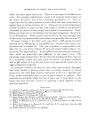
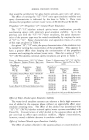
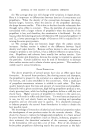
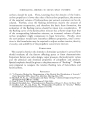
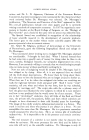
262 JOURNAL OF THE SOCIETY OF COSMETIC CHEMISTS +2 OC--CH• /0 ..... -• NH• NH•CH•CO0- --•- '-- / uu .,/ No,• E DTA Figure 1. The commercially available aminocarboxylic acids aside from EDTA that are currently offered for cosmetic uses are N-hydroxyethylethylene- diaminetriacetic acid, HEDTA diethylenetriaminepentaacetic acid, DTPA and N-dihydroxyethylglycine, DHG. Figure 2 shows the struc- tural configuration of each of these acids. The common symbols for the acid form of each and the commercial name of these products offered by The Dow Chemical Company are given beneath each structural formula. HEDTA was introduced a few years ago, but DTPA is a very recent development. DHG has been around for quite some time and its main feature is specificity to ferric ion. It becomes a problem to most chemists deciding which of the chelating agents is best suited for his particular need. This is where formation constants have some practical value. Formation constants are expressed as log K values (logarithmic values) that define the ratio of the metal ion as a metal chelate to the metal ion in the free ionized state. When the log K value is very large then the metal ion concentration will be extremely lOW. Let us consider ferric Fe +•, cupric Cu +2, and calcium Ca +2 ions to illustrate the significance of formation or stability constants. Table 1 gives the values for each of the chelating agents shown on Fig. 2. The log K values show DTPA is the strongest chelator of ferric, cupric and calcium ions. The greater this value the more preferential is the complexing action, so it means that trivalent metal ions are complexed first followed by divalent metal ions. However, chelation is pH dependent, so the efficiency of these agents for ferric and calcium ions is given special treatment. The Fe+•-EDTA chelate is more susceptible to hydrolysis in the presence of OH ion or alkalinity than either HEDTA or DTPA, thus, above a pH of 7.0 the best choice for complexing Fe +• would be DTPA, and from 7.0 to 2.0, either EDTA or DTPA. The only reason the hydroxyethyl derivative of EDTA came into prominence was the fact that it had the ability to hold
Purchased for the exclusive use of nofirst nolast (unknown)
From: SCC Media Library & Resource Center (library.scconline.org)