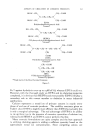
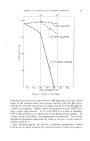
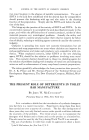
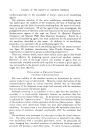
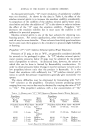
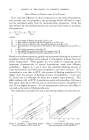
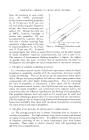
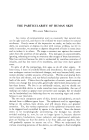
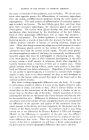
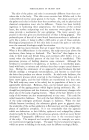
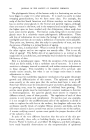
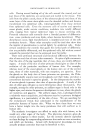
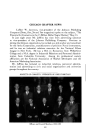
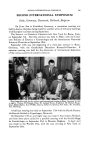
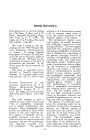
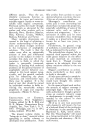
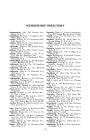
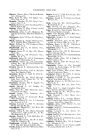
ASPECTS O1,' CHELATION IN COSMETIC PRODUCTS 263 HOOC--CH= CH2--COOH N--CH=--CH=--N HOOC--CH= CH=--COOH EDTA Ethylenediaminetetraacetic Acid Versene © HO--CH= CH= CH=--COOH N--CH.•--CH=--N HOOC--CH., CH=--COOH HEDTA N-Hydroxycthylethylenediaminetriacetic Acid Versenol© HOOC--CH= CH=--COOH N--CH=--CH=--N--CH=--CH=--N HOOC--CH2 CH= CH=--COOH I COOH DTPA Diethylenetriaminepentaacetic Acid Versenex © CH=--COOH N--CH2--CH=--OH % CH=--CH=--OH DHG N-Dihydroxyethylglycine Versene Fea Specific © ©Trade mark of the Dow Chemical Company. Figure 2. Fe +• against hydrolysis even up to a pH of 9.0, whereas EDTA could not. However, with the thorough study on DTPA and its chelating properties completed, it is obvious that HEDTA and even possibly EDTA will play a secondary role to this newest member to chelation in many industrial applications. Calcium represents a metal ion of primary concern in nearly every phase of end use of cosmetic products. The stability constants given on Table 1 show DTPA is slightly more efficient than EDTA but actually this is only a marginal advantage. The real advantage of DTPA is its ability to tie up ferric ion in the presence of excessive quantities of calcium ion, whereas both HE DTA and EDTA cannot perform this feat. Many cosmetic formulations are quite complex and the best approach to utilizing chelating agents is adding a sufficient quantity based on the approximate metal ion contamination. Since competing anions are

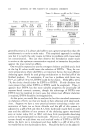
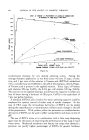
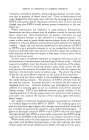
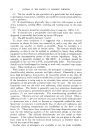
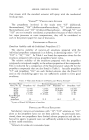
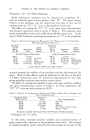
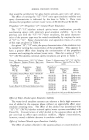
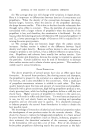
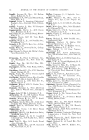
264 JOURNAl. OF THE SOCIETY OF COSMETIC CHEMISTS TABLE 1--STABILITY CONSTANTS TABLE 2--EFFECT OF pH ON Fe •3 CHELA- TION Order of pH Increasing Efficiency 2-3 Log Log Log 4.0-8.5 Ligand KFe +3A KcuA KcaA 8.5-10.0 HEDTA DTPA EDTA HEDTA EDTA DTPA EDTA HEDTA DTPA DHG P 8.15 EFFECT OF PH ON CALCIUM CHELATION HEDTA 19.6 17.4 •10 EDTA 25.1 18.8 10.6 pH Range of DTPA 28.6 21.03 11.0 90-100% Ligand Chelation HEDTA 8.0 EDTA 7.0 DTPA 6.5 generally present, it is always advisable to use a greater proportion than the stoichiometric or mole to mole ratio. This empirical approach is nothing new but it is really the only course to follow in problems with trace metal ion contamination. One can then observe the formulation under study to arrive at the optimum concentration required to immunize the product against the trace metal ion effects. One would be expected to use the strongest chelator available and a look at the log K values would mean the selection of DTPA. Thus, for cos- metic preparations where shelf life is an important factor, the most efficient chelating agent should be used giving consideration to the final pH of the finished product. To summarize, if one has a problem with ferric ion, Fe +a, at a pH of 7.0 to 9.5, DTPA would be the choice. If the pH is 4.0 to 7.0, the choice should either be EDTA or DTPA. If only divalent ions were present then either EDTA or DTPA could be employed. Thus, it appears that DTPA has the most suitable properties for practically all aqueous-based cosmetic systems, though the advantage of DTPA over EDTA may be marginal in many uses, but where most efficient chelation is required, DTPA should be investigated first. At this point, we would like to analyze the last few standard statements vn chelation of ferric ion that are based on facts obtained with ideal condi- tions. Suppose we have a very practical system containing a molar con- centration of ferric ion as ferric chloride and the pH of this system is adjusted to a pH of 4.0 and then 8.5, ferric hydroxide would form in each case and the addition of any amount of the chelating agents mentioned even at molar ratios 10:1 or 100:1 will show little precipitable dissolving action on the precipitated iron hydroxide. However, in our very practical system should we add about one and one-half moles of EDTA or DTPA before the ferric ion is introduced and then buffer to a pH of 4.0 or 8.5, we would find no iron hydroxide to form. Should the ferric ion be added in
Purchased for the exclusive use of nofirst nolast (unknown)
From: SCC Media Library & Resource Center (library.scconline.org)